
Fót
Accommodation in Fót
Fót offers a variety of starting points for a trip, from castle history and places of remembrance to nature on the Somlyó-hegy. If you’d like to prioritize your interests in advance, you’ll find facts here about architectural history, artists, butterflies, and a circular trail.
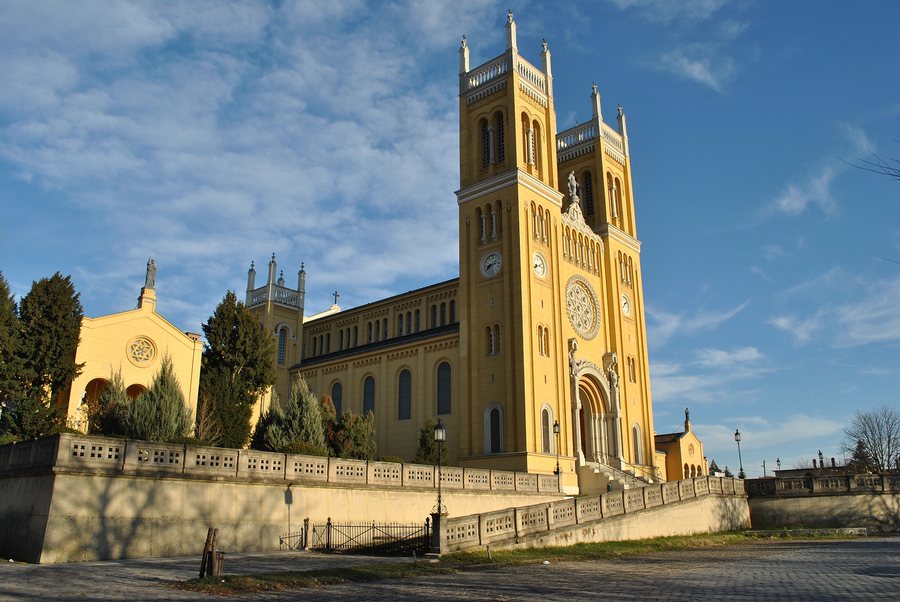 File:Római katolikus templom (7024. számú műemlék) 2.jpg
Photo: Puffancs via Wikimedia Commons, CC BY-SA 2.5 hu
File:Római katolikus templom (7024. számú műemlék) 2.jpg
Photo: Puffancs via Wikimedia Commons, CC BY-SA 2.5 hu
Fót at a glance
- In the 1840s, Ybl Miklós transformed the Károlyi-kastély from the Classical to the Romantic style.
- Prominent figures of Hungary’s Reform Era, including Vörösmarty, Deák, and Garay, often met at the Fáy-présház.
- The Fóti-Somlyó nature trail is a 3,500-meter circular route that starts at the Fáy-présház.
- The Somlyó-hegy was protected in 1952 because of its nearly 1,500 butterfly species; the fóti boglárka is among the best known.
- The Németh Kálmán Emlékház includes the collection, house, and garden of sculptor Németh Kálmán (1903–1979).
- The Szeplőtelen fogantatás katolikus templom was completed in 1855 to designs by Ybl Miklós.
- A Kalandpark opened on the grounds of Fóti-tó in 2019.
What architectural and cultural history can you discover?
At the Károlyi-kastély, you can trace a specific change in style: in the 1840s, Ybl Miklós transformed the castle from its earlier Classical style to a Romantic one. Those interested in architectural history can focus on the transformation itself—not just the name of the building. Ybl Miklós is also associated with the Szeplőtelen fogantatás katolikus templom, which was completed in 1855 to his designs. Fót is therefore connected to him through two different building projects: the transformation of an existing castle’s style and the completion of a church to his designs.
Another way to explore cultural history is through Hungary’s Reform Era. Prominent figures of the time, including Vörösmarty, Deák, and Garay, often met at the Fáy-présház. The site is also the starting point of the Fóti-Somlyó nature trail. The Németh Kálmán Emlékház offers a different focus: it includes the collection, house, and garden of sculptor Németh Kálmán, whose dates were 1903–1979. If you’re comparing cultural topics, you can distinguish between architectural history, historical figures, and a sculptor’s collection.
What makes the Somlyó-hegy interesting to nature enthusiasts?
The Somlyó-hegy was protected in 1952 because of its nearly 1,500 butterfly species. One of the best known is the fóti boglárka. This distinctive butterfly life is a natural highlight among the topics associated with Fót. If you’re interested in biodiversity, the area’s history of protection and the butterfly mentioned here offer concrete points of reference; the figure refers to butterfly species.
How do the experiences differ in focus?
The 3,500-meter Fóti-Somlyó nature trail is a circular route that starts at the Fáy-présház. Its length and circular layout are useful details when deciding whether the route suits your planned outing. The distance alone does not indicate how long the walk will take. Those more interested in architectural and cultural history will find different topics than on the trail; the circular route offers its own way to experience the Somlyó-hegy.
The Kalandpark on the grounds of Fóti-tó is a separate leisure option: it opened in 2019. The circular route offers a nature-focused experience, while the castle, church, and places of remembrance offer cultural and historical interest; the Kalandpark adds a leisure option to the mix.
If you’d like to compare other destinations as well as Fót, you’ll also find information here about Dunakeszi, Göd, and Mogyoród.
FAQ
How long is the Fóti-Somlyó nature trail?
The circular route is 3,500 meters long and starts at the Fáy-présház.
Why was the Somlyó-hegy protected?
It was protected in 1952 because of its nearly 1,500 butterfly species. One of the best known is the fóti boglárka.
When did the Kalandpark on the grounds of Fóti-tó open?
The Kalandpark opened there in 2019.
For the broader travel overview: Dunakeszi.

_2.jpg)