
Somogy – Nature and Culture
Accommodation in Somogy
Somogy reveals itself through a wide variety of landscapes and cultural sites: a birdwatching tower offers views over a wetland basin, while the history of the Benedictine Abbey of Szent Egyed in Somogyvár and an open-air museum offer insights into Somogy’s past. When planning your trip, it is worth weighing up nature experiences, cultural destinations, and regional routes according to what interests you most.
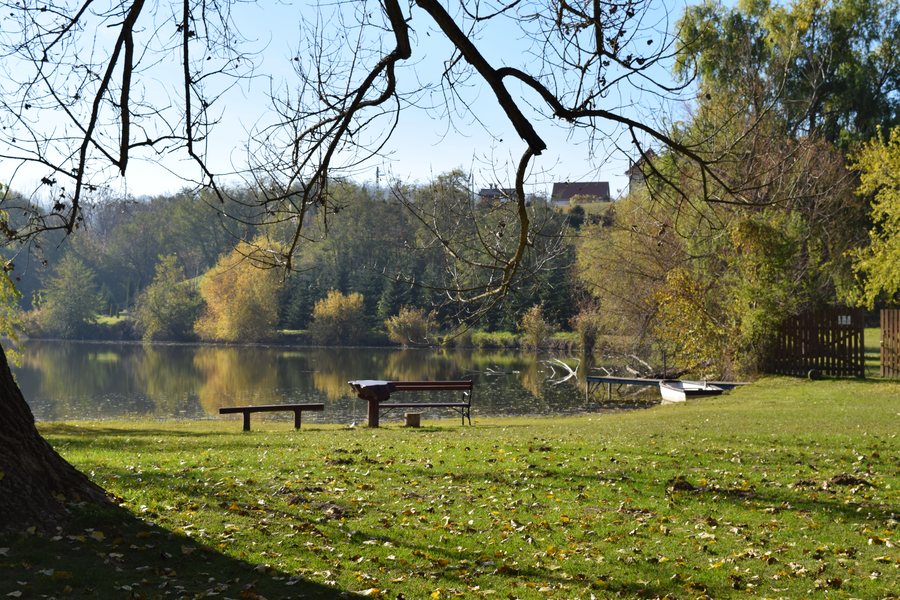 A Füzes tavat körülölelő park, Látrány, Somogy megye
Photo: Botos Andrea via Wikimedia Commons, CC BY-SA 4.0
A Füzes tavat körülölelő park, Látrány, Somogy megye
Photo: Botos Andrea via Wikimedia Commons, CC BY-SA 4.0
Somogy at a glance
- Somogy comprises the landscape regions of Külső-Somogy, Belső-Somogy, Zselic, and Dráva mente.
- Baláta-tó is Somogy’s oldest nature reserve and has been protected since 1942.
- The main route of the Mesztegnyői Erdei Vasút is 8.8 kilometres long and runs through forests and along lakes.
- King Ladislaus founded the Benedictine Abbey of Szent Egyed in Somogyvár in 1091.
Which natural areas shape the region?
Baláta-tó preserves a remnant of an Ice Age wetland and is home to several nationally rare plant and animal species. From the birdwatching tower in the protected natural area, you can look out over the wetland basin. If you are interested in wetlands and wildlife watching, this spot offers a specific nature focus for your trip.
The Zselici Tájvédelmi Körzet is also one of Somogy’s nationally significant protected natural areas. In 2009, it became the first area in Europe to receive the international designation for a dark-sky park. Guided programmes take place in the observatory building and the surrounding forest at Zselici Csillagpark. The observatory is accessible only as part of tours announced in advance; bear this restriction in mind when planning your visit.
In Barcsi Borókás, a nature trail passes through characteristic habitats of Inner Somogy: sandy steppe, sessile oak forest, and wetland forest. More than 50 protected plant species occur around the Mesztegnyői Erdei Vasút. Each place has its own character—from the wetland remnant and forest habitats to a landscape you can explore on a ride through forests and along lakes.
What routes and excursions are available?
You can reach Baláta-tó from Kaszó by forest railway; a marked footpath also leads there from the Kaszó Forest Railway station. The main route of the Mesztegnyői Erdei Vasút runs for 8.8 kilometres through the Boronka-melléki Tájvédelmi Körzet.
Boat trips and/or water tours from Barcs are recommended for exploring the Dráva. More than 50 fish species have been recorded in the Dráva and its oxbow lakes, accounting for two-thirds of Hungary’s fish fauna. An excursion route of about 50 kilometres connects Csurgó, Csurgónagymarton, Ágneslak, Iharosberény, Kanizsaberek, Kaszó, Baláta-tó, and Szenta, before returning to Csurgó.
In Brézai Forest Park, hiking trails make it easier to find your way around. The park has a car park, a shelter, and a fire pit. A cycle path also leads from the forest park to the historic memorial site in Somogyvár. If you would like to factor routes and cultural history into your plans, these offer two different ways to shape your stay around a particular theme.
What does Somogy offer culture enthusiasts?
The history of Somogyvár dates back to the founding of the Benedictine Abbey of Szent Egyed by King Ladislaus in 1091. Somogyvár was declared a national memorial site in 2011. The Szent László Napok event series has been held there every year since 1989. The site’s historical significance and its recurring events are two distinct aspects of the place.
The Szennai Szabadtéri Néprajzi Gyűjtemény received a Europa Nostra Award in 1982. Szántódpuszta is also an architectural ensemble honoured with a Europa Nostra Award; many of its buildings reflect Somogy’s agricultural past. Those more interested in historic buildings can also visit the medieval castle ruins of Kereki, known by the names Kupavár, Katonavár, and Fehérkővár.
For nature and architecture, the Szennai Örökség Tanösvény combines information about natural beauty, wildlife, and plant life with architectural sights around Szenna. Several bus stops are about 80 metres from the main entrance of the Szennai Skanzen; from there, services run to and from Kaposvár.
Which other parts of the region can you explore?
Somogy’s winegrowing and wine culture are part of the county’s values. A recurring culinary event in Somogy was a rétes festival in Mesztegnyő. If you would like to narrow your search to individual subregions, you can switch to the pages for Nagyatád, Barcs, Siófok, Lengyeltóti, Marcali, Tab, Kaposvár, Fonyód, Kadarkút, Csurgó, Balatonföldvár, and Tab.
FAQ
How can you reach Baláta-tó?
There is a forest railway connection from Kaszó. A marked footpath leads to Baláta-tó from the Kaszó Forest Railway station.
How long is the main route of the Mesztegnyői Erdei Vasút?
The main route is 8.8 kilometres long. It runs through forests and along lakes in the Boronka-melléki Tájvédelmi Körzet.
Is the observatory at Zselici Csillagpark freely accessible?
No. The observatory is accessible only as part of tours announced in advance; guided programmes take place in the building and the surrounding forest.
For the main travel overview: Hungary.

