
Discover Látrány: church art, a mill and Füzes-tó
Accommodation in Látrány
Látrány brings together church art, the history of a watermill and Füzes-tó on the edge of the village.
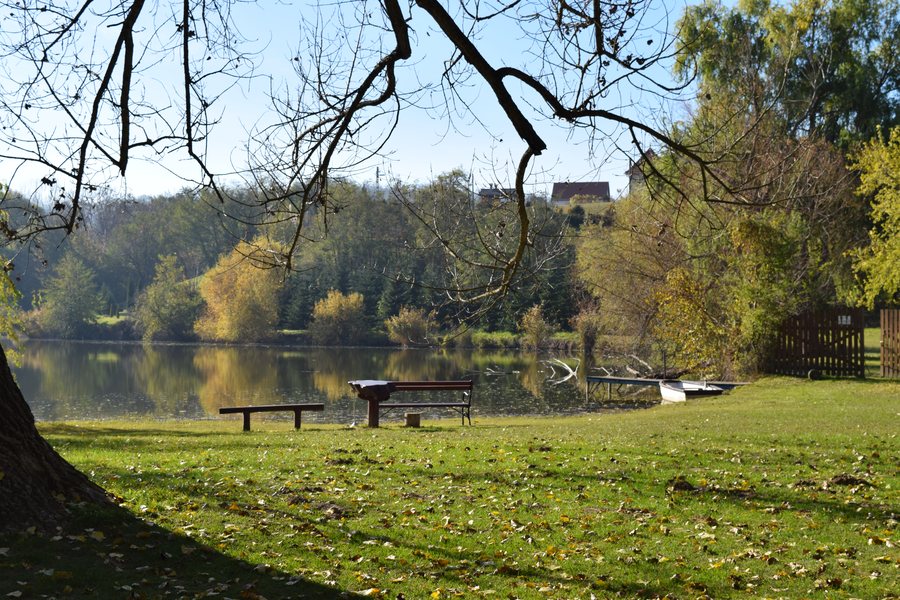 A Füzes tavat körülölelő park, Látrány, Somogy megye
Photo: Botos Andrea via Wikimedia Commons, CC BY-SA 4.0
Key facts about Látrány
- The Roman Catholic church was built in 1763 in the Late Baroque style; inside is a Rococo high altar featuring an image of the Archangel Michael.
- A painting on the north side of the nave depicts Látrány and its inhabitants from that period; the Reformed church was built in the Zopf style.
- Füzes-tó is on the edge of the village, covers three hectares and is used for fishing. A park with old trees surrounds the lake.
- At Tukora tanya in the Látrány-puszta Nature Reserve, Tukora Péter operated a watermill in the early 20th century. The building is still well preserved and visible.
What church art defines the town?
The construction date and furnishings of the Roman Catholic church can be considered separately: the building was built in 1763 in the Late Baroque style; inside is a Rococo high altar featuring an image of the Archangel Michael. This places the description of the building’s style alongside that of the altar, without referring to the same architectural feature.
The painting on the north side of the nave depicts Látrány and its inhabitants from that period. Its subject complements the image of the Archangel with a depiction of the town and its residents. The Reformed church in Látrány was built in the Zopf style, adding another style classification to the description of the churches. When comparing churches and local history, the architectural style, altar design and the painting’s depiction of the town are distinct elements.
What natural and historical features define Látrány?
Füzes-tó is on the edge of the village, covers three hectares and is used for fishing. A park with old trees surrounds the lake.
To explore the history of the watermill, head to Tukora tanya in the Látrány-puszta Nature Reserve. Tukora Péter operated a watermill there in the early 20th century; the building is still well preserved and visible. The lake and the mill represent different themes: Füzes-tó is associated with fishing and the park, while the mill speaks to its former use and a surviving, visible structure. The period when it operated and the condition of the building are two separate aspects of the mill’s history.
What regional highlights are part of Southern Balaton?
In the wider Southern Balaton destination, the Zselici Tájvédelmi Körzet was awarded the International Dark Sky Park title in 2009 because of its low light pollution. The Zselici Csillagpark was built in the heart of the protected area. The award and the park are two distinct points of reference: the award recognizes the protected area, while the Csillagpark was built within it.
Baláta is also among Somogy’s most valued natural assets and lies between Kaszó and Szenta. On its section in Somogy County, the regional Dráva active tourism network includes stopping points for water tourism. Individual facilities may change during development, so check the latest information before making specific plans.
Discover more destinations: Balatonfenyves, Somogybabod, Ordacsehi, Somogytúr, Visz, Fonyod, Balatonlelle, Balatonboglár.
FAQ
Which architectural styles are represented in Látrány?
The Roman Catholic church is Late Baroque, and its high altar is Rococo. The Reformed church was built in the Zopf style.
What is known about Füzes-tó?
The three-hectare lake is on the edge of the village, is used for fishing and is surrounded by a park with old trees.
What is known about the watermill at Tukora tanya?
Tukora Péter operated it in the early 20th century in the Látrány-puszta Nature Reserve. The mill building is still well preserved and visible.
See the wider travel overview: Fonyódi.

