
Nyírtass: Tas Tradition, Church Art and Nature
Accommodation in Nyírtass
Nyírtass can be explored through three specific themes: the tradition surrounding Tas vezér, the Reformed church with its medieval and later features, and a 100-hectare protected natural area. This gives you a basis for deciding whether local history, architecture or the landscape should shape your stay most.
Nyírtass at a glance
- Local tradition traces the name Nyírtass to Tas, a Hungarian military leader from the era of the Magyar Conquest.
- Nyírtassi védett terület is a locally significant protected area covering 100 hectares.
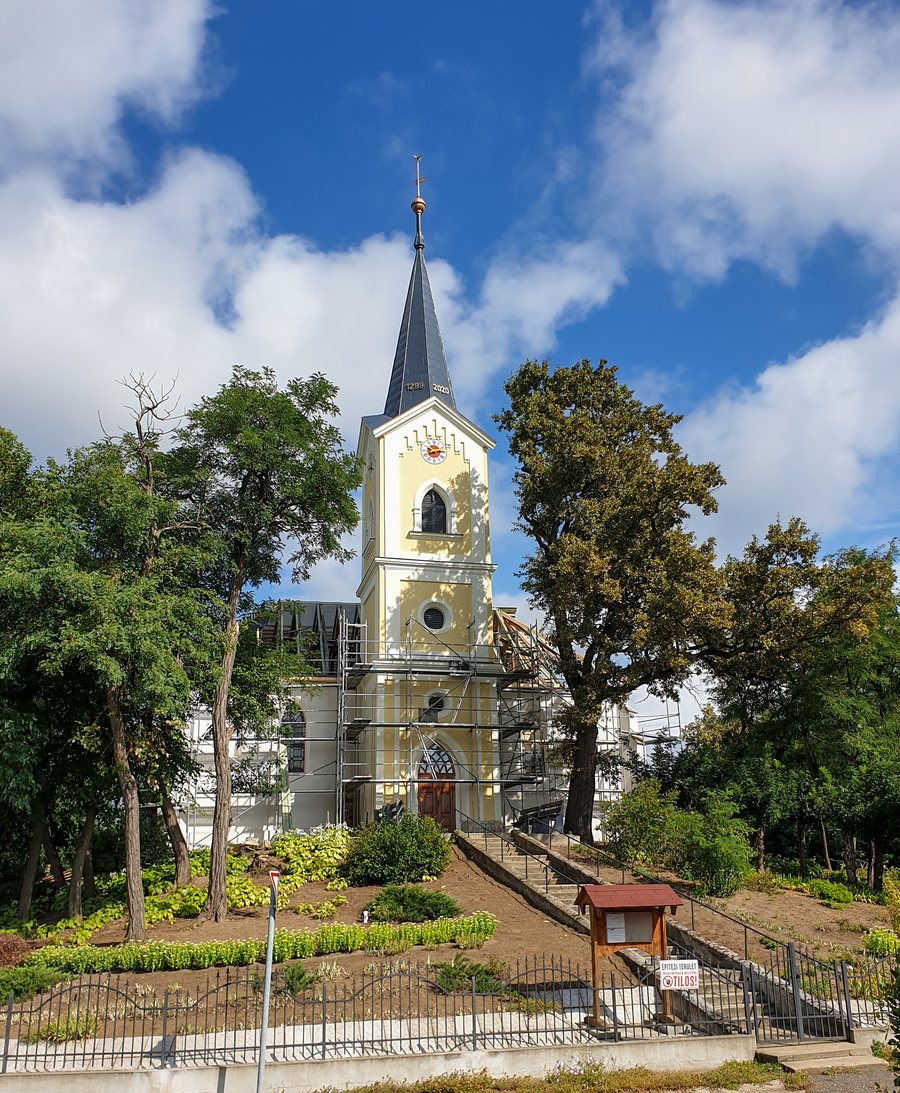
- After part of the building collapsed in the 18th century, the Reformed church was enlarged into a hall church using the Romanesque choir.
- The Magyar Talléros company’s fruit growing dates back to 1996; its pálinka is sold under the name MAGYAR TALLÉROS PÁLINKA.
How does the Tas tradition feature in Nyírtass?
Local tradition connects the town’s name with Tas, a Hungarian military leader from the era of the Magyar Conquest. The theme is also present in public spaces: Tas vezér lovasszobra, the bronze equestrian statue of Tas vezér, stands on a tall stone plinth in the landscaped park between the Reformed church and the community hall. The name and the monument thus provide a shared historical point of reference.
The area around the monument is also useful for finding your way around: the church, community hall and park are the landmarks described in the townscape. The equestrian statue makes the Tas tradition visible as a physical monument, while the tradition surrounding the town’s name provides the historical context.
What does the Reformed church’s architectural history reveal?
The Reformed church brings together several building phases. After a large part of the building collapsed in the 18th century, it was enlarged into a hall church using the Romanesque choir. During renovations in 1970, medieval door and window openings were uncovered. The Romanesque choir and the later alterations are therefore part of a long architectural history that can be read in specific features.
The interior also has some distinctive details. Multilayered fragments of Gothic wall paintings are exposed on the side wall of the nave nearer the choir. To the left of the entrance to the flat-ceilinged nave is a white-painted organ gallery supported by simply carved wooden columns. Its projecting section of balustrade bears a cut-out lute motif dating from the 1860s. If you are planning to visit the interior, check access in advance.
What is Nyírtass like as a natural destination?
Nyírtassi védett terület is described as a locally significant protected natural area covering 100 hectares. Its protected status and size are the specific details that make the landscape a focus alongside the town’s architectural history. If you are planning to visit, it is advisable to check access arrangements for the protected area in advance.
What characterizes local products?
The Magyar Talléros company has been growing fruit since 1996. In 2010, it established a visitor distillery outside Nyírtass and markets fruit grown there as pálinka under the name MAGYAR TALLÉROS PÁLINKA. Fruit growing and a pálinka product sold under a specific name are therefore also among the town’s points of interest.
What other themes does Szabolcs-Szatmár-Bereg offer?
Beyond Nyírtass, the wider destination of Szabolcs-Szatmár-Bereg offers other distinct themes. In Vaja, the Vay-Ádám Museum Collection of the Hungarian National Museum is housed in the Renaissance Vay Castle. The Báthori Castle in Nyírbátor has a permanent exhibition and a panopticon depicting members of the Báthori family in period settings. Andrássy Castle in Tiszadob offers a different architectural focus: it was built from 1880 to 1885 in the French Gothic style, to plans by Alpár Ignác, for former Prime Minister Andrássy Gyula.
The region’s nature conservation sites also vary considerably. The approximately 53-hectare Bátorliget Ancient Swamp, which is strictly protected, preserves the stages in the development of the vegetation and landscape history of the Alföld plain particularly completely. Nyíres-tó and Báb tava near Csaroda are distinctive peat bogs whose formation dates back to the Ice Age. Near Tiszadob, a 1,000-hectare nature reserve includes oxbow lakes, floodplain forests and grassland; 80 to 90 pairs of herons nest in Tölgyes Forest. This lets you distinguish regional interests in history and architecture from those in landscapes and nature, without confusing these places with Nyírtass.
Discover more destinations: Ófehértó, Baktalórántháza and Levelek.
FAQ
Where does the name Nyírtass come from?
Local tradition traces it to Tas, a Hungarian military leader from the era of the Magyar Conquest. Tas vezér is also the subject of a bronze equestrian statue in the park between the Reformed church and the community hall.
Which building phases can be seen at the Reformed church?
After part of the building collapsed in the 18th century, the church was enlarged into a hall church using the Romanesque choir. Medieval door and window openings were uncovered during the 1970 renovation.
What is known about the natural area in Nyírtass?
Nyírtassi védett terület is a locally significant protected natural area covering 100 hectares. Check access arrangements if you are planning to visit.
What is the connection between pálinka and Nyírtass?
Magyar Talléros has been growing fruit since 1996 and markets fruit from outside Nyírtass as pálinka under the name MAGYAR TALLÉROS PÁLINKA.
Go to the main travel overview: Baktalórántháza.

