
Ófehértó: Gothic Church, Memorial Park and Hike
Accommodation in Ófehértó
Ófehértó offers three distinct points of interest for planning a trip: a Gothic church with historic details, a chronologically arranged group of monuments in the memorial park, and a hike that starts in the town and ends in Baktalórántháza. If you are looking for accommodation in Ófehértó, these themes can help you decide what to focus on during your trip.
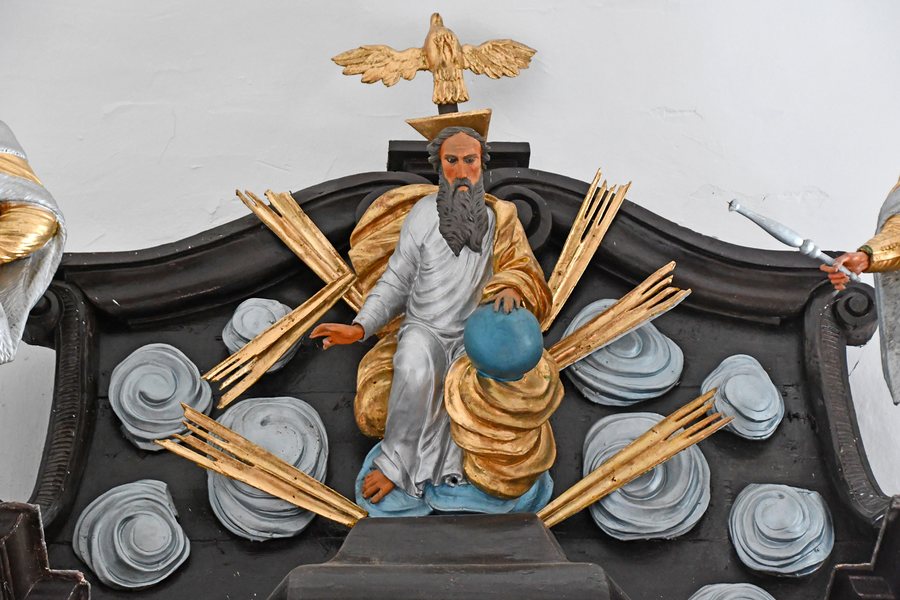 Ófehértó, római katolikus templom főoltára 2024 06.jpg
Photo: Pasztilla aka Attila Terbócs via Source, CC BY-SA 4.0
Ófehértó at a glance
- The Roman Catholic church is a single-nave Gothic building dating from the second quarter of the 14th century.
- A fresco depicting St. George is located on the north side of the nave; in the 17th century, it was painted over with floral motifs.
- A group of monuments in the memorial park was expanded to include a 1956 Büszkeségpont.
- An inscription is located on the church’s south façade; visits are by prior arrangement.
- A hike starts in Ófehértó, passes through the Baktalórántháza Forest Reserve, and ends in Baktalórántháza.
What do the church and memorial park tell us?
The Roman Catholic church in Ófehértó combines a single-nave layout with Gothic architecture. Its origins in the second quarter of the 14th century place it in a medieval context. A fresco depicting St. George is on the north side of the nave. In the 17th century, it was painted over with a layer of floral motifs. The fresco therefore brings together a figurative subject and a later ornamental overpainting.
Another architectural detail is on the south façade: an inscription is set in a niche above a bricked-up portal. Visits must be arranged in advance. The memorial park contains a chronologically arranged group of monuments, which was expanded to include a 1956 Büszkeségpont. The church and the memorial park thus have different focuses: sacred architectural history and a chronologically arranged group of monuments.
What is the route of the hike from Ófehértó?
The hike starts in Ófehértó, passes through the Baktalórántháza Forest Reserve between Ófehértó and Baktalórántháza, and ends in Baktalórántháza. The starting point and destination are therefore different. Take this route into account when planning, and check current trail conditions before setting off. This allows you to consider the hike as a separate option alongside the town’s cultural attractions, without conflating the hike with a visit to the church or memorial park.
What cultural attractions are there in Szabolcs-Szatmár-Bereg?
The wider destination of Szabolcs-Szatmár-Bereg offers other cultural attractions. The Vay-Ádám Museum Collection of the Hungarian National Museum is housed in the Renaissance Vay Castle in Vaja. Báthori Castle in Nyírbátor has a permanent exhibition and a panopticon, where members of the Báthori family are depicted in period settings. These examples present history in different ways: a museum collection in a Renaissance castle and depictions of a family in a historical setting.
Andrássy Castle in Tiszadob also offers an architectural point of comparison. It was built between 1880 and 1885 in the French Gothic style by former Prime Minister Gyula Andrássy, to designs by Ignác Alpár. Compared with the church in Ófehértó, the construction dates alone show a marked difference in age: a 14th-century building is set against a castle from the late 19th century. As a separate regional point of reference, the northern Hungarian section of the Route of Medieval Churches links 37 churches in the medieval church landscape of Szabolcs-Szatmár-Bereg.
What natural features define the region?
Regional examples range from bog landscapes to floodplain forests and grassland. The Bátorliget Primeval Bog covers about 53 hectares and is strictly protected; it preserves particularly well the different stages in the vegetation and landscape history of the Alföld plain. Near Csaroda are Nyíres-tó and Báb tava, distinctive peat bogs whose origins date back to the Ice Age.
The nature reserve near Tiszadob offers another kind of landscape: it covers 1,000 hectares of oxbow lakes, floodplain forests, and grassland. A large heron colony of 80 to 90 pairs nests in Tölgyes Forest. Near Vaja, there is also a 77-hectare reservoir fed by the Vajai Main Canal, suitable for fishing and irrigation. The examples thus differ in landscape type and use: peat bogs, a protected river landscape, and a reservoir each have their own character.
Discover more destinations: Nyírtass, Baktalórántháza, Levelek
FAQ
What historical features does the church in Ófehértó have?
The single-nave Gothic church dates from the second quarter of the 14th century. A fresco depicting St. George is located on the north side of the nave; in the 17th century, it was painted over with floral motifs.
Where does the hike start and end?
It starts in Ófehértó, passes through the Baktalórántháza Forest Reserve, and ends in Baktalórántháza. Check current trail conditions before setting off.
Which natural areas are mentioned for Szabolcs-Szatmár-Bereg?
Natural areas in Szabolcs-Szatmár-Bereg include, for example, the strictly protected Bátorliget Primeval Bog, the Nyíres-tó and Báb tava peat bogs near Csaroda, the Cégénydányád Park Nature Reserve, which currently covers 14.28 hectares, and the protected area near Tiszadob with floodplain forests and grassland.
For the wider travel overview: Baktalórántháza.

