
Discover Kemecse
Accommodation in Kemecse
Get to know Kemecse through its churches, a memorial to the events of 1848–1849, and its early 19th-century building history. If you broaden your view to the wider destination of Szabolcs-Szatmár-Bereg, you will find further, distinct cultural and natural themes there.
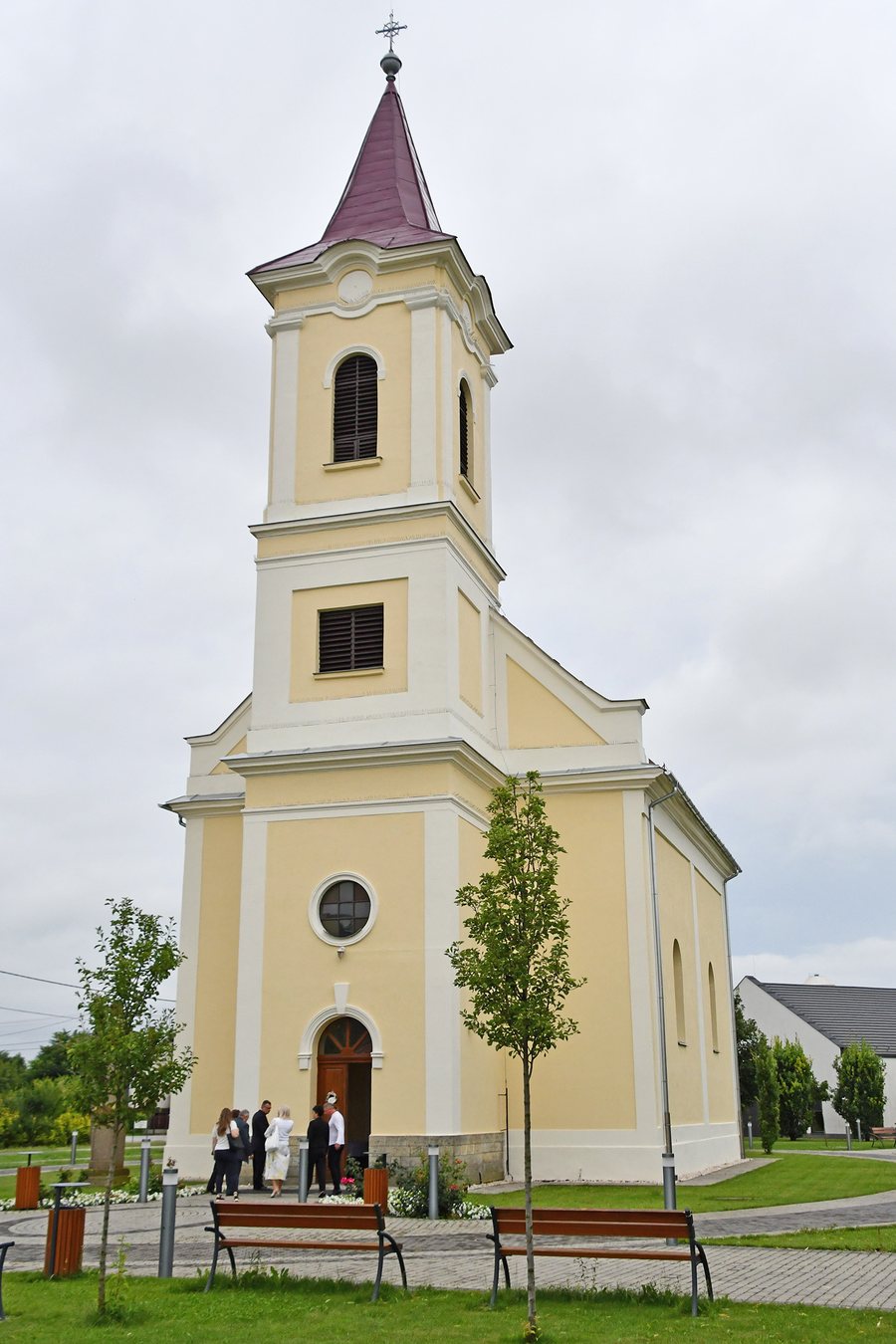 File:Kemecse, római katolikus templom 2024 03.jpg
Photo: Pasztilla aka Attila Terbócs via Wikimedia Commons, CC BY-SA 4.0
Key facts about Kemecse
- The Catholic church was built between 1821 and 1824 and dedicated to Saint King István.
- The tower of the Reformed church is believed to date from 1820 or 1821.
- An obelisk in Kegyeleti Park commemorates honvéd general Répásy Mihály and the heroes of Kemecse from 1848–1849.
Which historical traces shape Kemecse?
The Catholic church was built between 1821 and 1824 to plans by master builder Czvenger József from Eger. It is dedicated to Saint King István. The tower of the Reformed church is believed to have been built between 1820 and 1821. The periods are close together, but the dating of the tower remains explicitly uncertain; the construction years of the Catholic church are given more precisely.
The obelisk in Kegyeleti Park recalls another chapter in the town’s history. It honours Répásy Mihály, a honvéd general, as well as the heroes of Kemecse from the Revolution and War of Independence of 1848–1849. A municipal account from 2012 reports that a memorial event was held in the park every year and candles were lit. This describes the account at the time; it does not indicate whether the event continues today.
Kemecse’s history therefore encompasses both church building in the early 19th century and commemoration of the events of 1848–1849. The two churches differ not only in denomination, but also in how certain their construction dates are.
Which cultural sites are there in the wider destination of Szabolcs-Szatmár-Bereg?
Other places in Szabolcs-Szatmár-Bereg add to the region’s historical themes. The Vay-Ádám Museum Collection of the Hungarian National Museum is housed in the Renaissance Vay Castle in Vaja. The Báthori-Várkastély in Nyírbátor has a permanent exhibition and a panopticon, where members of the Báthori family are depicted in a period setting. These examples offer different emphases: a museum collection in a castle in one place, and a family portrayed in a historical setting in another.
Castles and the medieval church landscape are also among the region’s themes. Andrássy Castle in Tiszadob was built between 1880 and 1885 in the French Gothic style. It was commissioned by former Prime Minister Andrássy Gyula and designed by Alpár Ignác. The northern Hungarian section of the Route of Medieval Churches offers a broader view of medieval places of worship: it connects 37 churches in the medieval church landscape of Szabolcs-Szatmár-Bereg.
Which landscapes shape the wider region?
The natural areas in the wider destination of Szabolcs-Szatmár-Bereg vary in size and character. The Bátorligeti Ancient Moor covers about 53 hectares and is strictly protected. It preserves especially well the different stages in the vegetation and landscape history of the Alföld plain. The Cégénydányád Park Nature Reserve currently covers 14.28 hectares.
The distinctive peat bogs of Nyíres-tó and Báb tava lie near Csaroda; their history dates back to the Ice Age. The protected area near Tiszadob covers 1,000 hectares and includes oxbow lakes, riparian forests and grassland. A large heron colony of 80 to 90 pairs nests in Tölgyes Forest. The region’s natural attractions thus include peatlands and Ice Age history, as well as river floodplains and a woodland with a large breeding colony.
Another landscape feature is the 77-hectare Vaja Water Reservoir near Vaja. It is fed by the Vajai Main Canal and is suitable for fishing and irrigation. Together with the protected areas, the reservoir shows that the region’s natural attractions include not only peatlands and forests, but also a body of water with specified uses.
Discover more destinations: Ibrány, Nagyhalász, Nyírbogdány.
FAQ
When was the Catholic church in Kemecse built?
It was built between 1821 and 1824 to plans by Czvenger József from Eger and dedicated to Saint King István.
Who is honoured by the obelisk in Kegyeleti Park?
The obelisk commemorates honvéd general Répásy Mihály and the heroes of Kemecse from the Revolution and War of Independence of 1848–1849.
Which distinctive natural areas are mentioned for Szabolcs-Szatmár-Bereg?
They include the strictly protected Bátorligeti Ancient Moor and the peat bogs of Nyíres-tó and Báb tava near Csaroda. Near Tiszadob there is also a protected area with oxbow lakes, riparian forests and grassland, as well as the heron colony in Tölgyes Forest.
For the wider travel overview: Ibrány–Nagyhalász.

