
Újfehértó between salt lake and town history
Accommodation in Újfehértó
Újfehértó combines protected salt landscapes and birdlife with churches, monuments and local history. When planning your trip, you can decide whether you are more interested in nature watching or the town’s historic sites.
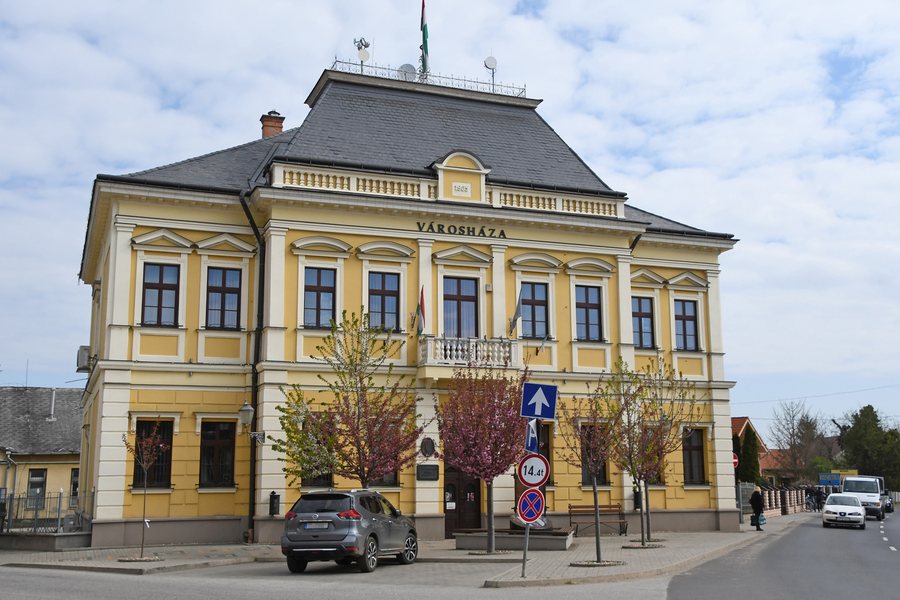 File:Újfehértó, városháza 2021 01.jpg
Photo: Pasztilla aka Attila Terbócs via Wikimedia Commons, CC BY-SA 4.0
File:Újfehértó, városháza 2021 01.jpg
Photo: Pasztilla aka Attila Terbócs via Wikimedia Commons, CC BY-SA 4.0
Quick facts about Újfehértó
Újfehértó lies between Debrecen and Nyíregyháza, on the edge of the Nyírség towards Hajdúság, in the southwestern part of Szabolcs-Szatmár-Bereg County. Szikes Sóstó is a nature reserve of national importance. In dry weather, its white lakebed regularly comes into view; it gave Újfehértó its name. Vadas-tó is also known for birdwatching. In the town centre, churches, statues, monuments and the chestnut tree avenue on Főtér offer points of interest for a walk through local history.
What kind of nature characterises the area?
Szikes Sóstó combines protected status with a landscape that changes in dry weather: the white lakebed then regularly comes into view. Újfehértó’s saline areas are home to numerous protected plant and animal species; numerous bird species also breed or stop there. Nature enthusiasts can therefore look out for various features as they explore the landscape.
A locally protected Ice Age loess wall offers a special combination of wildlife and geology. Protected sand martins nest in its upper layer. At Vadas-tó, by contrast, birdwatching and its location on an international migratory bird route are the main attractions; due to its size and varied surroundings, it is considered a suitable destination for an outing. These nature features differ: Szikes Sóstó is characterised by its saline habitat and white lakebed, while Vadas-tó is notable for its importance to migratory birds and birdwatching.
What historic sites are there in the town?
A church built between 1803 and 1814 stands on Fő tér. It was originally consecrated in 1812 in honour of All Saints and is now dedicated to Our Lady of Hungary. Karol Wojtyła, the future Pope John Paul II, visited this church in the late 1970s. A stained-glass window commemorates him. The churchyard of the Reformed Church is a separate site: it contains three sarcophagus-shaped tombstones from the 17th century. Their inscriptions are illegible; an asymmetrical floral engraving can be made out on one of the stones.
The Városi Múzeum opened in 1995 in a manor house dating from the second half of the 19th century. The building formerly belonged to the Grünberger family and has a vaulted colonnade. Alongside temporary exhibitions, the museum mainly displays material on local history. Statues in front of the museum commemorate Nyúzó Mihály, Rákóczi Pál, Szoboszlai Pap István and Zajti Ferenc, figures with connections to the town.
The Csörsz-árok, which runs through Újfehértó and is also called Ördög-árok, is another historic feature of the town. Its origins are disputed; most evidence points to a late Roman origin. The uncertainty surrounding its origins is part of how it should be understood: there is no definitive explanation of how it came about.
Which options suit your travel plans?
If you want to focus on nature, Szikes Sóstó, the saline habitats, the loess wall and Vadas-tó offer different points of interest. If you are more interested in architectural and local history, the church on Fő tér, the Reformed Church’s churchyard, the museum and the statues take centre stage. The sights in the town centre are well suited to a walk through local history; these include public statues and monuments as well as the centuries-old chestnut tree avenue on Főtér.
One place to visit comes with an important restriction: the grave of Silbermann Ferenc in the former cemetery on Kossuth út remains a pilgrimage site, but the cemetery is not open to visitors. Keep this restriction in mind when matching your interests to the town’s sites. For more destinations, also discover Nagykálló and Kállósemjén.
FAQ
Where is Újfehértó?
The town lies between Debrecen and Nyíregyháza, on the edge of the Nyírség towards Hajdúság, in the southwestern part of Szabolcs-Szatmár-Bereg County.
What makes Szikes Sóstó special?
It is a nature reserve of national importance. In dry weather, its white lakebed regularly comes into view; this gave Újfehértó its name.
Can visitors enter the former cemetery on Kossuth út?
No. Although the grave of Silbermann Ferenc, a pilgrimage site, is located there, the cemetery is not open to visitors.
Have the origins of Csörsz-árok been established?
No. Its origins are disputed; most evidence points to a late Roman origin.
For the broader travel overview: Nagykálló.

