
Discover Sótony
Accommodation in Sótony
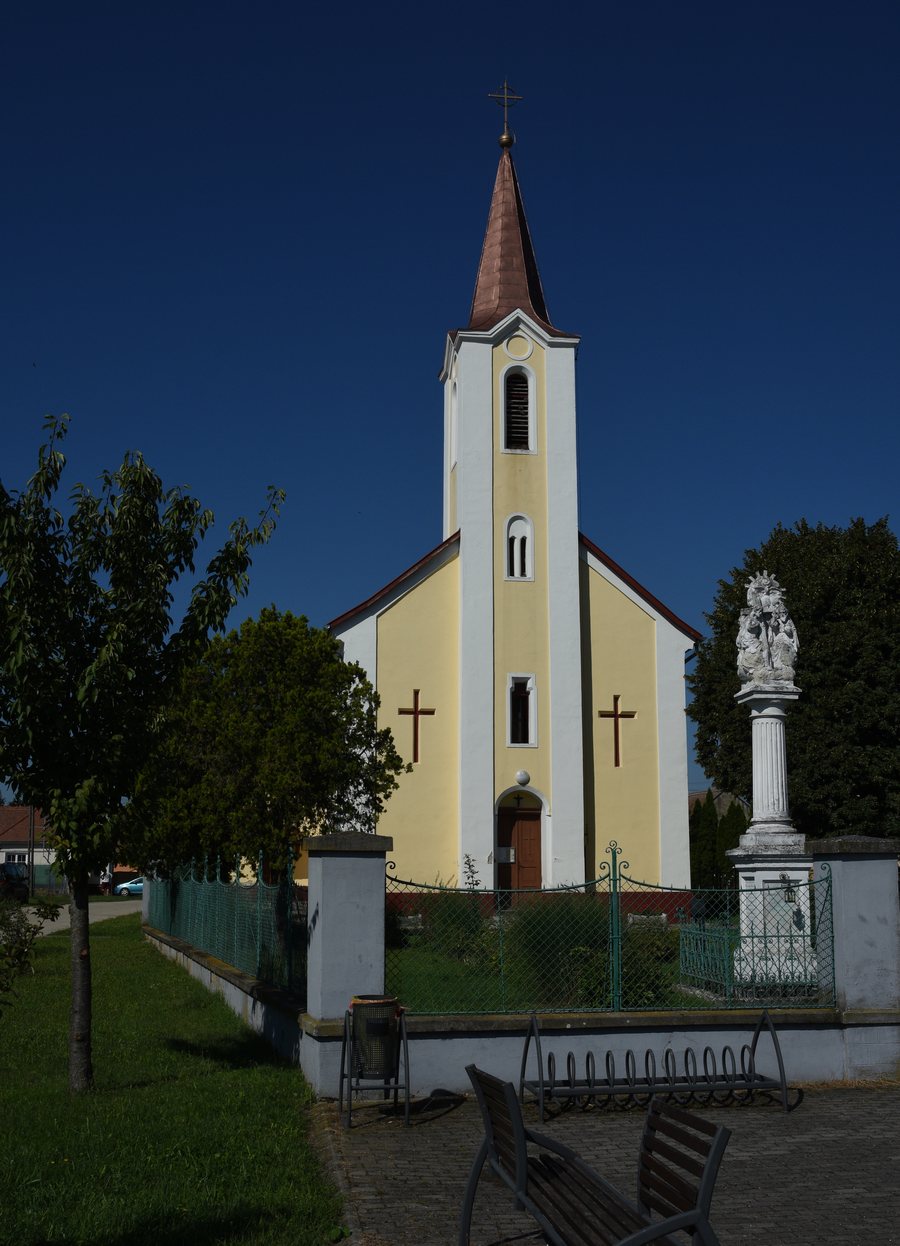
Sótony brings together a Trinity Church consecrated in 1874, a war memorial erected later, and vineyard traditions. If you are looking for a destination with a local cultural focus, these places and stories give you a concrete impression. The wider destination of Vas County also offers its own nature, cycling and museum attractions.
Sótony at a glance
- The Roman Catholic Trinity Church was consecrated in 1874.
- In front of the church stands a 1906 statue of the Holy Trinity on a Doric column.
- The First and Second World War memorial in the central square was erected in 1991, replacing the memorial dedicated in 1926.
- A 2024 report describes Gyepűjárás as an annual tradition with 25 to 40 cellars open to visitors.
Which historic sites shape Sótony?
The Trinity Church and the statue in front of it form a shared local landmark, but they date from different periods: the church was consecrated in 1874, followed by the statue of the Holy Trinity on its Doric column in 1906. Seeing the church and monument together helps you distinguish two specific dates in the town’s history without assuming that both works are the same age.
The war memorial in the central square also represents a distinct timeline. Erected in 1991, the memorial to the First and Second World Wars replaced its predecessor, which was dedicated in 1926. Both its location and the replacement of the earlier memorial are useful points of reference when finding your way around.
What do the vineyard traditions tell us?
Gyepűjárás offers a glimpse into a community tradition in Sótony: a 2024 report describes it as an annual event and mentions 25 to 40 cellars that open for the occasion. A church service is usually part of it. The number gives you a sense of the tradition’s scale, while the service adds a religious element to its social side. If you would like to plan your trip around an event, check the latest dates in advance.
Another event with a clearly specified date is Gyepűtiprás in 2007. Participants visited cellars in Sótony’s seven vineyards, with views described as reaching as far as the Kőszegi-hegység. At the opening ceremony by the decorated wooden gate on Kómár-hegy, women and zither players sang, and a carved commemorative post was unveiled. These details convey the role played by music, remembrance and views across the vineyards at this documented event. They are a historical snapshot, not an indication of a current events programme.
What does the wider destination of Vas County have to offer?
The wider destination of Vas County lets you place Sótony’s cultural history in a broader regional context. The Írottkő Nature Park lies in the northwestern part of Vas County and includes the 4,303-hectare Kőszeg Landscape Protection Area. This means that, alongside churches and monuments, protected landscapes are a distinct topic in the regional context.
For cycling and bathing, the Termál Kerékpáros Túraút in Vas County leads to five thermal bath complexes. The cycling tour combines riding with visits to architectural and natural attractions, as well as other thermal baths. This regional route description complements Sótony’s local cultural profile with a different kind of travel interest; however, it does not indicate a route through the town.
Museums also broaden the cultural options in Vas County. Since opening in 1973, the Vasi Skanzen has rescued and rebuilt 43 buildings from 27 settlements. It presents the rural way of life and folk architecture of Vas County from the past two centuries. The Nádasdy Ferenc Museum has an exhibition on the history of the Hussars, described as unique in Hungary; the museum also displays art and cultural history objects from the castles and manor houses of Vas County. This gives you a way to distinguish Sótony’s local history from the broader museum and landscape topics available in the wider destination of Vas County.
Discover more destinations: Sitke, Meggyeskovácsi, Szeleste, Répcelak, Bögöt, Bögöte, Zsédeny, Sárvár.
FAQ
Which sights shape Sótony?
The local sights mentioned include the Trinity Church, consecrated in 1874; the 1906 statue of the Holy Trinity in front of the church; and the war memorial erected in 1991 in the central square.
What is known about Gyepűjárás?
A 2024 report describes the tradition as an annual event and mentions 25 to 40 cellars open to visitors. A church service is usually part of it; check the dates of specific events before your trip.
What happened at Gyepűtiprás in 2007?
Participants visited cellars in seven of Sótony’s vineyards, with views described as reaching as far as the Kőszegi-hegység. At the opening ceremony, women and zither players sang, and a carved commemorative post was unveiled.
Which cultural destinations are mentioned in the wider destination of Vas County?
The Vasi Skanzen focuses on the rural way of life and folk architecture of Vas County. The Nádasdy Ferenc Museum displays, among other things, an exhibition on the history of the Hussars, as well as art and cultural history objects from the region’s castles and manor houses.
Go to the wider travel overview: Sárvár.

