
Felsőszölnök: Discover hiking and culture
Accommodation in Felsőszölnök
Felsőszölnök combines a clearly described hiking route with history that can be seen at the border stone and in local culture. If you are looking for accommodation, you can first decide whether hiking, church history or the workshops on offer will be the deciding factor for your stay.
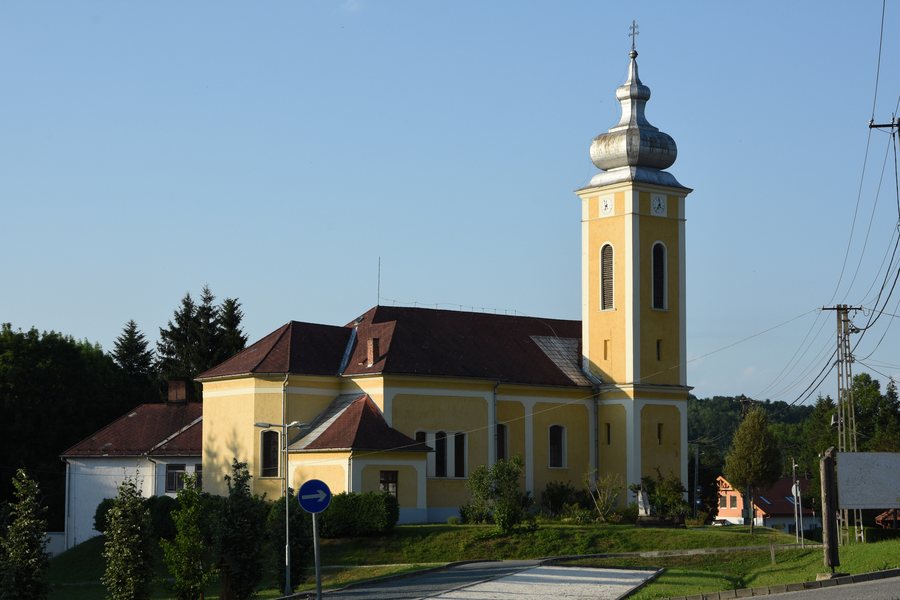
Felsőszölnök at a glance
- The “Hármashatár” study trail starts in the village center, passes through the Hampó Valley and ends at the Tri-Border Stone.
- A marked hiking trail leads to the Hármas-határ kő. The stone was erected in 1922, following the Treaty of Trianon, where the Hungarian, Austrian and Slovenian borders meet.
- The old rectory houses a permanent exhibition about the pastors of the Slovenian villages in the area around Szentgotthárd.
- The landscape of Felsőszölnök is part of Őrségi Nemzeti Park.
Which hiking destinations shape a stay here?
The “Hármashatár” study trail has three named points: its start in the village center, its route through the Hampó Valley and its end at the Tri-Border Stone. A marked hiking trail leads to the Hármas-határ kő. The border stone was erected in 1922, following the Treaty of Trianon, where the Hungarian, Austrian and Slovenian borders meet.
The route and the border monument offer two perspectives on hiking: the route description identifies the course and destination, while the stone recalls the historic border point. When choosing accommodation, you can consider whether you mainly want to explore the trails or also focus on the history of the three-country border area.
What do the rectory and chapel tell us?
The old rectory in Felsőszölnök houses the permanent exhibition “A szlovén plébániák történetéből.” It is dedicated to the pastors of the Slovenian villages in the area around Szentgotthárd. Its focus is therefore on the clergy and communities of these villages. If you plan to visit the exhibition, check the visiting arrangements in advance.
A chapel dedicated to Saint John the Baptist is documented in Felsőszölnök from 1377. This date marks the time of the earliest record, not explicitly the year it was built. The exhibition and chapel therefore offer different ways to explore local history: one focuses on the pastors of the Slovenian villages in the surrounding area, the other on a place of worship dedicated to Saint John the Baptist. For a culture-focused trip, these themes complement the history of the border without limiting your stay to a single historical focus.
What activities are available to visitors?
Szlovén-vidék Közhasznú Nonprofit Kft. offers visitors forest-school programs, handicraft workshops and gastronomy workshops. The three formats cover different topics: forest education, crafts and gastronomy. When planning, you can look for the focus that interests you most rather than treating the offers as one unified program.
The workshops and forest-school programs mentioned are offered by the organization; this does not mean that you can necessarily join spontaneously. If you want to plan one of them specifically, ask Szlovén-vidék Közhasznú Nonprofit Kft. in advance about current dates and participation requirements. This is especially helpful if a workshop is to be a fixed part of your day’s plans.
How does the landscape fit into the picture?
The landscape of Felsőszölnök is part of Őrségi Nemzeti Park. Two aspects can therefore inform your choice: a named hiking trail with a start, route and destination, and the landscape’s connection to the national park. When choosing your stay, you can take both a specific hiking route and the village’s place within the landscape into account.
Discover more destinations: Rátót, Alsószölnök, Kétvölgy, Vasszentmihály, Szentgotthárd, Apátistvánfalva.
FAQ
Where does the “Hármashatár” study trail start?
It starts in the center of Felsőszölnök, passes through the Hampó Valley and ends at the Tri-Border Stone.
What does the Hármas-határ kő commemorate?
The stone was erected in 1922, following the Treaty of Trianon, where the Hungarian, Austrian and Slovenian borders meet.
What does the exhibition in the old rectory show?
The permanent exhibition “A szlovén plébániák történetéből” is dedicated to the pastors of the Slovenian villages in the area around Szentgotthárd.
What programs are offered to visitors?
Szlovén-vidék Közhasznú Nonprofit Kft. offers forest-school programs, as well as handicraft and gastronomy workshops. Ask in advance about dates and participation requirements.
For the broader travel overview: Szentgotthárdi.

