
Discover Nagykanizsa: Nature and History
Accommodation in Nagykanizsa
Nagykanizsa combines an artificial lake and nature attractions with a history that can be read in its buildings and a monument. Which of these aspects interests you most may shape how you choose your destination and accommodation.
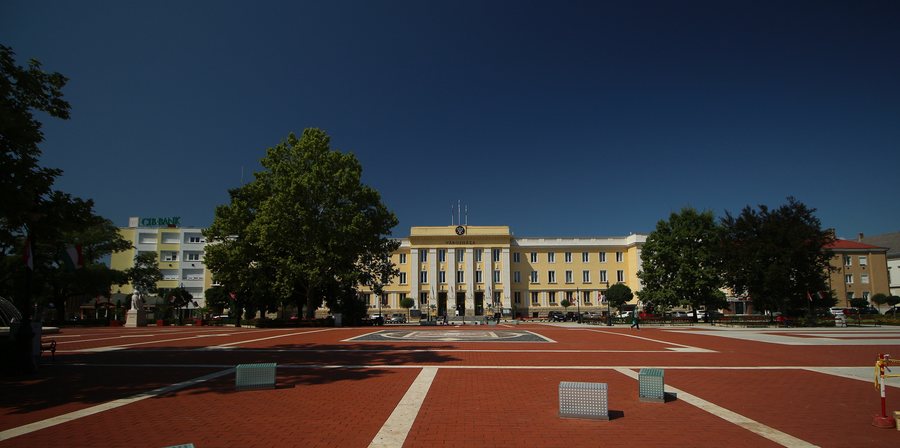
Nagykanizsa at a glance
Csónakázó-tó was created by damming the Bakónak stream and has a water surface area of 41.16 hectares. On its eastern shore stands a 48-metre-high lookout tower, converted from a disused drilling rig. The 1,400-metre-long Madárerdő nature trail runs through the forest; its information boards introduce typical bird species in the area and their distinctive behaviours. For mountain biking, there is a 4,200-metre-long XCO course with 160 metres of elevation gain. At four hectares, Sétakert is the city’s largest park by area.
What makes the lake and lookout tower distinctive?
Csónakázó-tó is not a naturally formed lake; it was created by damming the Bakónak stream. Its water surface area is 41.16 hectares. This makes it a clearly defined landscape feature for anyone interested in Nagykanizsa’s waters and scenery. An unusual structure adds to the scene on the eastern shore: the lookout tower is 48 metres high and was created by converting a disused drilling rig. Its height and the structure’s former use make it a distinctive feature among the places described here.
Which nature and activity options are in focus?
The Madárerdő nature trail has a different focus from the lake and lookout tower: it runs for 1,400 metres through the forest and explores the world of birds. Information boards introduce species typical of the area and explain their distinctive behaviours. The trail is therefore especially suited to those interested in learning about nature and birdwatching. The XCO mountain-bike course, in turn, offers a different kind of activity. It is 4,200 metres long and has 160 metres of elevation gain. These two figures give a concrete indication of the course length and elevation gain, without specifying a particular duration or level of difficulty.
How do the park and XCO course differ?
When planning your stay, it is worth distinguishing between the different ways to get active and enjoy urban green space. The XCO course is designated for mountain biking and is characterised by its length and 160 metres of elevation gain. Sétakert, by contrast, is a park within the city: at four hectares, it is Nagykanizsa’s largest park by area. The facts described here thus present two clearly different options—a designated mountain-bike course and a green space distinguished mainly by its size within the city. Which aspect matters to you depends on whether you would rather include a sporting route or a city park in your travel plans.
What historical traces are associated with Nagykanizsa?
Alsóvárosi templom, also known as Szent József Plébániatemplom, was built for the Franciscans between 1702 and 1714. Bricks and stones from the demolished castle were used in its construction. The church’s history therefore connects two buildings from different periods: the materials came from the former castle, while the church itself was built between 1702 and 1714. The Várkapu monument commemorates the historical era of the former castle. The bust in front depicts Thury György, the castle’s best-known captain. The church and monument thus offer different points of interest for culture enthusiasts: the building’s history and reuse of materials in one case, and the memory of the former castle and a person associated with it in the other.
Which other places can you compare?
If you would like to include pages about other places in your travel plans alongside Nagykanizsa, you can also find information about Sormás, Újudvar, Magyarszerdahely, Nagyrécse, Nagybakónak and Pölöskefő.
FAQ
Was Csónakázó-tó formed naturally?
No. The lake was created by damming the Bakónak stream and has a water surface area of 41.16 hectares.
How long is the Madárerdő nature trail?
The nature trail is 1,400 metres long. Information boards introduce typical bird species in the area and their distinctive behaviours.
What are the dimensions of the XCO mountain-bike course?
The course is 4,200 metres long and has 160 metres of elevation gain.
What does the Várkapu monument depict?
The monument commemorates the historical era of the former castle. The bust in front depicts Thury György, the castle’s best-known captain.
For the broader travel overview: Nagykanizsa.

