
Discover Bagod
Accommodation in Bagod
Bagod combines a cycling route through the Zala Valley with a local history spanning everything from Stone Age finds to distinctive buildings. These different themes offer points of reference for comparing Bagod and the wider Zala destination according to your interests.
Bagod at a glance
- A cycling route almost 17 kilometres long runs through Bagod in the Zala Valley.
- During a search for a grave, the remains of 43 houses from a Stone Age village at least 6,000 years old were discovered.
- Notable buildings include the Szent Pál Church and a protected brick water tower.
What travel interests make Bagod appealing?
The cycling route runs from Zalaegerszeg through Bagod to Zalalövő and is almost 17 kilometres long. Its course through the Zala Valley makes Bagod a named section of the route. If you are planning a cycling trip, you can therefore consider the town in connection with this route. Check the current condition of the cycling route before setting out.
Bagod also offers several different ways to explore local history: archaeological finds, religious and industrial buildings, and family history. This allows you to weigh up whether to focus your trip on a cycling route or historical themes, without combining them into a single excursion offer.
What stories do the finds and buildings tell?
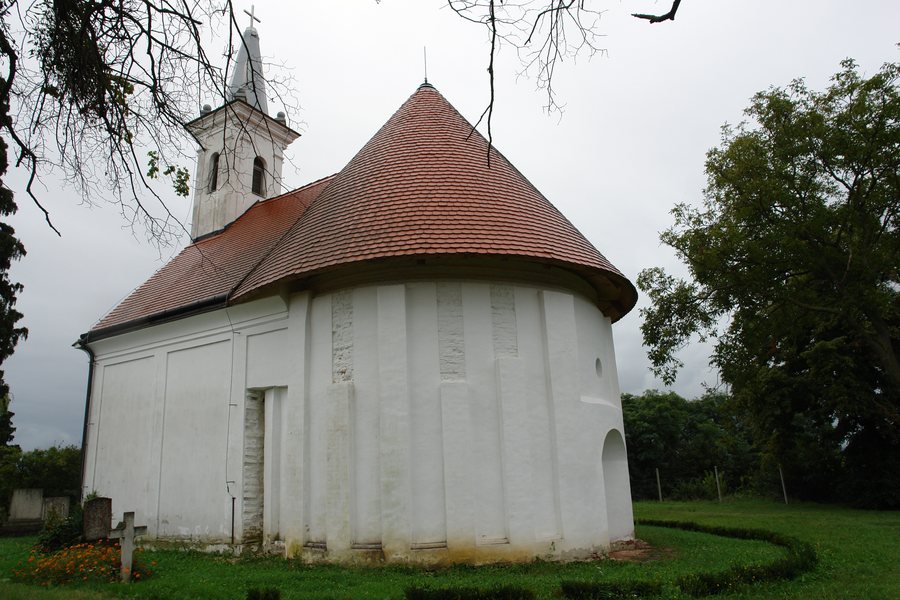
During a search for a grave in Bagod, the remains of 43 houses from a Stone Age village at least 6,000 years old were discovered. The number of houses and their age give the find a concrete historical dimension. The Szent Pál Church takes you into a different era: it was built in the 13th century as a rare round church. During restoration in the early 2000s, its original medieval walls came to light.
The protected brick water tower is also a prominent feature of the local landscape. Built in 1954, it supplied water for decades to the neighbouring business and its 300 employees. The Csertán estate retains its original form and garden and is now used as a residence. Together, these examples represent different aspects of Bagod’s architectural and local history.
Other historical connections concern the Boldogfai Farkas family. Nine family members rest in their crypt in Bagod, including Imre Farkas, organiser of the 1848 National Guard and friend of Ferenc Deák, as well as his grandson Tibor. Csertán Sándor is also connected with the town’s history: his remains were transferred from the family tomb in Nemesapáti to a mausoleum near the Csertán estate in Bagod.
What other themes does the wider Zala destination offer?
Beyond Bagod, the wider Zala destination offers a regional perspective on landscape and culture. The Zalai Borvidék wine region developed on the slopes and plateaus of the Zalai-dombság hills and on the north-western slopes of the Keszthelyi-hegység. It comprises two wine-growing districts and 38 settlements. This regional wine landscape is a distinct focus and should not be confused with Bagod’s local attractions.
Another example within the wider Zala destination is the Kotsy-vízimalom in Zalaszántó, where a 390-centimetre overshot waterwheel mechanism can be seen in operation. Kis-Balaton is Zala’s largest body of water, strictly protected and covering 14,745 hectares. It is also the setting for István Fekete’s classic novels Tüskevár and Téli berek. The wine landscape, watermill and protected area each offer a different focus from Bagod’s cycling route and local history.
How do you choose Bagod as a place to stay?
If you are looking for accommodation in Bagod, first base your choice of location on the interests that matter to your trip: the cycling route runs through the town, while its buildings, finds and family history offer a cultural and historical perspective. If you would also like to include other landscape and cultural themes, you can compare Bagod with other destinations in the wider Zala area.
Discover more destinations
Discover more destinations: Pusztaszentlászló, Hottó, Vasboldogasszony, Lickóvadamos, Nagykutas, Egervár, Vaspör and Lakhegy.
FAQ
What is the route of the cycling path through Bagod?
The cycling route, almost 17 kilometres long, runs through the Zala Valley from Zalaegerszeg via Bagod to Zalalövő. Check the current condition of the route before your ride.
What was discovered during the search for a grave?
The remains of 43 houses from a Stone Age village at least 6,000 years old were found in Bagod.
What is special about the Szent Pál Church?
The church was built in the 13th century as a rare round church. Its original medieval walls came to light during restoration in the early 2000s.
To the wider travel overview: Zalaegerszegi.

