
Discover Zalabér: Church, Earthwork Castle and Walking Trail
Accommodation in Zalabér
The 12 km-long Szőlőhegyi tanösvény, an earthwork castle and two historic churches provide practical points of reference for planning your trip. Here you’ll find facts about the trail, views and architectural history in Zalabér.
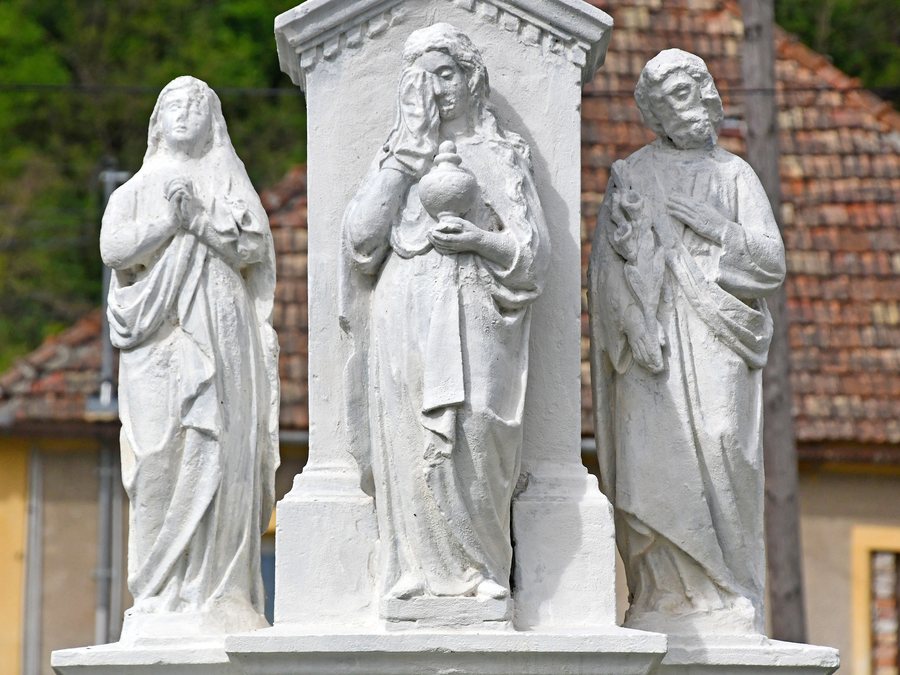 File:Zalabér, Golgota-szoborcsoport 2024 02.jpg
Photo: Pasztilla aka Attila Terbócs via Wikimedia Commons, CC BY-SA 4.0
File:Zalabér, Golgota-szoborcsoport 2024 02.jpg
Photo: Pasztilla aka Attila Terbócs via Wikimedia Commons, CC BY-SA 4.0
Zalabér at a glance
- The Szőlőhegyi tanösvény is 12 km long and can be completed on foot or by mountain bike.
- The earthwork castle at the Nemesi temető is the trail’s second stop, and the trail begins in Zalabér.
- The Szentháromság Church was rebuilt in 1796 and most recently renovated in 2003; the Szent Antal Chapel dates from 1799.
What does the Szőlőhegyi tanösvény offer?
The trail has eight stops and information points. Stops listed in Zalabér include the Zalabéri Generációs Park, the Zalabéri Nemesi Temető, the Magasles on Zalabér-Szőlőhegy and the Szent Antal Chapel on Zalabér-Szőlőhegy. Pakod and Dötk are also part of the route. The places named in Zalabér are therefore alongside stops in other settlements; plan your route with its full 12 km length in mind.
The trail can be completed on foot or by mountain bike. If you’re interested in architectural history, the earthwork castle at the Nemesi temető is a specific stop along the way: it is the second stop, and the trail begins in Zalabér. The chapel on Szőlőhegy is also listed as a stop.
What views does the castle site offer?
The well-maintained grounds of the castle site at the Nemesi temető offer views of the Zala Valley and Zalabér. The earthwork castle is at the second stop of the Szőlőhegyi tanösvény. This means you can take both the route and the viewpoint into account when planning, without conflating the castle site with the trail’s full course.
What architectural history do the churches reveal?
The Szentháromság Church in Zalabér was rebuilt in 1796 with support from the Horváth family of Zalabér. It was renovated in 1837 and 1972; the most recent renovation mentioned took place in 2003.
Another historic stop is the Szent Antal Chapel. It was built on Szőlőhegy in Zalabér in 1799 and is also one of the stops on the Szőlőhegyi tanösvény listed in Zalabér. When planning, you can connect the chapel’s history with the other local waypoints.
What other themes does the wider destination of Zala offer?
Within the wider destination of Zala, the Zalai Borvidék offers a distinctive landscape: it developed on the slopes and plateaus of the Zalai-dombság and on the northwestern slopes of the Keszthelyi-hegység. The wine region comprises two wine-growing districts and 38 settlements.
Another regional landmark is Kis-Balaton, Zala’s largest body of water. This strictly protected area covers 14,745 hectares and is the setting for István Fekete’s classic novels Tüskevár and Téli berek. If you’re comparing themes for your trip, Zala offers wine country and protected nature as distinct points of interest alongside Zalabér’s trail and historic buildings.
Discover more destinations: Kehidakustány, Zalacsány, Sénye, Nagygörbő, Kallósd, Zalaszentlászló, Zalaszentgrót, Vindornyaszolos.
FAQ
How long is the Szőlőhegyi tanösvény?
The trail is 12 km long and has eight stops and information points. Its route also includes stops in Pakod and Dötk.
Can I complete the trail by mountain bike?
Yes. The Szőlőhegyi tanösvény can be completed on foot or by mountain bike.
What is the trail’s second stop?
The earthwork castle at the Nemesi temető is the second stop. The well-maintained grounds of the castle site offer views of the Zala Valley and Zalabér.
To the wider travel overview: Zalaszentgróti.

