
Ģipka: Routes, Church and Beach
Accommodation in Ģipka
Ģipka can be explored through specific travel interests: the Jūrtaka section connects the village with Kolka, while a cycling route passes through Ģipka and other places before returning to Roja. There is also a Lutheran church with a museum exhibition and a white-sand beach. Hiking, cycling, cultural heritage and the beach thus offer different starting points for planning your trip.
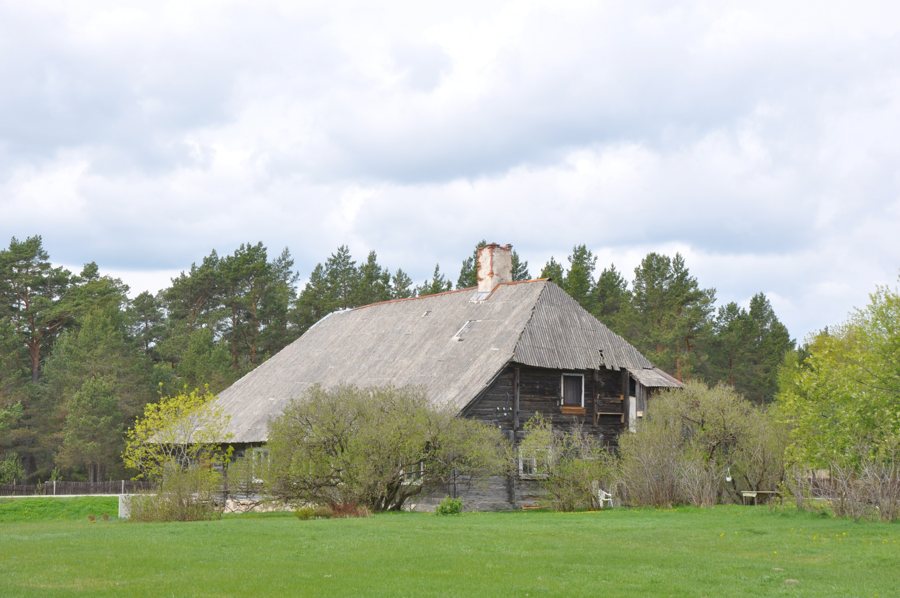 File:Māja pie Ģipkas baznīcas, Ģipka, Rojas pagasts, Rojas novads, Latvia - panoramio.jpg
Photo: M.Strīķis via Source, CC-BY-SA-3.0
Ģipka at a glance
- The 16th section of the Jūrtaka connects Kolka and Ģipka; it is 24 km long.
- A cycling route runs from Roja through Žocene, Ģipka and Pūrciems and back to Roja.
- The Lutheran church is an outstanding example of sacred architecture in Northern Kurzeme. The exhibition “Ģipkas baznīcas stāsts” is located there.
- Ģipkas pludmale 7 is a white-sand beach with an equipped car park.
- The former Ģipka maritime school building is now a residential building.
Which routes suit your travel plans?
The 16th section of the Jūrtaka connects Kolka and Ģipka and is 24 km long. This length gives you a concrete measure of the hiking section and helps you consider it as a distinct part of your travel plans. Its route can also be understood through the two places: Kolka and Ģipka are the endpoints of this section.
The cycling route has a different layout. It runs from Roja through Žocene, Ģipka and Pūrciems and back to Roja. Here, the focus is on a sequence of several places with a return to Roja, whereas the Jūrtaka section is a 24 km connection between Kolka and Ģipka. This gives you two clear route ideas to compare: a hiking section between two places and a cycling route that passes through several places before returning to its starting point.
What makes the church culturally interesting?
The Lutheran church in Ģipka is an outstanding example of sacred architecture in Northern Kurzeme. The museum exhibition “Ģipkas baznīcas stāsts” is also located at the church. These offer two distinct aspects for understanding its cultural significance: the architecture of the church building and the exhibition itself. If culture plays a role in choosing your destination, you can consider both as specific points of interest rather than viewing the church merely as a landmark.
What do the beach and historic buildings tell you?
Ģipkas pludmale 7 is a white-sand beach with an equipped car park. This identifies both a feature of the beach and a practical point of reference for arriving by car. The beach adds a distinct seaside focus to the routes and cultural attractions, without being confused with the hiking section or cycling route.
The former Ģipka maritime school building also contributes to the area’s historical context. It was once a maritime school; today, it is a residential building. The church and the former school building therefore have different significance: sacred architecture and a museum exhibition are central to the church, while the former school is notable for the change from its past use to its present residential function.
Discover more destinations: Roja, Kaltene.
FAQ
How long is the 16th section of the Jūrtaka?
The section between Kolka and Ģipka is 24 km long.
Which exhibition is located at the Lutheran church?
The museum exhibition “Ģipkas baznīcas stāsts” is located at the church.
Which places does the cycling route include?
It runs from Roja through Žocene, Ģipka and Pūrciems and back to Roja.
What is distinctive about Ģipkas pludmale 7?
The beach has white sand and an equipped car park for cars.
Go to the main travel overview: Roja.

