
Discover Pakruojis on the Kruoja
Accommodation in Pakruojis
Pakruojis lies on both banks of the Kruoja; the old and new towns are connected by several footbridges and bridges. A 14-hectare city park, an exceptional wooden synagogue, and other cultural history give the town clear themes for a stay.
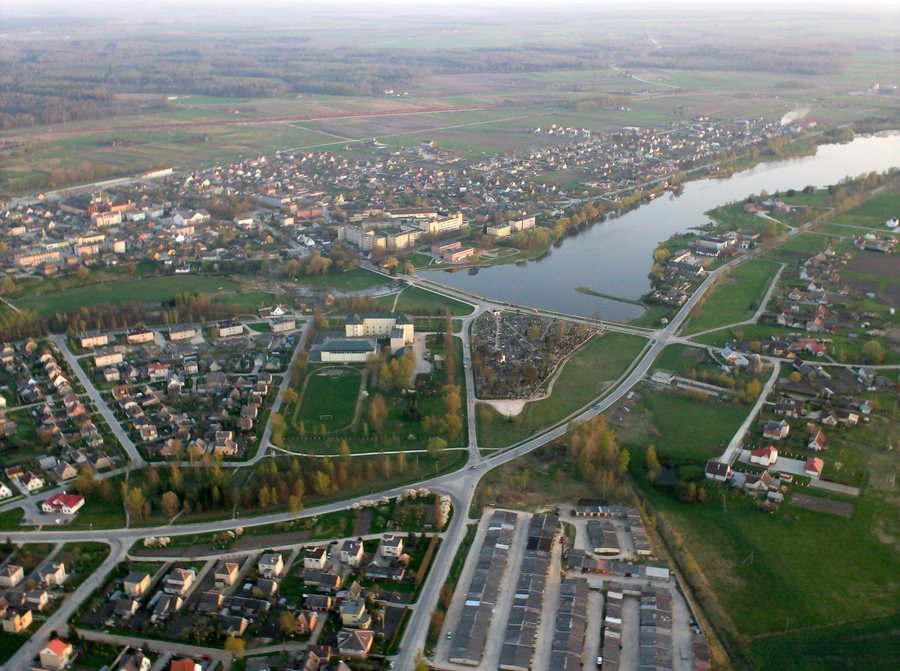
Pakruojis at a glance
- Three suspended pedestrian footbridges and two bridges connect the old and new towns across the Kruoja.
- The city park covers 14 hectares and was established in the Kruoja Valley in 1974.
- The synagogue is the oldest surviving wooden Jewish synagogue in Lithuania.
- The present-day brick Church of St. John the Baptist was built in 1887.
How does the Kruoja help you find your way around?
The town’s location on both banks is a practical reference point when exploring Pakruojis. Three suspended pedestrian footbridges and two bridges cross the Kruoja, connecting the old and new towns. That makes five crossings in total: three footbridges for pedestrians and two bridges. You can take the town’s layout on both banks into account when planning your own visit. If you plan to use a crossing, check its current condition in advance.
What makes the city park historically interesting?
The city park was established in the Kruoja Valley in 1974 and serves as a venue for events and recreation. Its design can be explored through several distinct features. Wooden sculptures were installed there in 1987, following a nationwide symposium for woodcarvers. On July 18, 2024, the municipality reported that the sculptures had been renovated shortly beforehand; they welcome park visitors.
A sakura garden was established in 2016 at the initiative of the Pakruojis Rotary Club. The sculptures came out of a nationwide symposium, while the garden was an initiative of the club: these two features of the park have different origins. Together with the park’s size and location in the Kruoja Valley, these details give a more specific picture than the park’s area alone.
What cultural history shapes Pakruojis?
The Pakruojis Synagogue is the oldest surviving wooden Jewish synagogue in Lithuania. Its cultural space hosts exhibitions, concerts, gatherings, and discussions. If you are planning around a particular concert or gathering, check the date in advance.
The town’s architectural history also spans different dates and building types: the present-day brick Church of St. John the Baptist was built in 1887. A fire station was built in 1928 with support from the Jewish community. Pakruojis is also home to the Atžalynas Gymnasium Museum. These details help show that the town’s cultural sites are not limited to a single period or architectural style.
How do you choose a hotel in Pakruojis?
You can then compare the location of a hotel you are considering with your own plans. The town features described here offer practical reference points without assuming that any particular accommodation location is best.
Discover more destinations: Meškuičiai, Kuršėnai, Jurgaičiai, Joniškis, Margiai, Šiauliai, Bubiai, Kelmė.
FAQ
What cultural activities take place in the synagogue?
The cultural space hosts exhibitions, concerts, gatherings, and discussions. If you have a particular date in mind, it is advisable to check in advance.
How large is Pakruojis City Park?
The city park covers 14 hectares. It was established in the Kruoja Valley in 1974 and serves as a venue for events and recreation.
When was the Church of St. John the Baptist built?
The present-day brick church in Pakruojis was built in 1887.
For the broader travel overview: Šiauliai County.

