
Alanta: Synagogue, Church and Hiking Route
Accommodation in Alanta
Alanta combines distinctive religious buildings with a challenging hiking route. Information about the architecture, history, and character of the route can help you choose the focus of your trip. Note that the synagogue is not currently open to visitors on a regular basis.
Key facts about Alanta
- The synagogue is a state-protected Jewish religious monument dating from the mid-19th century and is considered a Romantic-style building.
- The Church of St. James the Apostle was built between 1904 and 1912 in the Neo-Romantic style.
- The “Alanta” hiking route starts at the Alanta District Municipality and is considered fairly long and challenging.
What buildings can you discover in Alanta?
The Church of St. James the Apostle offers specific architectural features that can guide a visit for travelers interested in culture. It was built to a design by the Liepāja architect K. E. Strandmann. Two towers, a hall-style layout, and three naves define the building; its floor plan is in the shape of a Latin cross. This means the church can be described not only by its construction period but also by its spatial layout. Those interested in religious architecture will find several aspects here to focus on.
What should you know about the synagogue?
The Alanta Synagogue dates from the mid-19th century and is a Jewish religious monument of local significance. Its status as a state-protected monument and its Romantic style provide a historical and architectural context. It is also one of 17 surviving wooden synagogues in Lithuania. This broader national context adds a comparison with a larger group of surviving buildings to the view of this individual structure.
For your planning, its current visitor status is important: the synagogue is not currently open to visitors on a regular basis. Check before your trip whether a visit is possible. This helps distinguish its architectural significance from the practical possibility of visiting.
How challenging is the hiking route?
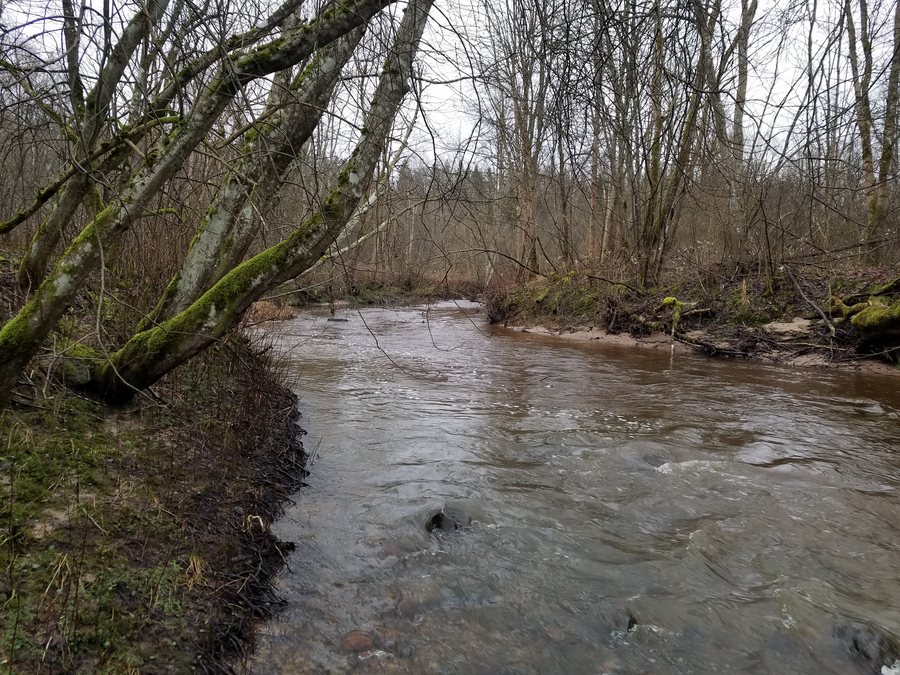
The route known as “Alanta” starts at the Alanta District Municipality. It is described as fairly long and challenging and requires good preparation. Its character is also shaped by the changing terrain: the route follows roads and field edges in the Alanta area, as well as sections of denser woodland that are more difficult to walk. Consider these features when deciding whether the route suits your hiking plans. A single description does not apply uniformly to every section: roads and field edges on the one hand, and more difficult forest stretches on the other, present different challenges along the way.
Which trip priorities are right for you?
If you are mainly looking for culture and architectural history, the church and synagogue offer different points of interest: the church stands out for its construction period and floor plan, while the synagogue also merits attention for its protected status and its place among Lithuania’s surviving wooden synagogues. The hiking route offers a different focus. Its length, challenging character, and the described woodland sections make careful preparation particularly important. This way, you can decide in advance whether you would rather explore religious architecture or set aside time for a challenging hike.
If you would like to compare other destinations: Antalgė, Anykščiai, Videniškiai, Leliūnai, Utena, Serapiniškė, Sudeikiai and Rimšė.
FAQ
Is the synagogue in Alanta regularly open to visitors?
No. It is not currently open to visitors on a regular basis. Check before your trip whether a visit is possible.
What architectural features does the Church of St. James the Apostle have?
It has two towers, a hall-style layout, three naves, and a floor plan in the shape of a Latin cross.
What should you plan for the “Alanta” hiking route?
The route is considered fairly long and challenging and requires good preparation. It follows roads and field edges as well as more difficult, densely wooded sections.
For the broader travel overview: Utena County.

