
Rimšė by Lake Ilgiai: Church and Paintings
Accommodation in Rimšė
Rimšė lies on the southern shore of Lake Ilgiai. The wooden Rimšės Švč. Trejybės bažnyčia and two paintings inside it give the place a specific cultural connection: both works are cultural monuments. A chapel built by Feliksas Pacas in Rimšė in 1669 is another historical point of reference. The place can thus be understood through its lakeside setting, a later phase of church construction, and named works of art. If you are comparing destinations with geographical and cultural connections, Rimšė offers several clearly distinct starting points for doing so.
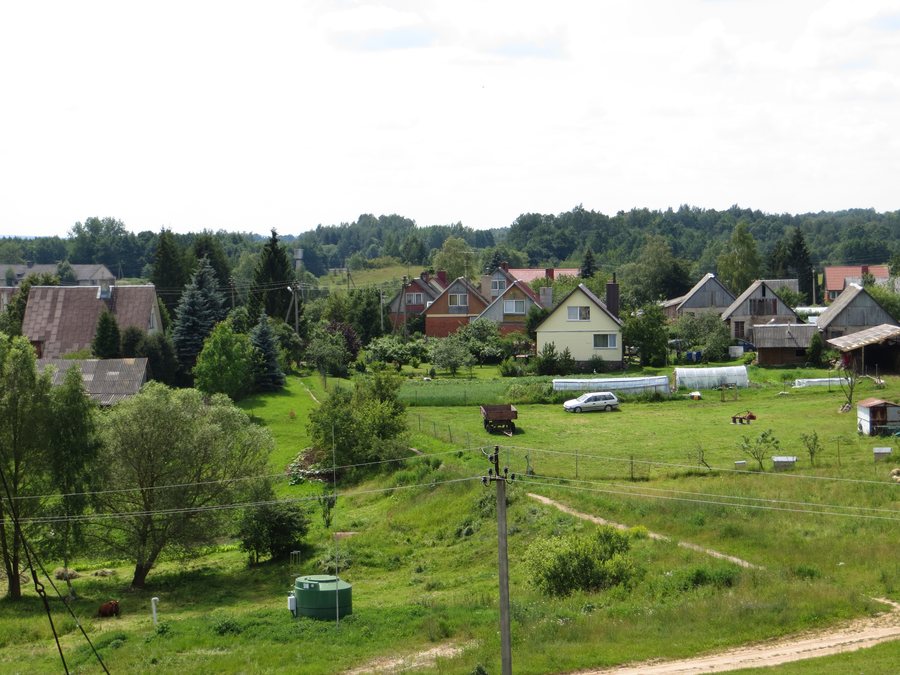
Rimšė at a glance
- Rimšė lies on the southern shore of Lake Ilgiai.
- Feliksas Pacas built a chapel in Rimšė in 1669.
- The present-day wooden Rimšės Švč. Trejybės bažnyčia was built in 1900–1908; part of the older church was used in its construction.
- “Marija su Kūdikiu” and “Šv. Jurgis” in the church are cultural monuments.
- In the lower part of “Marija su Kūdikiu” is a painted panel displaying the coats of arms of the Pacai family.
How can the construction periods be distinguished?
In 1669, Feliksas Pacas built a chapel in Rimšė. The present-day wooden Rimšės Švč. Trejybės bažnyčia was built in 1900–1908; part of the older church was used in its construction. For a sense of the chronology, these are two distinct reference points: the construction of the chapel in the 17th century and the building of the present-day wooden structure in the early 20th century. The partial reuse of the older church building is part of its construction history, as is its date. The church therefore cannot be reduced to a single construction year: its material, period, and incorporation of part of an older building are all specific features that complement one another.
Which paintings shape its cultural significance?
The paintings “Marija su Kūdikiu” and “Šv. Jurgis” are in the Rimšės Švč. Trejybės bažnyčia. Both are cultural monuments. An additional detail of the first work’s composition is also described: in the lower part of the image, a panel is painted, depicting the coats of arms of the Pacai family. Alongside the titles of the two works, their protected status and a specific visual element are therefore also in focus.
The distinction between the paintings is simple: both are classified as cultural monuments, but the panel with the coats of arms is a detail of “Marija su Kūdikiu.” “Šv. Jurgis” adds a second named painting to the cultural picture. Together with the wooden church’s construction history, these offer different points of interest for travelers interested in architecture or art.
How can you understand Rimšė’s character?
The features of the place serve different purposes in helping you orient yourself. The southern shore of Lake Ilgiai locates Rimšė geographically; the church, its construction history, and the two paintings provide a cultural focus. When comparing destinations, you can therefore weigh whether the lakeside setting or the history and art matter more to you. This distinction helps you match the character of the place to your own travel interests.
Discover more destinations: Salakas, Serapiniškė, Alanta, Molėtai, Sudeikiai, Zarasai, Balninkai, Utena.
FAQ
Where is Rimšė?
Rimšė lies on the southern shore of Lake Ilgiai.
When was the present-day wooden church built?
The present-day Rimšės Švč. Trejybės bažnyčia was built in 1900–1908. Part of the older church was used in its construction.
Which paintings in the church are cultural monuments?
“Marija su Kūdikiu” and “Šv. Jurgis” are classified as cultural monuments. In the lower part of “Marija su Kūdikiu” is a painted panel displaying the coats of arms of the Pacai family.
For the broader travel overview: Utena County.

