
Dubingiai – Culture and Nature on Lake Asveja
Accommodation in Dubingiai
Dubingiai combines the history of a surviving wooden bridge with distinctive church architecture and a nature trail. You can explore the town according to your cultural and nature interests.
Dubingiai at a glance
- The bridge across Lake Asveja is one of the few surviving wooden bridges in Lithuania.
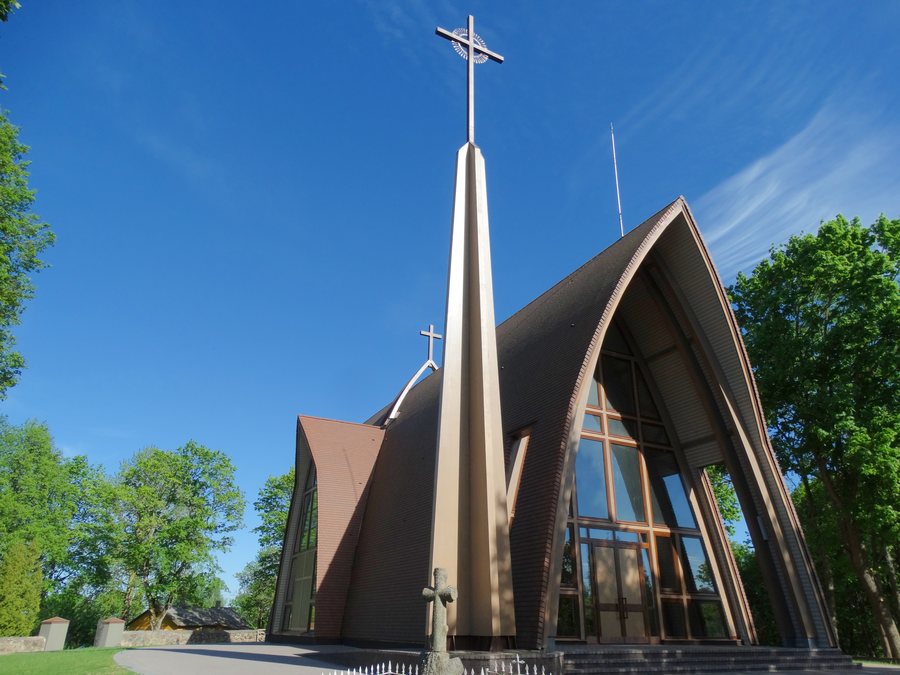
- St George’s Church stands on the site of the old church and has a cruciform floor plan.
- The nature trail at the castle site is about 1.5 kilometres long and has wooden stairs, information boards and benches.
- The Asveja Regional Park Visitor Centre has an exhibition about the park’s natural and cultural values.
What history and information can you find at the Visitor Centre?
The Asveja Regional Park Visitor Centre and Directorate moved into the former Dubingiai tavern in 2008, following its reconstruction. The exhibition “Mysteries of the Longest Lithuanian Lake, Archaeological Heritage” was established in 2013. It presents the park’s natural and cultural values, with its title placing the lake and archaeological heritage at the forefront.
The Visitor Centre also provides information about exhibitions, attractions and campsites. You can also book excursions and hikes there. If you plan one of these tours, confirm availability for your date in advance.
What distinguishes St George’s Church and its ensemble?
St George’s Church was built on the site of the old church and is similar in size to its predecessor. Its cruciform floor plan and combination of laminated timber and glass give the building a clearly defined architectural form. The roof and walls are covered with special panels modelled on traditional roof shingles.
The church also includes a preserved old bell tower at one corner of the churchyard, a stone wall and a restored gate. The ensemble therefore comprises both the new church building and older and restored elements. If you are interested in architectural history, you can consider the choice of materials, floor plan and preserved features as different aspects of the same place.
What nature and water activities can you consider?
The nature trail on the educational trail at the Dubingiai castle site is approximately 1.5 kilometres long. Its features include wooden stairs, information boards and benches. The stated length gives you a clear guide when choosing a route; the facilities describe what to expect along the way. You can therefore consider the trail as a nature experience alongside the town’s cultural attractions.
Stand-up paddleboarding is another option to consider when planning a visit to Asveja Regional Park: Asveja SUP delivers boards to ten locations in the park.
Discover more destinations: Antalgė, Užpaliai, Alanta, Dubingių Seniūnija, Serapiniškė, Sudeikiai, Utena and Girsteitiškis.
FAQ
What is special about the Dubingiai Bridge?
The bridge crosses Lake Asveja and is one of the few surviving wooden bridges in Lithuania.
How long is the nature trail at the castle site?
The nature trail is about 1.5 kilometres long. Its features include wooden stairs, information boards and benches.
What can you learn at the Asveja Regional Park Visitor Centre?
The exhibition presents the park’s natural and cultural values. The centre also provides information about exhibitions, attractions and campsites; excursions and hikes can be booked there.
For the overview of the wider area: Utena County.

