
Piaski: Architectural History and Historic Townscape
Accommodation in Piaski
Piaski offers several points of interest for anyone interested in architectural and local history: a church with a precise construction period, a former Protestant church complex, and a former cemetery that is now a park. These different themes can help you decide before your trip which aspect of history interests you most.
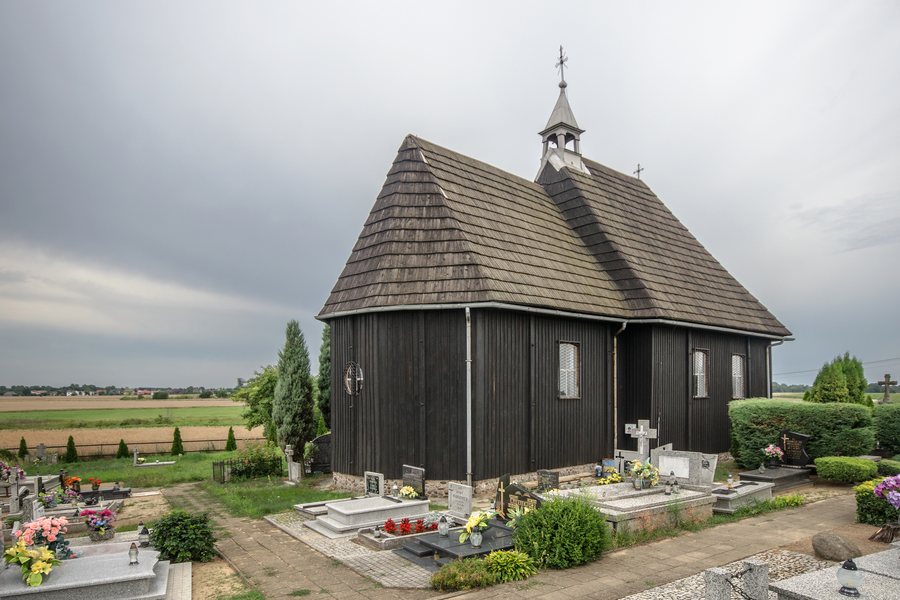 File:SM Piaski Kaplica cmentarna św Małgorzaty (1) ID 614845.jpg
Photo: Sławomir Milejski via Wikimedia Commons, CC BY-SA 3.0 pl
Piaski at a glance
- The Roman Catholic Church of the Immaculate Heart of Mary was built between 1775 and 1782.
- The former Protestant church complex in Piaski is listed in the monuments register.
- The complex includes a wooden bell tower from the first half of the 19th century.
- The former church cemetery is now a park.
- The listed architectural ensemble and urban layout date from the 18th and 19th centuries.
What can Piaski’s architectural history tell us?
The Church of the Immaculate Heart of Mary was built between 1775 and 1782, placing its construction in the late 18th century. The dates indicate a period rather than a single year, providing a concrete reference point for understanding the church’s history.
Piaski’s architectural ensemble and urban layout are also listed as monuments; they date from the 18th and 19th centuries. An architectural ensemble draws attention to buildings in their wider context, while an urban layout refers to a broader aspect of a townscape. In this way, a single church with a precisely dated construction period stands alongside a broader view of Piaski’s built character. This distinction can help you clarify your interests: are you more interested in the history of a particular place of worship or in the historic character of a town?
What makes the former church complex distinctive?
The former Protestant church complex in Piaski is listed in the monuments register. It includes a wooden bell tower from the first half of the 19th century. The listed complex and the dated tower offer two ways to explore architectural history: through the complex as a whole and through a specific structure with a named material and period.
Comparing its dates with those of the Church of the Immaculate Heart of Mary takes you from the church’s construction in the late 18th century to the first half of the 19th century. This makes it possible to explore Piaski’s architectural history through different periods rather than reducing it to a single date. For anyone interested in culture, this is one way to organize the historical information by building, period, and scale.
How does the former cemetery contribute to the townscape?
The former church cemetery is now a park. This place brings together a former religious function and its current use as a park. This change adds another perspective to the story of the church and listed architectural ensemble: the focus here is not on when a building was constructed, but on how a place has changed.
This raises another question for planning your trip: are you most interested in the history of a church building, the layout of a historic complex, or the transformation of a cemetery into a park? These themes are distinct, even though they are all connected to Piaski’s local history.
How can a cultural focus help you find accommodation?
A precisely dated church, a former church complex, and a park on the site of a former cemetery offer different themes to consider when planning your trip. You can first decide whether Piaski’s architectural and local history matches your interests; then choose a hotel based on your own plans and needs.
Discover more destinations: Ostrowo, Leonów, Borek Wielkopolski, Magdalenki, Krobia, Stezyca and Gostyń.
FAQ
When was the Church of the Immaculate Heart of Mary built?
The Roman Catholic church was built between 1775 and 1782.
What does the former Protestant church complex include?
The complex includes a wooden bell tower from the first half of the 19th century.
What is now on the site of the former church cemetery?
The former church cemetery is now a park.
What period do the architectural ensemble and urban layout date from?
Piaski’s listed architectural ensemble and urban layout date from the 18th and 19th centuries.
For the main travel overview: Gostyn.

