
Discover Kalisz
Accommodation in Kalisz
Kalisz combines historic architecture and archaeological reconstructions with walking paths, ponds and opportunities on the Prosna. This makes it possible to choose a hotel in Kalisz to suit your interests – whether in the city’s history, a visit to green spaces or active exploration.
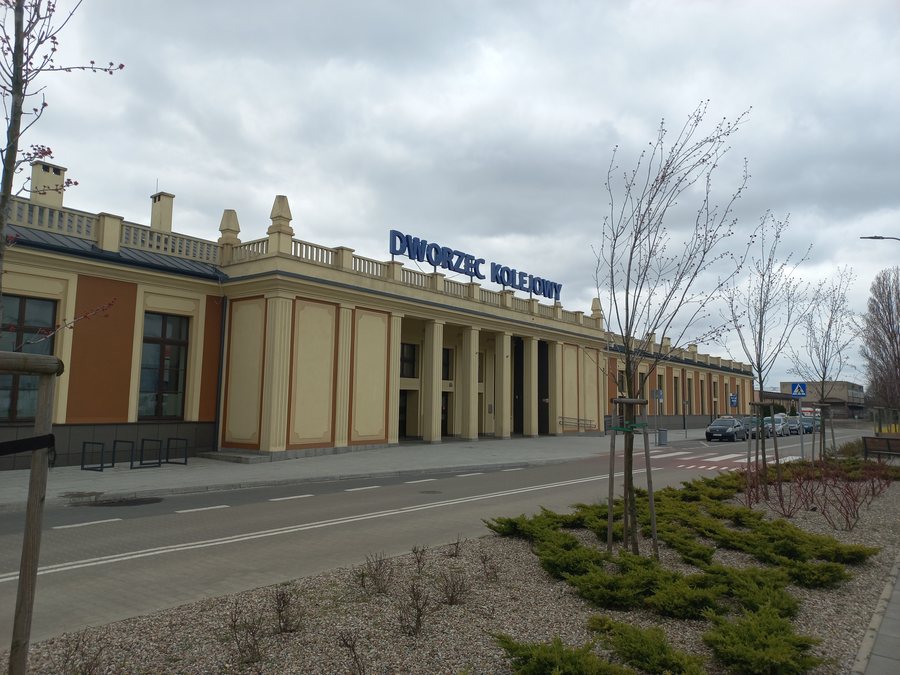
Kalisz at a glance
The Town Hall was built between 1920 and 1925. Its tower is more than 50 metres high and offers views of the Kalisz skyline. At the “Kaliski Gród Piastów” Archaeological Reserve, an entrance gate with a palisade and seven residential buildings have been reconstructed. Przyjaźni Park covers more than 11 hectares and has five ponds. The “Szlak Ciekawej Architektury Kalisza” is an approximately 5.5-kilometre route for walking around the city.
Which sights shape a cultural stay?
At the Town Hall, architecture and a multimedia exhibition come together. It is located in the cellars, in the corridor on the third floor before the entrance to the tower, and on the levels of the Town Hall tower. The exhibition ends on an observation terrace. The tower is more than 50 metres high and offers views of the Kalisz skyline. Those interested in urban history and architecture can explore several different aspects in one building.
The National Shrine of St. Joseph is also part of the city’s historical and religious character: in 1978, Pope Paul VI elevated it to the rank of a minor basilica. The Muzeum Okręgowe Ziemi Kaliskiej was founded to collect and preserve the natural and cultural heritage of Kalisz and the Kalisz region. Together with the Town Hall and the archaeological reserve, these places offer different ways to explore culture and history, without needing to be considered a single walking tour.
What does the Archaeological Reserve showcase?
The “Kaliski Gród Piastów” Archaeological Reserve focuses on reconstructed structures and depictions of everyday life. The reconstruction of the entrance gate includes a palisade made of pointed stakes and a bridge over the moat. Seven residential buildings depict a saddler, a castellan, a weaver’s widow, a servant, a knight, a blacksmith and a potter.
The reserve’s regular open-air programme includes the “Jarmark Archeologiczny”, which takes place in June. If you want to focus your stay on culture, you can take this date into account when planning your trip.
Where can you plan walks and time in green spaces?
Przyjaźni Park lies between Polna, Skalmierzycka and Sułkowskiego streets and the Szlak Bursztynowy. It covers more than 11 hectares. Five ponds are connected by embankments or separated by bridges; they are home to fish and wild ducks. This gives a visit to the park a different character from a walk focused on architecture.
For other activities, the park has two playgrounds, an amphitheatre, sports fields, tennis courts and a street workout area. The “Szlak Ciekawej Architektury Kalisza” is an approximately 5.5-kilometre route for walking around Kalisz. The Kaliski Szlak Wiewiórek combines recreation, education and sightseeing, inviting residents and tourists to explore the city actively. If you prefer to be on the water, you can rent pedal boats, kayaks and SUP boards at Przystań Kalisz and see Kalisz from the Prosna.
FAQ
How long is the “Szlak Ciekawej Architektury Kalisza”?
The walking route through Kalisz is approximately 5.5 kilometres long.
What is included in the reconstruction at the Archaeological Reserve?
It includes an entrance gate with a palisade, pointed stakes and a bridge over the moat, as well as seven reconstructed residential buildings.
What options are there for seeing Kalisz from the Prosna?
You can rent pedal boats, kayaks and SUP boards at Przystań Kalisz.
For the regional travel overview: Greater Poland.

.jpg)