
Kalisz
Accommodation in Kalisz
Discover Kalisz on walking routes, through historical landmarks and from the perspective of its Town Hall tower. You can plan your trip according to whether you would rather explore the city actively, learn about its medieval history or visit its parks.
Kalisz at a glance
The Kaliski Szlak Wiewiórek is a walking route with nine stops at characteristic locations in Kalisz. The “Kaliski Gród Piastów” Archaeological Reserve in Zawodzie is part of the Muzeum Okręgowe Ziemi Kaliskiej. The Szlakem Kaliskich Parków passes through five parks. The Town Hall tower, over 50 metres high, offers panoramic views of the city.
How can you explore Kalisz on foot?
The Kaliski Szlak Wiewiórek invites residents and tourists to explore the city actively. Its nine stops take you through characteristic locations in Kalisz. This walking route provides a concrete framework for exploring the city, with different stops forming part of the experience. If this way of discovering the city appeals to you, you can consider the Kaliski Szlak Wiewiórek as one of the options for your stay. The number of stops describes the route, but in itself says nothing about how long it takes.
The Town Hall tower panorama offers a different perspective. The tower is over 50 metres high and offers a view of the city. The walking route and the viewpoint offer different experiences: the route focuses on stops around the city, while the tower offers a view of the city as a whole. You can therefore decide whether you would rather explore Kalisz step by step or take it in as a panorama.
What can you discover at the Archaeological Reserve?
At the “Kaliski Gród Piastów” Archaeological Reserve, you can encounter various remnants of medieval history. The reconstructed fortifications include a gate with a palisade, palisades around a reconstructed defensive tower, and a section of the former timber-and-earth fortifications. Visitors can also learn about remnants of the early medieval castle complex and the furnishings of medieval houses. The reconstructions and remnants offer different perspectives: the fortifications illustrate how parts of the complex were designed, while the remains and furnishings provide insights into the castle complex and its houses.
The reserve is located in Zawodzie and is part of the Muzeum Okręgowe Ziemi Kaliskiej. The treasury of the Sanctuary of St Joseph offers another historical perspective: it displays the Romanesque paten known as the “Kalisz Paten”. Mieszko III the Old donated it around 1193–1202 to the Cistercian monastery in Ląd. This means that you can explore a range of subjects in Kalisz, from reconstructed fortifications and early medieval remains to a single Romanesque artwork and the history of its donation.
Which parks are included in a walking route?
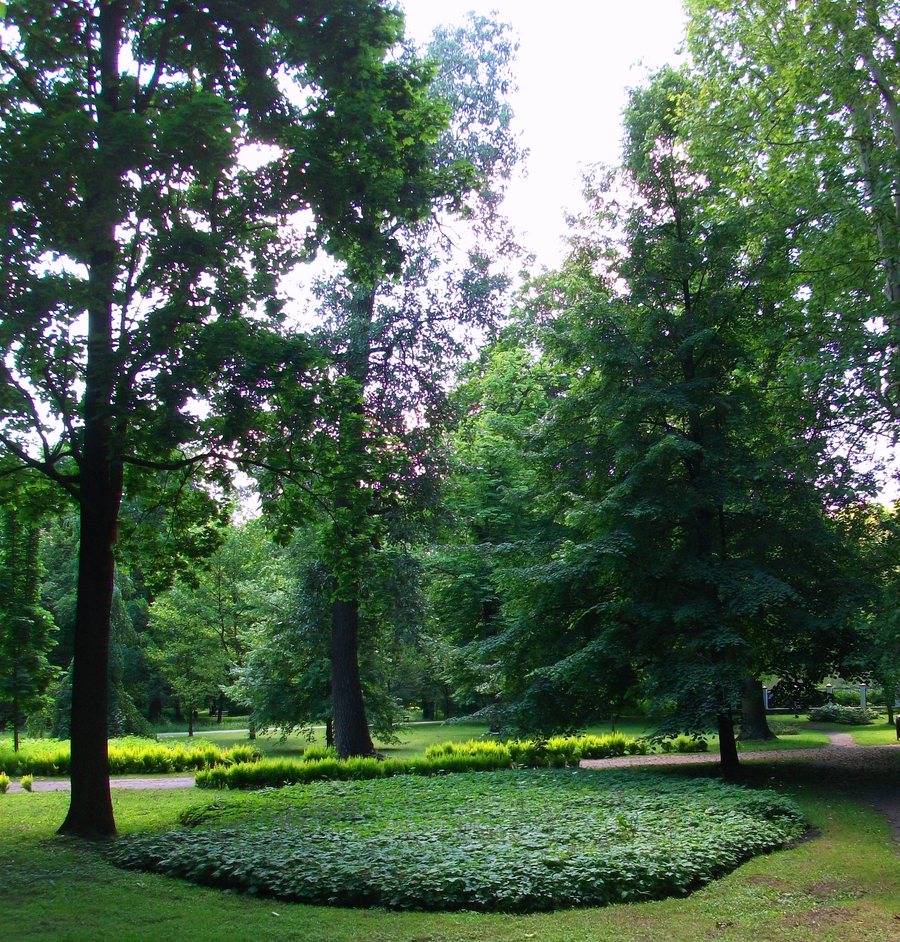
The Szlakem Kaliskich Parków route passes through Park im. Rodziny Wiłkomirskich, Planty Miejskie, Park Miejski, Park Przyjaźni and Park Dworski Szczypiorno. If you would like to include parks in your exploration of Kalisz, this route connects five named parks. Park Miejski also has its own history: it was established in 1798 on the site of former Jesuit gardens.
If you would also like to compare other destinations as you plan your trip, you can find pages about Borek, Dębniałki, Nowa Plewnia, Pawłówek, Staw, Wolica, Blizanów and Tłokinia Kościelna.
FAQ
How many stops does the Kaliski Szlak Wiewiórek have?
The walking route through characteristic locations in Kalisz has nine stops.
What is included in the Szlakem Kaliskich Parków?
The route passes through five parks: Park im. Rodziny Wiłkomirskich, Planty Miejskie, Park Miejski, Park Przyjaźni and Park Dworski Szczypiorno.
What is the Kalisz Paten?
This is the name of a Romanesque paten displayed in the treasury of the Sanctuary of St Joseph. Mieszko III the Old donated it around 1193–1202 to the Cistercian monastery in Ląd.
For the broader travel overview: Kalisz.

