
Kosmów
Accommodation in Kosmów
The parish church of St. Lawrence is the main focus of cultural interest in Kosmów: its furnishings combine Baroque altars and paintings with artworks from other centuries. A 28.5-kilometre cycling stage also passes through the village.
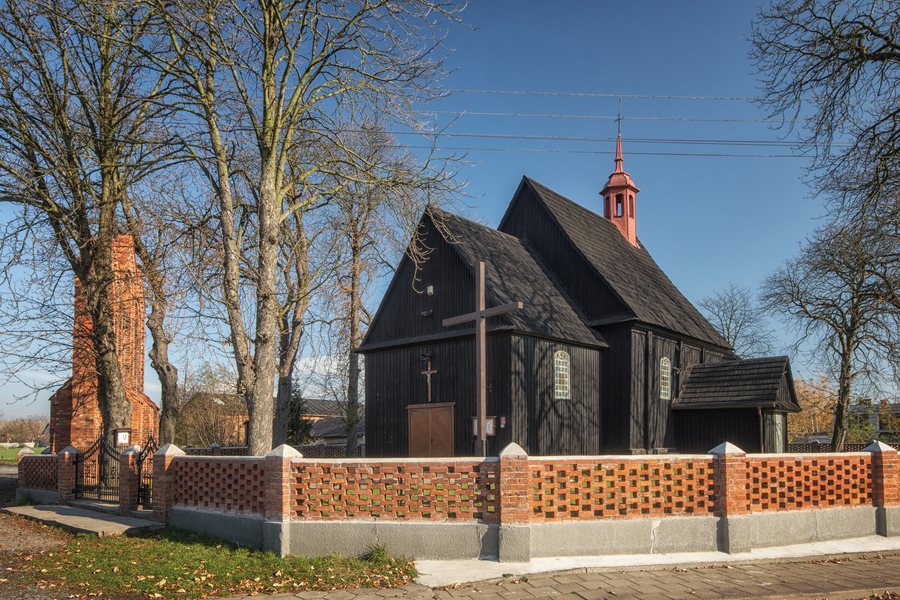 File:SM Kosmów Kościół św Wawrzyńca 2018 (1).jpg
Photo: Sławomir Milejski via Wikimedia Commons, CC BY-SA 4.0
File:SM Kosmów Kościół św Wawrzyńca 2018 (1).jpg
Photo: Sławomir Milejski via Wikimedia Commons, CC BY-SA 4.0
Kosmów at a glance
The parish church of St. Lawrence is among the village’s protected cultural monuments. Its listing bears the number KI.IV – 73/98/54 and is dated 12.06.1954. The church contains, among other things, Baroque side altars, ceiling paintings and a pulpit depicting the four Evangelists.
A northern cycling stage runs from Stawiszyn through Kosmów to Krzyżówki. It is 28.5 kilometres long. Kosmów is home to a war grave for a soldier of the Polish Army.
What makes the parish church of St. Lawrence distinctive?
The side altars give a clear impression of the Baroque furnishings: two 18th-century altars are decorated with Ionic columns and figures of saints. The ceiling features two illusionistic Baroque paintings. They depict the Holy Trinity and the Madonna and Child. Architectural details and religious imagery come together, without the church being defined by just one work of art.
The pulpit is also part of the Baroque furnishings. It stands in the chancel and is decorated with paintings of the four Evangelists. The high altar is Baroque as well and dates from the first half of the 18th century. Its retable, however, contains an older work: a Late Renaissance painting of the Holy Family from the first half of the 17th century. Thus, different periods and forms of representation meet within the altar.
Which periods are represented in the furnishings?
The artworks span several centuries. A Late Gothic crucifix from the 15th century is located on the rood beam. The painting of the Holy Family is Late Renaissance and dates from the first half of the 17th century; the high altar and side altars are Baroque.
More recent furnishings complete the picture: the baptismal font is Late Neoclassical and dates from the early 19th century. The Late Neoclassical organ case was made around the middle of the 19th century. Together with the older works, these furnishings reveal the different styles and periods represented in the church. For those interested in culture, Kosmów offers a clear focus on sacred art and its diversity across time.
What other points of interest can help with planning a trip?
The war grave for a soldier of the Polish Army is another distinct historical point of interest in Kosmów. It differs in subject from the church art and may interest travellers who also want to learn about military history during their visit. Together, the church, cycling stage and war grave offer different ways to explore the village.
FAQ
Which artworks are particularly distinctive in St. Lawrence Church?
The works mentioned include Baroque side altars, two illusionistic ceiling paintings, a pulpit depicting the four Evangelists and the painting of the Holy Family in the high altar.
What periods do the artworks date from?
The Late Gothic crucifix dates from the 15th century. The Late Renaissance painting was created in the first half of the 17th century; the Baroque high altar dates from the first half of the 18th century.
How long is the cycling stage through Kosmów?
The northern stage from Stawiszyn through Kosmów to Krzyżówki is 28.5 kilometres long.
Return to the main travel overview: Nowa Plewnia.

.jpg)