
Słupca: City History and Culture
Accommodation in Słupca
Słupca combines a preserved historic urban layout with distinctive cultural landmarks. If you are looking for accommodation for your trip, the different historical themes can help you narrow down your own interests in discovery: Would you like to focus on the city as a whole, or take a closer look at individual landmarks?
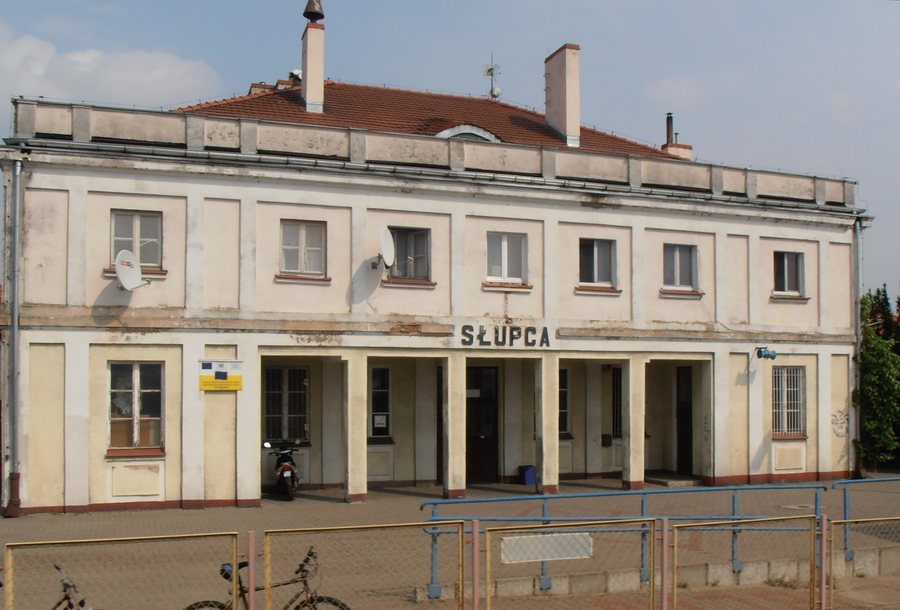
Słupca at a glance
- The historic spindle-shaped street plan and several 19th-century buildings have been preserved to this day.
- A historic house on Kościuszki Street once served as a coaching inn.
- The Municipal Tourist Route comprises 29 information boards spread throughout the city.
- The late Gothic Church of St. Lawrence has a bishop’s throne from the early 17th century that was converted into a confessional.
- A poster exhibition presents selected events from the city’s history.
What does the historic urban layout tell us?
The spindle-shaped street plan, preserved to this day, gives Słupca a clearly identifiable historic framework. Several 19th-century buildings add to it. Together, these features draw attention both to the city’s layout and to individual buildings; the city’s history is therefore not reflected in just one house. One example stands on Kościuszki Street: the historic house once served as a coaching inn. This former use adds a clue about the role the house once played to its architectural context.
When interpreting historic places, you can distinguish three aspects here: the shape of the street plan, the age of several buildings, and the former use of a particular house. This gives you different starting points for exploring Słupca’s past, rather than reducing the city’s history to a single landmark.
What do the route and the Church of St. Lawrence offer as points of reference?
The Municipal Tourist Route comprises 29 information boards distributed throughout the city. Their number and distribution make clear that this is a citywide information and orientation network, not a single board at one location. This sets the route apart from the historical details you can examine at a particular building.
One such place is the late Gothic Church of St. Lawrence. It has a late Renaissance bishop’s throne from the early 17th century that was converted into a confessional. This detail combines a specific date with a later alteration. In this way, the transformation of a historic object also becomes part of its history.
Poland’s oldest clock mechanism was discovered in the Church of St. Lawrence in 1998. This refers to the discovery of the mechanism; it should be distinguished from the throne described as a furnishing. Anyone interested in the church’s history will find two different points of connection here: a converted object and a discovery with a stated year.
How can you explore the cultural offerings according to your interests?
The poster exhibition “Słupca. Faktycznie tak było” presents selected events from the city’s history. Unlike the street plan, buildings, and church furnishings, it focuses on a selection of historical events. The museum invites visitors to view the exhibition; check before your trip whether it is on display at the museum.
These different approaches sit side by side: the urban layout, individual architectural and ecclesiastical details, and historical events presented in an exhibition. When planning your trip, you can first consider which approach interests you most. This distinction can help you organize your cultural interests without treating different landmarks as the same experience.
Discover more destinations: Powidz, Polanowo, Wólka, Żelazków, Ostrowite, Zagórów, Szydlowiec, Siernicze Małe.
FAQ
What is notable about Słupca’s historic cityscape?
The spindle-shaped street plan has been preserved to this day. There are also several preserved 19th-century buildings, including a former coaching inn on Kościuszki Street.
What historic details can you see in the Church of St. Lawrence?
The late Gothic church has a late Renaissance bishop’s throne from the early 17th century that was converted into a confessional. Poland’s oldest clock mechanism was discovered there in 1998.
What should you know before visiting the poster exhibition?
The exhibition “Słupca. Faktycznie tak było” presents selected events from the city’s history. The museum invites visitors to see it; check before your trip whether the exhibition is on display at the museum.
For the broader travel overview: Słupca County.

