
Głęboczek
Accommodation in Głęboczek
Głęboczek combines memories of the settlement’s history with marked hiking and cycling routes. When planning your trip, both a cultural highlight and specific route details may therefore be of interest.
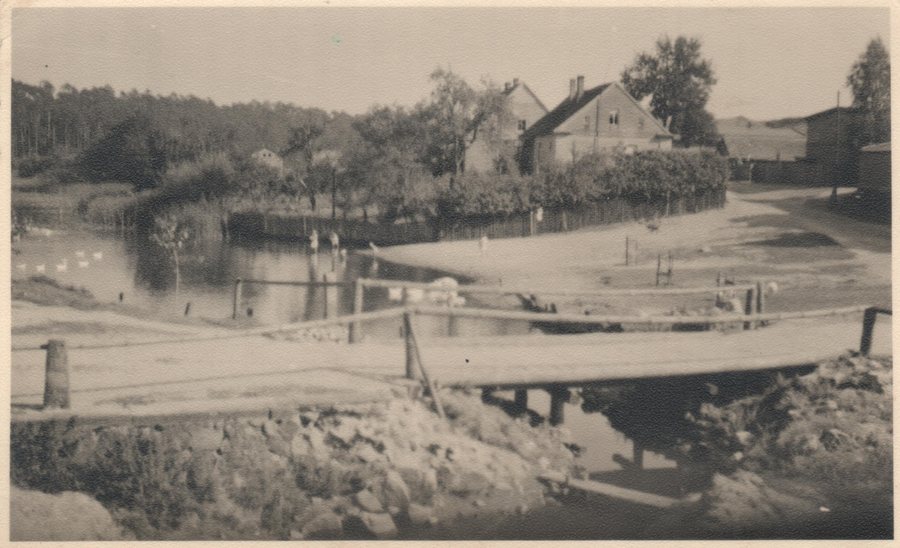 File:Panorama of Głęboczek (Puszcza Zielonka).jpg
Photo: Unknown author Unknown author via Wikimedia Commons, CC BY-SA 4.0
File:Panorama of Głęboczek (Puszcza Zielonka).jpg
Photo: Unknown author Unknown author via Wikimedia Commons, CC BY-SA 4.0
Key facts about Głęboczek
A memorial stone commemorates the settlement’s receipt of town rights in 1458 and its contribution to a military campaign to Malbork. The conical archaeological site Pański Dwór lies nearby, about 500 metres southeast of Głęboczek. A blue hiking trail and the R-4 cycling route meet at the northern edge of the village. Cycling routes also intersect in Głęboczek, including one route to the Marian shrine in Dąbrówka Kościelna.
What story does the memorial stone tell?
The memorial stone recalls two aspects of Głęboczek’s history: the settlement received town rights in 1458 and provided a foot soldier for the campaign against the Teutonic Order in Malbork. The monument thus highlights both the town’s legal development and a specific military contribution. Anyone interested in the history of a destination will find a clearly identified historical reference here, distinct from the route offerings.
This brief memorial offers a separate way to connect with Głęboczek, whether you plan to focus your stay on culture or combine it with hiking and cycling trips.
What is known about Pański Dwór?
Pański Dwór is a conical archaeological site located about 500 metres southeast of Głęboczek. Early medieval pottery was found at the site. These two details complement each other: its shape and classification as an archaeological site describe the place, while the pottery find points to its early history. The direction is also specified to help you find your way: Pański Dwór lies southeast of the settlement. This distinguishes the archaeological site from the memorial stone without treating the two historical subjects as equivalent.
Which cycling routes can help you find your way?
A cycling route about 30 kilometres long runs from Murowana Goślina via Boduszewo, Głęboczek, Zielonka, Czernice, and Maruszka to Dziewicza Góra. This sequence of places provides specific guidance for this longer route description. A four-kilometre section of the cycling route from Boduszewo to Głęboczek is also listed. This lets you distinguish between a route with several named stops and a shorter, separately described section when making your initial choice.
The route to the Marian shrine in Dąbrówka Kościelna is also part of the cycling route information: one of the routes that intersect in Głęboczek leads there. This religious destination offers a different focus from the longer route through several named places. If you prefer a specific destination when choosing a ride, this distinction is useful: one description gives a sequence of stops, while the other names a destination.
Where do the hiking and cycling routes meet?
The blue hiking trail and the R-4 cycling route meet at the northern edge of Głęboczek.
Other destinations in the same overview: Poznań, Puszczykowo, Walerianowo, Owińska, Czerwonak, Dąbrówka, Mosina and Wiktorowo.
FAQ
What does the memorial stone in Głęboczek commemorate?
It commemorates the settlement’s receipt of town rights in 1458 and the fact that it provided a foot soldier for the campaign against the Teutonic Order in Malbork.
How long is the cycling section from Boduszewo to Głęboczek?
The described section is four kilometres long.
Where do the blue hiking trail and the R-4 cycling route meet?
The routes meet at the northern edge of Głęboczek.
For the broader travel overview: Poznań.

.jpg)