
Murowana Goslina: Historic Architecture and Park Dzieje
Accommodation in Murowana Goslina
Murowana Goślina offers culture-minded travellers several different points of interest: a historic urban layout, buildings from various centuries, and the educational and entertainment park Park Dzieje.
Key facts about Murowana Goslina
- The historic urban layout has been listed in the Greater Poland Voivodeship register of monuments since decisions dated 4 December 2006 and 12 February 2007: registration number 410/Wlkp/A.
- The parish church of St James was built in the 14th century; the nave and presbytery date from later construction phases.
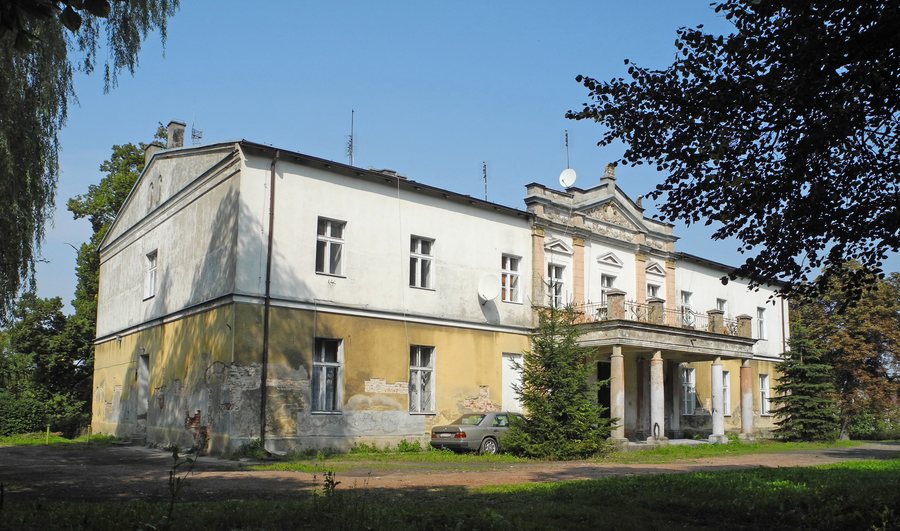
- The palace was built in 1841 and remodelled in the second half of the 19th century.
- Park Dzieje is on Chabrowa Street; its grounds are also home to the Nadrzewna osada high ropes course.
- The Mały Pierścień Rowerowy (Small Cycling Ring) begins on Chabrowa Street.
Which historic traces shape the town?
The listing of the historic urban layout gives Murowana Goślina a clearly defined heritage status. The exact dates are important, too: the listing was made by a decision dated 4 December 2006 and an amendment decision dated 12 February 2007. Registration number 410/Wlkp/A and its designation as part of the Greater Poland Voivodeship are associated with this listing.
Individual buildings add their own dates to this picture. The half-timbered house at Rynek, Pl. Powstańców Wlkp. 22, dates from the second half of the 18th century. The palace was built for the Winterfeld family in 1841 and later remodelled, in the second half of the 19th century. These offer different historical points of reference without all belonging to a single building phase.
What do the church and park tell us about the town's history?
The parish church of St James was built in the 14th century. Its nave dates from the 15th or 16th century, while the presbytery dates to 1717. The parish church of St James the Apostle also houses a valuable piece of Renaissance funerary sculpture: a stone tomb slab for Urszula z Ostrorogów Lwowskich Potulicka, made after 1583.
The historic park is also part of Murowana Goślina's history: it was laid out in the 19th century and entered in the register of monuments. If your trip focuses on architectural and cultural history, you can consider sites from different periods: the historic layout, the church, the palace, the half-timbered house and the park.
What experiences can you plan?
Park Dzieje is an educational and entertainment park on Chabrowa Street. Adults and children can take part in historical reenactments and events there. The Nadrzewna osada high ropes course is also on the grounds. Alongside the historic buildings, visitors can choose an attraction featuring reenactments and another activity classified as a high ropes course.
For cycling travellers, the starting point of the Mały Pierścień Rowerowy (Small Cycling Ring) gives a specific location: it begins on Chabrowa Street in Murowana Goślina. Find out more about other destinations in the catalogue: Złotoryjsko, Czerlejno, Tulce, Strykowo, Będlewo, Czmoń, Chludowo and Buk.
FAQ
What is listed in the register of monuments in Murowana Goślina?
The historic urban layout is listed in the Greater Poland Voivodeship register of monuments under number 410/Wlkp/A.
Which construction phases does the parish church date from?
The parish church was built in the 14th century. The nave dates from the 15th or 16th century, and the presbytery from 1717.
What does Park Dzieje offer?
At Park Dzieje, adults and children can take part in historical reenactments and events. The grounds are also home to the Nadrzewna osada high ropes course.
For the main travel overview: Poznań.

