
Buk: Discover Culture and History
Accommodation in Buk
Buk offers several starting points for planning a culture-focused trip: a walking trail connected to the Old Town, a museum dedicated to the history of the town and its surroundings, and churches and synagogues with different historical associations. If you are looking for a hotel in Buk, you can use these themes as a starting point and consider what kind of cultural experience matters most to you.
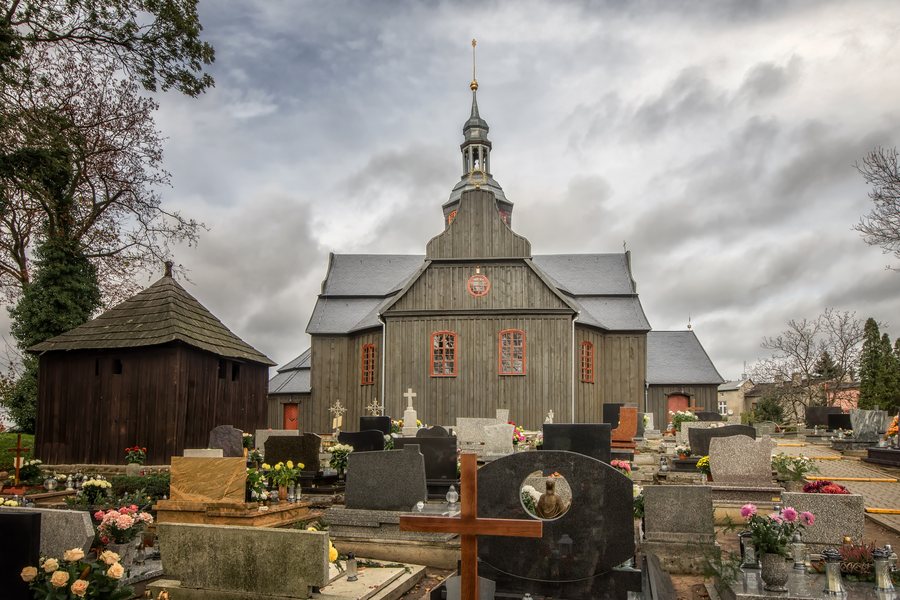 File:SM Buk Kościół Świętego Krzyża 2019 (15).jpg
Photo: Sławomir Milejski via Wikimedia Commons, CC BY-SA 4.0
Buk at a glance
- The walking trail is called “Tajemnice starówki w Buku”.
- The Izba Muzealna Ziemi Bukowskiej collects memorabilia relating to the history of Buk and its surroundings.
- The first stone church at the present site of the Sanktuarium Matki Bożej Bukowskiej Literackiej was consecrated in 1418.
- The wooden Holy Cross Church dates from 1760; the existing synagogue complex was built in the first decade of the 20th century.
What cultural themes can you discover in Buk?
The “Tajemnice starówki w Buku” walking trail adds its own perspective to the history of the museum and buildings: it is a walking trail associated with Buk. This means you can plan around a range of different interests. You can make a walking trail the focus, explore the history of the town and its surroundings, or look at individual buildings in terms of when they were built and their design. This distinction helps you decide what to focus on during your stay without treating the themes as interchangeable.
The Izba Muzealna Ziemi Bukowskiej collects memorabilia relating to the history of Buk and its surroundings. The town’s museum description lists archaeological artefacts, historical banners, miniature buildings, old photographs and archival materials among the items on display. The collection therefore brings together different kinds of material: objects, models, photographs and archival materials. If you are interested in local history, you can explore different forms of historical representation rather than focusing on just one building or one period.
How do the historic buildings differ?
The historical associations of Buk can be understood through the different dates and building details. In 1418, Bishop Andrzej Łaskarz z Gosławic consecrated the first stone church at the present site of the Sanktuarium Matki Bożej Bukowskiej Literackiej. In this case, the year refers to a consecration. By contrast, the wooden Holy Cross Church (Kościół Świętego Krzyża) was built in 1760 and has a cruciform ground plan. The information about the present-day synagogue complex refers to its construction in the first decade of the 20th century and its design by Alfred Grotte.
These details highlight different things: a consecration at a particular site, the construction date and floor plan of a wooden church, and the period when a synagogue complex was built together with its architect. The form of the Holy Cross Church is also a point of interest in its own right: “cruciform ground plan” describes the shape of the floor plan. If you are particularly interested in architecture, you can compare these features and historical dates without reducing the buildings to a single period or style.
What does the exhibition at the Dawna Synagoga show?
The upper gallery of the Dawna Synagoga (Sala Miejska) houses a historical exhibition with multimedia facilities. This is another cultural focus alongside the materials at the Izba Muzealna Ziemi Bukowskiej and the buildings described above. When planning your visit, you can therefore consider whether you are more interested in collection items, historic architecture or a multimedia exhibition. If this exhibition is a key reason for your visit, check the latest visitor information in advance.
How do you choose a hotel for your trip to Buk?
First, consider which of these themes you want to shape your trip: the walking trail, the collection on local history, the religious buildings or the historical exhibition. When searching for hotels in Buk, compare the details of each offer and its location to see what best suits your plans.
Discover more destinations: Walerianowo, Chomęcice, Jarosławiec, Luboń, Sapowice, Mrowino, Warthelager Military Training Area, Suchy Las.
FAQ
What is the walking trail in Buk called?
The walking trail is called “Tajemnice starówki w Buku”.
What materials are on display at the Izba Muzealna Ziemi Bukowskiej?
The items listed include archaeological artefacts, historical banners, miniature buildings, old photographs and archival materials. The collection relates to the history of Buk and its surroundings.
Which historical dates help put the buildings in context?
The first stone church at the present site of the Sanktuarium was consecrated in 1418. The wooden Holy Cross Church was built in 1760; the present-day synagogue complex was built in the first decade of the 20th century.
For the main travel overview: Poznań.

