
Discover Radawnica
Accommodation in Radawnica
Radawnica’s cultural character can be understood through its churches, a historic palace, and the park surrounding it.
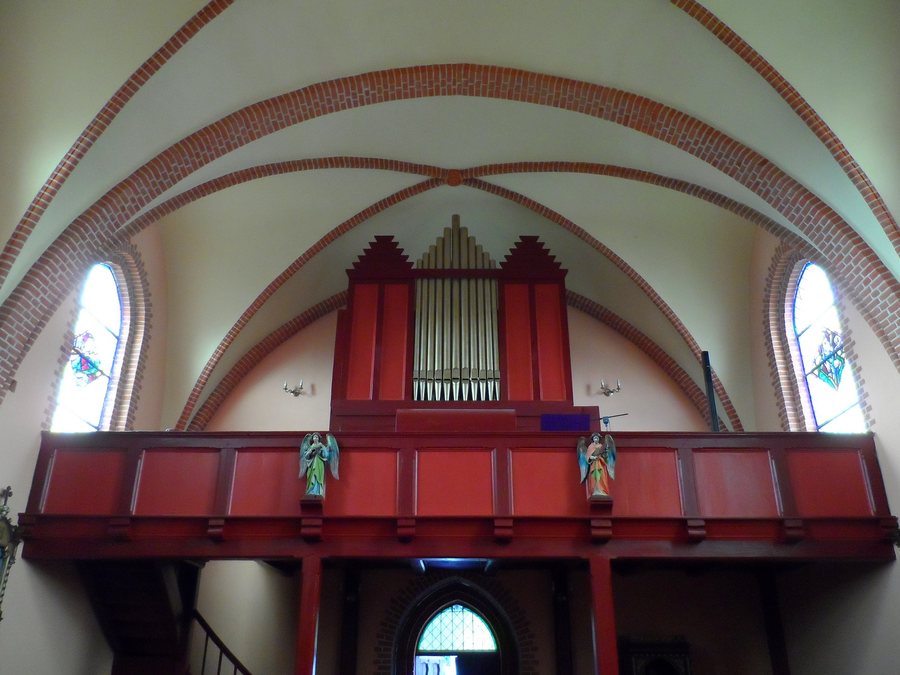 File:Chór i organy kościoła św. Barbary.jpg
Photo: Tadeusz Rzepka (tedesse) via Wikimedia Commons, CC BY-SA 3.0 pl
File:Chór i organy kościoła św. Barbary.jpg
Photo: Tadeusz Rzepka (tedesse) via Wikimedia Commons, CC BY-SA 3.0 pl
Radawnica at a glance
- The Neo-Gothic Church of St. Barbara was built in 1888 to replace a predecessor church that had been destroyed.
- The historic palace is the headquarters of Uniwersytet Ludowy w Radawnicy. It dates from the second half of the 19th century and is Neo-Gothic.
- A 3.5-hectare park surrounds the palace.
- The former Protestant church was built in the Neo-Romanesque style in 1933 and has served as the Catholic auxiliary church of St. Stanislaus Kostka since 1946.
What architectural history has shaped Radawnica?
The two churches represent different building and use histories. The Church of St. Barbara was built in 1888 to replace a predecessor church that had been destroyed. The history of the former Protestant church includes both its construction in 1933 and its later function: since 1946, it has served as the Catholic auxiliary church of St. Stanislaus Kostka.
The architectural styles also offer a clear contrast. St. Barbara’s and the palace are Neo-Gothic; the former Protestant church is Neo-Romanesque. Radawnica therefore brings together two distinct architectural reference points. Those interested in architectural history can compare the construction dates and styles without combining the histories of the two churches.
What connects the palace and the park?
The palace is not only a historic building but also the headquarters of Uniwersytet Ludowy w Radawnicy. Its date, in the second half of the 19th century, places it in a different period from the two churches. It shares its Neo-Gothic design with the Church of St. Barbara; its institutional role is another aspect of its significance to Radawnica.
The surrounding grounds are part of the palace: a 3.5-hectare park surrounds the building. This makes it possible to consider architecture and landscape as two aspects of the local setting. The park’s size makes it a tangible part of the cultural and landscape impression conveyed by the facts about Radawnica. When planning your trip, you can decide whether to focus on architectural history, the institutional connection, or the park as well.
How should you consider Radawnica for your trip?
Three questions can help you compare it with other destinations: Are you interested in Neo-Gothic and Neo-Romanesque architecture? Would you like to see a historic palace that also serves as an institution’s headquarters? Would you like a park to be part of your cultural experience? Radawnica offers concrete points of interest related to these preferences, through its architectural history and the relationship between the palace and the park.
If you are looking for hotels, you can compare these cultural highlights with your own preferences for a stay. The known construction dates and architectural styles can help you assess the destination according to your interests; you can then decide which accommodation and location suit your trip based on your personal plans.
Discover more destinations: Kamień, Głomsk, Okonek, Zakrzewo, Skórka, Złotów, Jastrowie, Łąkie.
FAQ
Which architectural styles are represented by the churches?
The Church of St. Barbara is Neo-Gothic. The former Protestant church was built in the Neo-Romanesque style.
What is the palace used for?
The historic palace is the headquarters of Uniwersytet Ludowy w Radawnicy. It dates from the second half of the 19th century and is Neo-Gothic.
How large is the park at the palace?
A 3.5-hectare park surrounds the palace in Radawnica.
To the main travel overview: Flatow.

