
Złotów
Accommodation in Złotów
Złotów combines architectural history and places of remembrance with paths along the town lake and through Zwierzyniec. If you are weighing up a focus on cultural history versus time in green surroundings for your trip, you will find concrete starting points here—from neoclassical forms to marked nature trails.
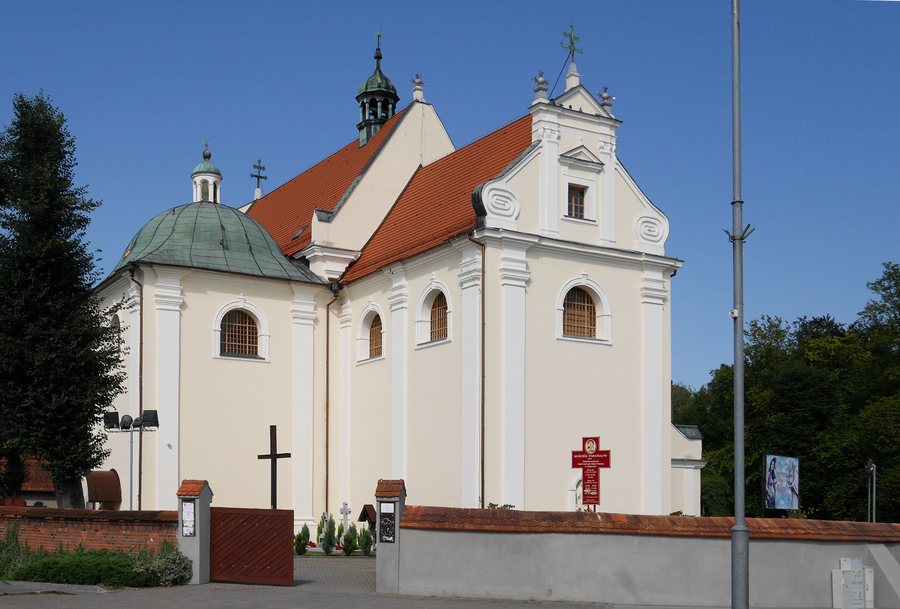 File:PL Złotów, kościół par. p.w. Wniebowzięcia NMP, 1660-1664.JPG
Photo: WiktorN.PL via Source, CC BY-SA 3.0 pl
File:PL Złotów, kościół par. p.w. Wniebowzięcia NMP, 1660-1664.JPG
Photo: WiktorN.PL via Source, CC BY-SA 3.0 pl
Key facts about Złotów
The Działyński Palace was built in the neoclassical style at the turn of the 18th and 19th centuries, with landscaped grounds. Other buildings and places of remembrance date from the 19th and 20th centuries. A 4 km pedestrian and cycling promenade runs along Jezioro Miejskie, which covers about 47 ha; Zwierzyniec Park has five nature trails marked with information boards.
What architectural and cultural history can you discover?
The Działyński Palace was remodeled in the 1830s at the initiative of the Hohenzollerns, based on a design by Prussian architect Karl Friedrich Schinkel. The town hall and other buildings add to the picture of different architectural periods: Złotów Town Hall was built in 1914 to a design by Adolf Behr. At ul. Domańskiego 5, an Art Nouveau façade adorns a building from 1905 that formerly served as the headquarters of the Fifth District of the Union of Poles in Germany. Beside the former Evangelical St. Stanislaus Kostka Church stands the red-brick former courthouse, built in 1866.
Religious sites and places of remembrance also offer different points of connection with the past. Near the neo-Gothic Rochus Church, built in 1904, are a disused Evangelical cemetery with a lapidarium established in 1998, and a military cemetery for soldiers who fell in the 1945 battles for the Złotowszczyzna region. The outline of the synagogue destroyed in 1938 is marked on Plac Paderewskiego. The Church of the Assumption of Mary houses the altarpiece “Koronacja Najświętszej Marii Panny,” painted by Paulus Hack in 1666.
The Muzeum Ziemi Złotowskiej has archaeological, historical and ethnographic collections relating to the town and its surroundings. Less than half of its holdings are on display. The palace, town hall and former courthouse date from different architectural periods.
How can you combine town walks with time by the water?
The pedestrian and cycling promenade in Złotów is 4 km long and runs along Jezioro Miejskie, which covers about 47 ha. You can walk or cycle around the lake; the 4 km promenade runs along the shore and is distinct from the circuit around the lake. It leads to Półwysep Rybacki. There you will find a plant maze and information boards about the town’s history, the noble families that ruled in Złotów and archaeological finds.
The promenade also has a wooden footbridge over the Głomia and a viewing platform overlooking the town panorama. If you plan to visit these facilities specifically, check their current condition before your visit. This lets you factor the waterside paths into your day without conflating visits to the architectural sites and places of remembrance with a walk by the water.
What paths does Zwierzyniec Park offer?
Five nature trails marked with information boards run through Zwierzyniec Park: Poznawcza, Żabia, Łowiecka, Leśna and Dendrologiczna. Since 2016, part of the “Zielony Punkt Kontrolny” orienteering course has also run through the park. The Szlak Złotowskiego Jelenia leads through the old town towards Zwierzyniec, a park-like woodland and recreational complex that is also home to the Złotów Forest District administration. It has nine stops and twelve information boards.
The nature trails are in Zwierzyniec Park; the Szlak Złotowskiego Jelenia leads through the old town towards the park. At Jezioro Miejskie, meanwhile, the focus is on the lakeside promenade and the option of walking or cycling around the lake. If you are planning a specific visit, check the condition of the paths and facilities beforehand.
If you would like to compare other destinations, discover Jastrowie, Radawnica, Okonek, Skórka, Łąkie, Zakrzewo and Głomsk.
FAQ
Which historic sites define Złotów?
The sites mentioned include the Działyński Palace, the town hall, Rochus Church, the marked outline of the synagogue destroyed in 1938 and the Muzeum Ziemi Złotowskiej.
Can you walk or cycle around Jezioro Miejskie?
Yes. You can walk or cycle around the lake, which covers about 47 ha. The 4 km promenade runs along the lake.
What topics does the Muzeum Ziemi Złotowskiej cover?
Its archaeological, historical and ethnographic collections relate to Złotów and the surrounding area; less than half of its holdings are on display.
For the broader travel overview: Flatow.

