
Kruszyniec on the Bydgoszcz Canal
Accommodation in Kruszyniec
Kruszyniec brings together the history of the Bydgoszcz Canal, historic buildings, and an Evangelical cemetery dating from the late 19th century. If you are looking for a hotel or other accommodation in Kruszyniec, these themes give you a concrete impression of what makes the place distinctive.
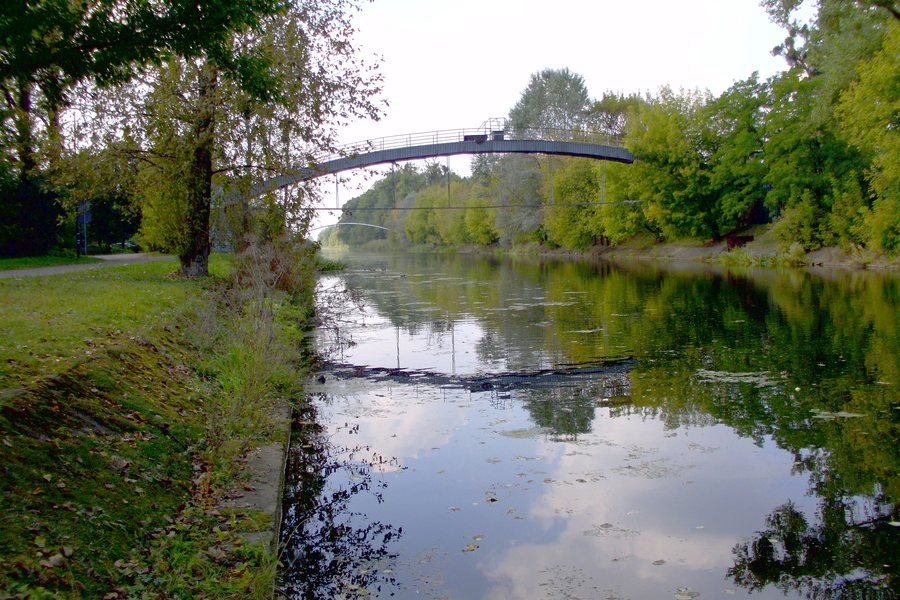
Kruszyniec at a glance
The Bydgoszcz Canal was built in 1773–1774 and is Poland’s oldest active inland waterway. In Kruszyniec, it meets the historic Górnonotecki Canal. Local landmarks also include a privately owned farmstead listed as a monument, farm buildings from different periods, a house dating from 1902, and an Evangelical cemetery from the late 19th century.
What makes the Bydgoszcz Canal in Kruszyniec special?
The canal is a good starting point if you are interested in the history of waterways: it was built in 1773–1774. At the same time, it is more than a historical subject; it is considered Poland’s oldest active inland waterway. This combination of early construction and continuing status sets it apart from a purely historical relic.
The canal’s history is also firmly rooted in Kruszyniec. Here, the historic Bydgoszcz Canal meets the Górnonotecki Canal. The Bydgoszcz Canal complex in Kruszyniec has been listed as a monument since November 30, 2005. A bridge connects the banks of the canal; in 2014, the bridge over the Bydgoszcz Canal in Kruszyniec was renovated to allow the canal to be crossed safely. For trip planning, these offer different perspectives on the same local focal point: the historic waterway, its junction, and the bridge.
What historic buildings and sites are there?
Farmsteads No. 13 and No. 15 offer a glimpse into the history of local farm buildings. At privately owned Farmstead No. 13, the farm buildings were constructed between 1912 and 1928. The farmstead is listed as a monument and is privately owned. The farm buildings at Farmstead No. 15 were built between 1900 and 1922. In each case, the dates refer to the farm buildings at the specified farmstead.
The house at Notecka 13, meanwhile, dates from 1902. The Evangelical cemetery in Kruszyniec dates back to the late 19th century. Together, the buildings and sites mentioned here reflect local history across more than one period: the cemetery dates from the late 19th century, the farm buildings were constructed in the first decades of the 20th century, and the house at Notecka 13 dates from 1902. The house and Farmstead No. 13 should be treated as separate entries.
What accommodation is right for a trip to Kruszyniec?
When looking for a hotel in Kruszyniec, consider whether the canal’s history or the historic buildings should shape your stay. The sights and buildings mentioned here are especially appealing to travelers interested in cultural history and rural architecture. The information about the canal, bridge, farmsteads, house, and cemetery gives you specific themes to explore without limiting you to a single period. Information about individual accommodations or their locations should be compared separately.
If you would like to compare other destinations, you can also find pages about Prądocin, Ostromecko, Osielsko, Niwy, Koronowo, Niemcz, Januszkowo, and Mąkowarsko.
FAQ
When was the Bydgoszcz Canal built?
The Bydgoszcz Canal was built in 1773–1774. It is Poland’s oldest active inland waterway.
Which canals meet in Kruszyniec?
The historic Bydgoszcz Canal meets the Górnonotecki Canal in Kruszyniec.
Is Farmstead No. 13 open to the public?
Farmstead No. 13 is listed as a monument and is privately owned.
For the broader travel overview: Bydgoski.

