
Discover Golubsko-Dobrzyński: City History and the E11
Accommodation in Golubsko-Dobrzyński
Golubsko-Dobrzyński offers a historical focus in Golub-Dobrzyń, along with other cultural and landscape themes in the surrounding region. When planning your trip, it makes a difference whether you are mainly interested in city history and museums, the E11 long-distance trail, or regional culture and nature.
Discover more destinations: Frydrychowo, Nowogród, Golub-Dobrzyń, Kowalewo Pomorskie, Miliszewy, Wrocki, Toruński and Sępoleński.
Golubsko-Dobrzyński at a glance
- Golub-Dobrzyń is considered the most important tourist hub in Golubsko-Dobrzyński County.
- The medieval town plan includes well-preserved town walls from the first half of the 14th century, which once had 17 towers.
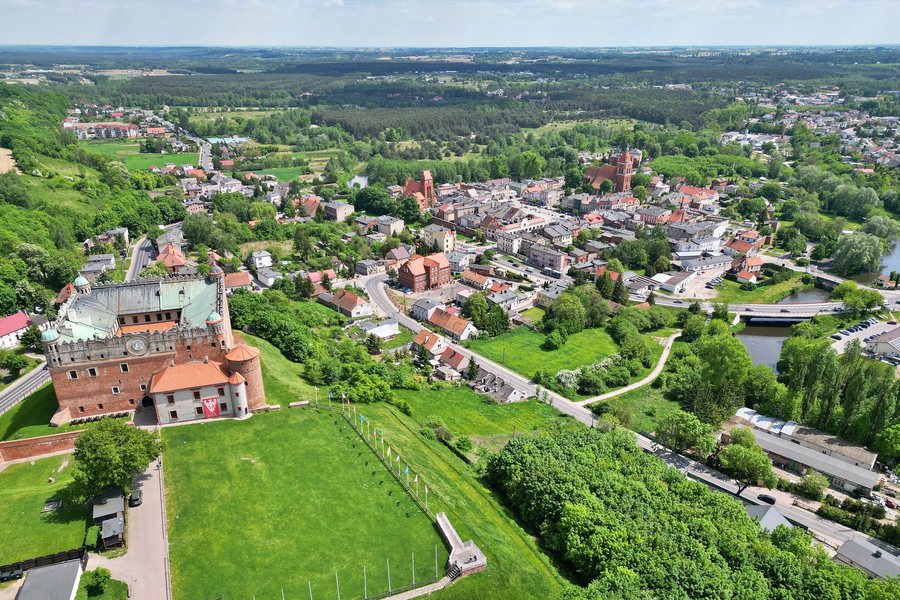
- Golub Castle houses a museum with armor, weapons, and objects from past eras, as well as exhibitions on the town’s history and the activities of the Polish Tourist and Sightseeing Society.
- The international E11 long-distance trail passes through Golub-Dobrzyń. Check the trail conditions before setting out.
What do the town plan and castle tell us?
The town walls and medieval layout give the history of Golub-Dobrzyń a tangible setting: the fortifications date from the first half of the 14th century and once included 17 towers. Anyone interested in historic townscapes can consider these details together, rather than understanding the place through a single attraction alone. Golub-Dobrzyń is also the most important tourist hub in the county.
Another glimpse of the past awaits at Golub Castle. The museum there has armor, weapons, and objects from earlier eras. It also features exhibitions on the history of Golub-Dobrzyń and the activities of the Polish Tourist and Sightseeing Society. Check current operating details separately before your visit.
The church in Golub also offers a historical point of interest: it dates from the late 13th to the 14th century. A guided tour of Golub-Dobrzyń may include access to its tower; advance arrangements are required. If you would like to include this part of the town’s history in your plans, make arrangements well in advance.
Which experiences offer different points of focus?
The E11 passes through Golub-Dobrzyń and offers a clear hiking option. No hiking time or difficulty level is specified; for planning, the main considerations are the route and its condition, which should be checked before you set out.
In the wider region, the Drwęca offers a different activity: it has been known as a canoe trail for many years. The documented options therefore differ in type: a long-distance hiking trail through Golub-Dobrzyń on the one hand, and a regional canoeing route on the other.
Which cultural destinations are in the wider region?
In Obory, religious history and contemporary life sit side by side. The Pietà there is carved from linden wood and dates from the final years of the 14th century or the first half of the 15th century; it draws pilgrims from all over Poland. The protected Carmelite monastery complex includes a church and monastery. The church was built between 1627 and 1649 and is now the parish church of the Visitation of the Blessed Virgin Mary; the monastery was built from 1741 to 1753.
Since 1999, the sanctuary in Obory has hosted spiritual and evangelizing Wieczernik gatherings every Saturday, in the spirit of Carmelite spirituality. They are open to everyone and bring together pilgrims from all over Poland. As dates and schedules may change, check the latest information in advance.
In Szafarnia, the Chopin Centre is housed in the 19th-century Dziewanowski family palace. Fryderyk Chopin spent extended holidays there twice, in 1824 and 1825. The centre organizes concerts, exhibitions, and art competitions, as well as the International Chopin Piano Competition for Children and Young People. Płonne has a Gothic church and a monument to Colonel Jan Dziewanowski, who commanded the Polish charge at Somosierra; it also has a historic manor park.
What landscape and culinary themes can you explore?
The wider region offers several points of interest for exploring the landscape. Lake Okonin is one of the county’s best-developed lakes and attracts many visitors during the season who want to spend time by the water. Facilities and seasonal conditions may change, so check them before making specific plans. Bobrowisko Nature Reserve lies on the slopes of the Drwęca Valley, where many rare and protected plant and animal species are found.
The drumlin fields near Zbójno are considered unique landforms on a European scale. In Radomin, the beech avenues include 585 historic trees. These examples offer different points of focus: one describes a distinctive landform, the other a historic tree-lined avenue. The regional cuisine includes “Ryba z Kija,” a recipe prepared on both sides of the Drwęca. This refers to a culinary tradition, not a specific current offering at a particular location.
Tailor your search to the kinds of experiences that matter for your plans.
FAQ
What shapes the historic townscape of Golub-Dobrzyń?
Golub-Dobrzyń has a medieval town plan and well-preserved town walls from the first half of the 14th century. The walls once had 17 towers.
How can visitors access the tower of the church in Golub?
A guided tour of Golub-Dobrzyń may include access to the church tower. Advance arrangements are required.
Which different activities are described in the wider region?
The E11 passes through Golub-Dobrzyń; in the wider region, the Drwęca is known as a canoe trail. Obory also hosts the Saturday Wieczernik gatherings. Check the latest dates in advance.
For the main travel overview: Kuyavian-Pomeranian Voivodeship.

