
Kowalewo Pomorskie
Accommodation in Kowalewo Pomorskie
Kowalewo Pomorskie offers visitors interested in culture preserved traces of medieval fortifications and a parish church with art from different centuries. If you are looking for a hotel for a trip focused on history and architecture, the town gives you a concrete reason to take these interests into account when choosing your destination.
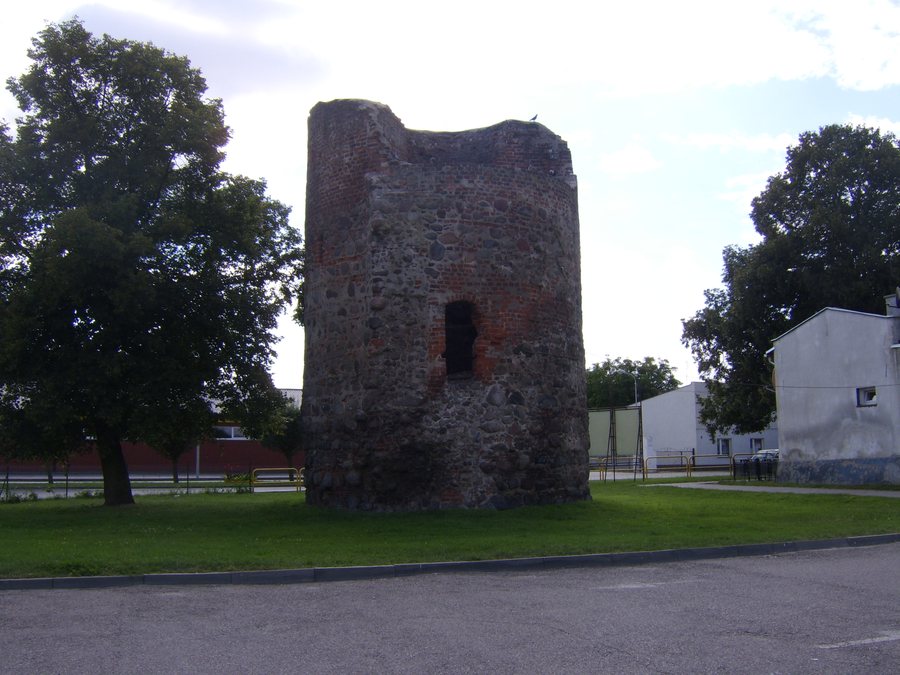 Kowalewo Pomorskie - medieval town wall tower
Photo: Jan Chmielewski via Wikimedia Commons, Public domain
Kowalewo Pomorskie - medieval town wall tower
Photo: Jan Chmielewski via Wikimedia Commons, Public domain
Quick facts about Kowalewo Pomorskie
- Fragments of the town wall and a corner tower date from around the turn of the 13th and 14th centuries.
- The Teutonic Knights’ castle was built around the same time and survives today only in fragments.
- The Church of St. Nicholas combines Gothic architecture with a Baroque interior and Neo-Gothic elements.
- Kowalewo Pomorskie is a stop on the Copernicus Trail.
What remains of the fortifications?
Fragments of the town wall and a corner tower dating from around the turn of the 13th and 14th centuries have survived as part of the town’s fortifications. Nearby, the remains of the Teutonic Knights’ castle recall another historic defensive structure. It was also built around the turn of the 13th and 14th centuries, but today only fragments remain. The castle should therefore not be understood as a fully preserved complex.
A Gothic pier from the Dansker tower stands at the foot of the castle hill. It is a remnant of the former fortifications of the Teutonic Knights’ castle. Together with the wall fragments and the corner tower, it offers a distinct perspective on the various surviving traces of the town’s fortification history. Visitors especially interested in medieval architecture can bear these differences in mind as they explore the town.
What makes the Church of St. Nicholas distinctive?
The Church of St. Nicholas is in the center of Kowalewo Pomorskie. Its architecture is Gothic; the interior is Baroque and also includes Neo-Gothic elements. This combination makes the church an example of how a single building can bring together different styles rather than represent just one period.
The furnishings include polychrome decoration from the 16th century and a Gothic Madonna and Child from the 14th century. The architecture and surviving artworks can thus be linked to different historical periods. Their historical and architectural significance may therefore also interest travelers who initially focus on the church’s exterior.
What cultural offerings are available?
In 1994, the cultural center and public library were brought together as one institution: the Miejsko-Gminny Ośrodek Kultury w Kowalewie Pomorskim. This institution’s recurring cultural program includes music festivals, art exhibitions, concerts, and author talks. The nationwide Narodowe Czytanie initiative is also part of the program.
The different formats appeal to a range of cultural interests: music, visual art, and literature are all represented. This offers a different perspective for planning a trip than the historic buildings. Specific program items may vary; the event types listed describe the recurring cultural program, not a particular event date.
What cultural role does the Copernicus Trail play?
Kowalewo Pomorskie is a stop on the Copernicus Trail. The trail commemorates the era and work of Nicolaus Copernicus. The town is therefore part of a context that, beyond its own architectural history, also connects it with the history of science and culture.
When deciding on your trip, you can consider which appeals to you more: medieval fortification remains, the architecture and art of the parish church, or the Copernicus Trail’s thematic connection. These themes offer different points of interest without requiring you to reduce the town to a single building or historical period.
If you would like to compare other destinations, you can also find pages here for Nowogród, Golub-Dobrzyń, Miliszewy, Frydrychowo and Wrocki.
FAQ
What remains of the Teutonic Knights’ castle?
Today, the Teutonic Knights’ castle survives only in fragments. A Gothic pier from the Dansker tower at the foot of the castle hill is a remnant of its former fortifications.
What artworks are in the Church of St. Nicholas?
The surviving works include polychrome decoration from the 16th century and a Gothic Madonna and Child from the 14th century.
Which events are part of the cultural program?
The recurring program includes music festivals, art exhibitions, concerts, author talks, and Narodowe Czytanie.
What does the Copernicus Trail commemorate?
The Copernicus Trail commemorates the era and work of Nicolaus Copernicus; Kowalewo Pomorskie is one of its stops.
For the broader travel overview: Golubsko-Dobrzyński.

