
Kwieciszewo: Churches, Market Square and History
Accommodation in Kwieciszewo
Kwieciszewo’s history comes to life through its churches, triangular market square and significant dates. The local buildings and historical associations offer a concrete starting point if you are interested in the history of a place.
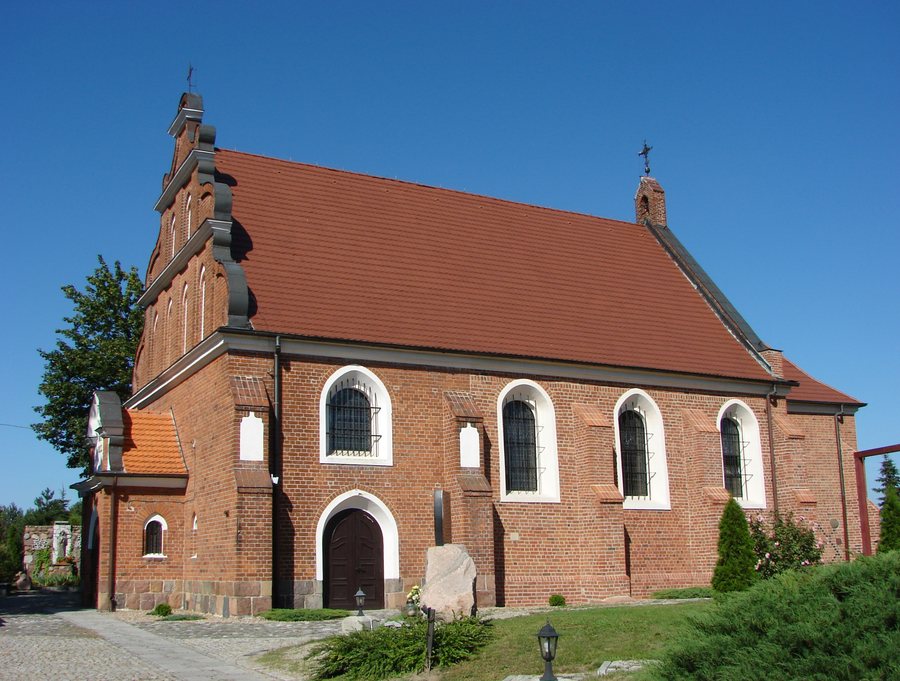 File:Kwieciszewo, Gmina Mogilno, Mogilno county.jpg
Photo: Eder~plwiki via Wikimedia Commons, CC BY-SA 4.0
File:Kwieciszewo, Gmina Mogilno, Mogilno county.jpg
Photo: Eder~plwiki via Wikimedia Commons, CC BY-SA 4.0
Key facts about Kwieciszewo
- The late Gothic Church of St. Mary Magdalene was built in 1522 and is considered the oldest monument in Kwieciszewo.
- The parish church stands on the site of an early medieval fortified settlement.
- The triangular market square and small-town buildings bear witness to the town’s urban past.
- The former Protestant church was built in the Neoclassical style between 1834 and 1838.
- In 1144, the sons of Bolesław III Wrymouth met in Kwieciszewo; in 1873, the settlement lost its town rights.
Which buildings tell the story of Kwieciszewo’s past?
The late Gothic Church of St. Mary Magdalene dates to 1522. It is the oldest monument in Kwieciszewo and provides a clear chronological anchor for the settlement’s history. Nearby, the parish church stands on the site of an early medieval fortified settlement. This connection points to a much earlier history of the site.
The former Protestant church marks another period in the history of the local architecture. It was built in the Neoclassical style between 1834 and 1838. Together with the late Gothic church, it shows that the surviving buildings belong to different eras. For your trip planning, this offers a focus on cultural history based on specific architectural forms and dates.
What do the market square and local history reveal?
The triangular market square and small-town buildings point to Kwieciszewo’s urban past. Two historical dates provide further context: in 1144, the sons of Bolesław III Wrymouth met here, and in 1873 Kwieciszewo lost its town rights. The meeting was a single event in local history, not an indication of a recurring event.
These dates help distinguish between different aspects: the meeting took place in 1144, while the loss of town rights marks a later change. Together with the market square and churches, they provide a picture of historical development without presenting Kwieciszewo as a town today.
What other cultural attractions are there in the wider destination of Mogilno?
The wider destination of Mogilno offers further architectural and museum history. The Fara – kościół św. Jakuba Apostoła in Mogilno is a Gothic church dating to 1511; its main altar features an 18th-century painting of Saint James the Greater. The Klasztor pobenedyktyński and its church were built in the 11th century by Benedictine monks on a small hill on the northeastern shore of Jezioro Mogileńskie. The church preserves the original form of a Romanesque basilica, with Gothic, Renaissance and Baroque elements. Its western crypt is considered one of only three crypts of its kind in Europe.
The Muzeum Ziemi Mogileńskiej in Mogilno offers another thematic focus. The permanent exhibition “Dzieje ziemi mogileńskiej” features guild documents and historical banners from 1919, 1923, 1927, 1929 and 1946. The exhibition “Pradzieje ziemi mogileńskiej” presents tools and objects used in everyday life and rituals, from the Neolithic through the Bronze and Iron Ages to the Middle Ages and modern era. Another exhibition focuses on the region’s folk culture and folk art, crafts and residents’ everyday lives.
The different highlights are easy to distinguish: information about Kwieciszewo leads to local buildings, the market square and history; Mogilno also offers ecclesiastical architecture and museum exhibitions. If you would like to discover more destinations: Mogilno, Chabsko, Izdby, Mielenko, Strzelno and Wójcin.
Which routes and experiences are mentioned for Mogilno?
Two cycling routes with different lengths and itineraries are listed for Mogilno. The approximately 14-kilometre TRASA nr 8 (MDW) runs around Jezioro Wiecanowskie and starts and ends in Mogilno. The approximately 28-kilometre TRASA nr 1 (MSK) connects Mogilno with Kalwaria Mogileńska and then returns to Mogilno. The routes are currently unmarked; take this into account when planning.
Another offering is the Zabytkowa Linia Kolejowa Mogilno–Orchowo. The 20.8-kilometre historic railway line includes 25 bridges and viaducts, including a 44-metre bridge over Jezioro Mogileńskie and a 43-metre bridge over the Noteć. The line is passable, and railbike rides are occasionally held there. These details help distinguish the cycling routes from the railway as separate options in the wider destination of Mogilno.
The Park miejski z amfiteatrem letnim i fontanną is also located in the centre of Mogilno. It has a fountain and renovated paths with new lighting. The summer amphitheatre has 300 seats and is used for concerts and outdoor events held in summer. This information complements the cultural attractions and routes with a public space and an event venue, but does not specify a particular event date.
FAQ
Which historical periods are reflected in Kwieciszewo’s buildings?
The Church of St. Mary Magdalene dates to 1522 and is late Gothic. The former Protestant church was built in the Neoclassical style between 1834 and 1838. The parish church stands on the site of an early medieval fortified settlement.
How do the two cycling routes in the wider destination of Mogilno differ?
The approximately 14-kilometre route is a circular route around Jezioro Wiecanowskie, starting and ending in Mogilno. The approximately 28-kilometre route goes from Mogilno via Kalwaria Mogileńska and back to Mogilno. Both routes are currently unmarked.
What topics do the exhibitions in Mogilno cover?
The exhibitions at the Muzeum Ziemi Mogileńskiej cover the region’s history through guild documents and historical banners; finds and objects from the Neolithic to the modern era; and regional folk culture, folk art, crafts and everyday life.
For the wider travel overview: Mogilno.

