
Discover Strzelno: Romanesque architecture and monastic history
Accommodation in Strzelno
Strzelno offers an engaging introduction to Romanesque architecture and the history of the Premonstratensian nuns. If you are planning a cultural trip, its churches, rotunda, and museum provide different starting points for choosing what to focus on.
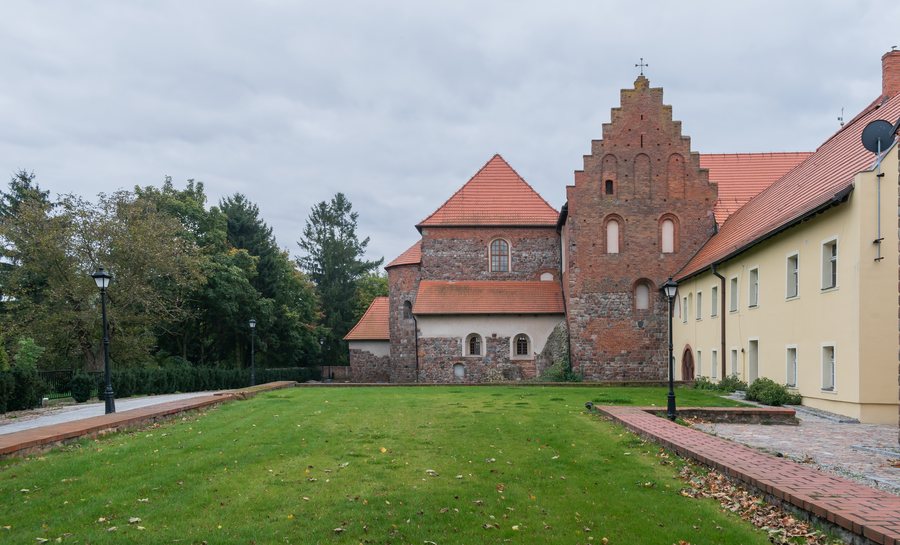 File:Holy Trinity church in Strzelno (2).jpg
Photo: Krzysztof Golik via Wikimedia Commons, CC BY-SA 4.0
File:Holy Trinity church in Strzelno (2).jpg
Photo: Krzysztof Golik via Wikimedia Commons, CC BY-SA 4.0
Strzelno at a glance
- The parish church of the Holy Trinity was built between 1174 and 1216 for the Premonstratensian convent.
- The church has four side chapels and four richly decorated Romanesque columns between the naves.
- The Romanesque Rotunda of St. Procopius has a circular nave, two apses, and a rectangular presbytery.
- The collections of the Otton and Bolesław Romanesque Museum cover, among other subjects, the history of the order.
Which Romanesque artworks define the history of the convent?
The former Premonstratensian convent complex is known for its Romanesque sculptural works. Three carved tympana are considered the largest collection of their kind in the country. A fourth tympanum from the Rotunda of St. Procopius is a reconstruction. This distinction helps separate the surviving works from the addition.
The columns in the Church of the Holy Trinity also offer a tangible insight into the visual language of the complex. Four Romanesque columns stand between the naves. They were uncovered in 1946 after being enclosed within Baroque brick piers. Their decorations depict personifications of virtues, sins, and vices, as well as plant motifs. The former convent complex is protected as a Polish Historic Monument; reasons for its protection include its historical, artistic, and scholarly value, as well as its authentic building fabric. The Romanesque columns depicting virtues and vices are described as unique in Europe.
What can you learn about the Church of the Holy Trinity?
Its construction between 1174 and 1216 links the parish church to the Premonstratensian convent. Its four side chapels are dedicated to St. Barbara, the Sacred Heart of Jesus, St. Norbert, and St. Restitutus. This allows you to understand the church not only through its Romanesque features, but also through its later religious dedications.
When exploring the architecture, it is worth looking at several details: the Romanesque columns between the naves, their figurative and floral decorations, and the four different chapel patrons. Together, these features convey different aspects of the church without reducing it to a single period or artwork.
How does the rotunda differ from the parish church?
The Rotunda of St. Procopius can be described by its layout: it has a circular nave, two apses, and a rectangular presbytery. Opposite the presbytery is a double Romanesque window, or biforium. The interior is simply furnished and predominantly Baroque; it dates from the 18th century. Thus, Romanesque architectural forms stand alongside later interior furnishings in the rotunda.
These details provide a clear guide for your cultural interests: the parish church features columns, decorations, and chapels, among other things, while the rotunda stands out for its layout, window, and Baroque furnishings. Those interested in Romanesque architecture can thus explore two different forms within Strzelno's monastic history, rather than treating the two buildings as alike.
What topics does the museum cover?
The collections of the Otton and Bolesław Romanesque Museum in Strzelno are divided into Romanesque and archaeological, and liturgical sections. Both explore the history of the Premonstratensian nuns from different perspectives. The museum thus complements the architectural themes with a collection-based perspective: when planning your trip, you can decide whether you are more interested in architectural forms and sculpture or in the history of the order.
Discover more destinations: Mogilno, Chabsko, Izdby, Wójcin, Kwieciszewo, Mielenko.
FAQ
What do the collections of the Otton and Bolesław Romanesque Museum show?
They are divided into Romanesque and archaeological, and liturgical sections, and cover the history of the Premonstratensian nuns.
How many Romanesque tympana are mentioned for the former convent complex?
Three carved tympana are considered the largest collection of their kind in the country. A fourth tympanum from the Rotunda of St. Procopius is a reconstruction.
What are the architectural features of the Rotunda of St. Procopius?
It has a circular nave, two apses, and a rectangular presbytery. Opposite the presbytery is a double Romanesque window, or biforium.
See the broader travel guide: Mogilno.

.jpg)