
Discover Włocławek: Culture, Views and Cycling Routes
Accommodation in Włocławek
Włocławek can be explored from several perspectives: the city’s history is presented in permanent exhibitions and large-scale murals, faience craftsmanship has its own cultural centre, and the observation tower offers views across the city and its surroundings.
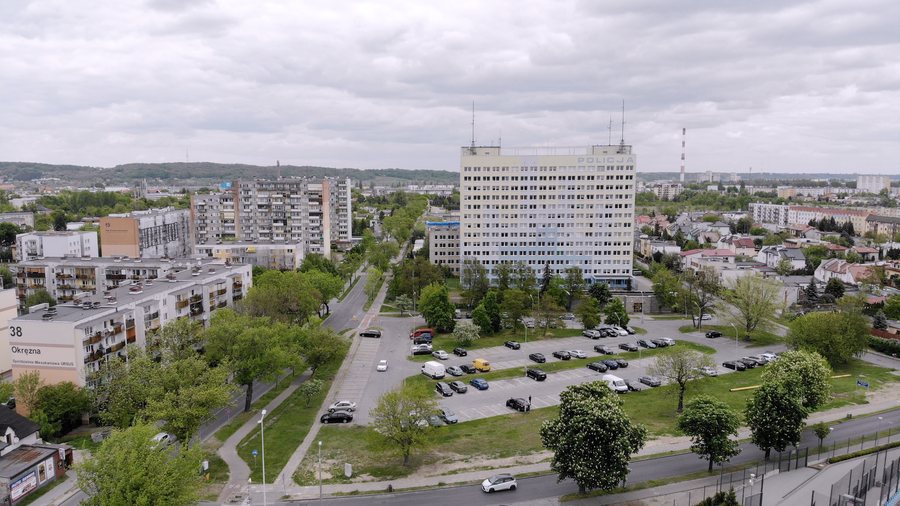
Włocławek at a glance
- The Muzeum Historii Włocławka presents permanent exhibitions on the history of the city and region, from prehistory to the period of the Polish People’s Republic.
- The observation tower on Wzgórze św. Gotarda offers views from platforms at heights of 3.5 m, 7.7 m, 11.9 m and 16.1 m.
- A murals trail explores the city’s history through large-scale wall paintings.
Which cultural attractions tell the story of Włocławek?
The Muzeum Historii Włocławka combines a broad historical perspective with a specific location in the city. It opened in 1972 as a branch of the Muzeum Ziemi Kujawskiej i Dobrzyńskiej and is housed in three listed townhouses at the junction of Stary Rynek and ul. Szpichlerna. The permanent exhibitions cover the history of Włocławek and the region from prehistory to the period of the Polish People’s Republic. Their timeline thus spans from early eras to more recent history.
The murals trail takes a different approach: its large-scale wall paintings have the city’s history as their central theme. Most of the works are located in the immediate Śródmieście area of Włocławek. The listed locations include Żabia 14/16, Wojska Polskiego 3, Piekarska 15, Bulwary Marszałka Józefa Piłsudskiego 22 and 25, Cyganka 9, and Żabia 2. This lets you compare the museum’s historical perspective with an artistic interpretation of the cityscape.
Skarbiec Fajansu offers another cultural perspective: it is an interactive cultural centre devoted to the 150-year history of Włocławek faience craftsmanship. Centrum Kultury Browar B. adds to the range with cultural events such as music concerts and theatre performances, contemporary art exhibitions, and regular courses and group activities. The themes thus range from city and regional history to crafts and contemporary culture.
How can you explore the views and routes?
The observation tower on Wzgórze św. Gotarda offers views of Włocławek and the surrounding area. The four listed platform heights range from 3.5 m to 16.1 m. The tower is therefore a complement to the cultural attractions if you would like to include a viewpoint alongside exhibitions and murals.
The Miejski Spacerowy Szlak Obiektów Zabytkowych is signposted for visitors interested in historic buildings in Włocławek. If you are more interested in cycling routes, you will find two marked trails with different lengths and destinations: the black Jezioro Wikaryjskie–Włocławek–Wieniec cycling route is 20 km long. The red Nadwiślański cycling route runs from Włocławek via Nieszawa to Ciechocinek and is 38 km long. If total distance is a factor in your choice, the black route is shorter; the listed destinations also differ.
The Włower municipal bike-sharing system has almost 100 modern bicycles and 22 stations across different parts of Włocławek. Since the fleet and number of stations may change, check the latest information if you want to include the system in your plans. You can consider the marked cycling routes by length and destination, and take the municipal bike-sharing system into account as another planning option.
How do you choose a hotel to suit your plans?
First, decide whether museums, murals and faience craftsmanship or views and cycling routes are the main focus of your stay.
Discover more destinations
Discover more destinations: Smólnik, Szczutkowo, Antoniewo, Augustynowo, Chotel, Kowal, Baruchowo, Brzezie.
FAQ
What period do the permanent exhibitions cover?
They present the history of Włocławek and the region from prehistory to the period of the Polish People’s Republic.
Where are most of the murals located?
Most of the works on the murals trail are in the immediate Śródmieście area of Włocławek.
How do the marked cycling routes differ?
The black Jezioro Wikaryjskie–Włocławek–Wieniec route is 20 km long. The red Nadwiślański cycling route runs via Nieszawa to Ciechocinek and is 38 km long.
Go to the main travel overview: Włocławek.

