
Brzesko: City History and the Tradition of St. James
Accommodation in Brzesko
Brzesko brings together traces of its city history and a vibrant tradition of St. James. Four cycling loops in the surrounding area add the opportunity to explore the region by bike to the cultural theme.
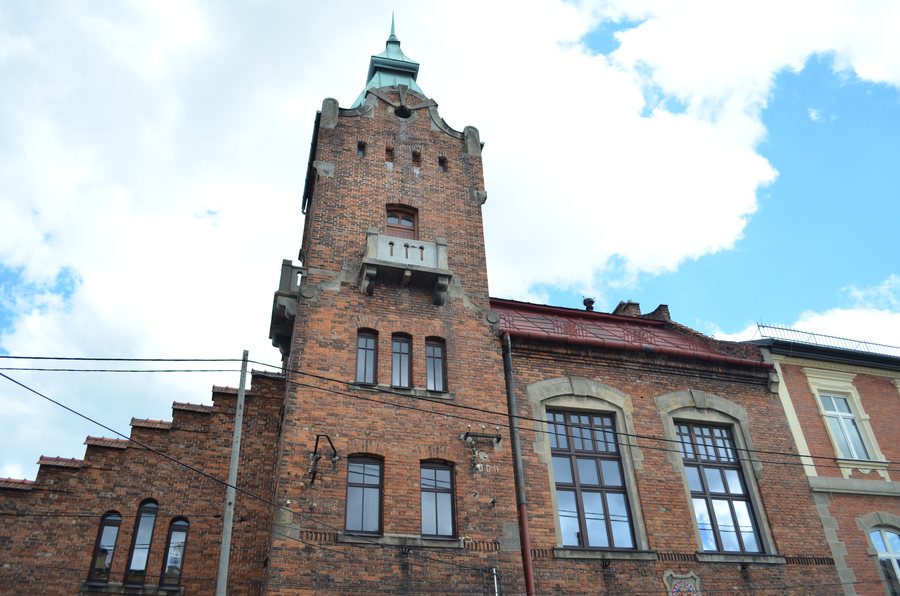 File:Brzesko, ratusz, ob. Miejski Ośrodek Kultury, 1909-1910 8.JPG
Photo: Fmbar22 via Wikimedia Commons, CC BY-SA 3.0 pl
File:Brzesko, ratusz, ob. Miejski Ośrodek Kultury, 1909-1910 8.JPG
Photo: Fmbar22 via Wikimedia Commons, CC BY-SA 3.0 pl
Brzesko at a glance
The market square is home to a Baroque statue of St. Florian and buildings featuring Neo-Renaissance, eclectic, and Art Nouveau elements. The former town hall has a mosaic of the griffin from the city coat of arms. Other historical points of interest include St. James Parish Church, a Jewish cemetery, and the Goetz family palace in Okocim. There are four cycling loops in the surrounding area, ranging from just over 18 to around 25 km.
What traces of the city’s history can you find?
The buildings around Brzesko’s market square were constructed after the great fire of 1904. Their designs feature Neo-Renaissance, eclectic, and Art Nouveau elements. The different styles offer a tangible insight into the architecture of the buildings, without limiting the market square to a single style.
The market square is also home to a Baroque statue of St. Florian, erected in 1731. It was funded by the town’s residents after another city fire. Another striking detail of the city’s history is the former town hall: built in 1909–1910, its south façade is decorated with a mosaic of the griffin from the city coat of arms. The market square and town hall thus offer different points of interest for travelers interested in city history, architecture, or heraldic motifs.
What religious and historical themes shape Brzesko?
On October 6, 2018, St. James Parish Church in Brzesko was elevated to the status of a sanctuary of St. James the Apostle on the Via Regia. Dni Jakubowe is also part of the town’s connection to St. James: it takes place every July in Brzesko and attracts pilgrims from various parts of Poland. For travel planning, the distinction matters: the church’s elevation was a dated event, while Dni Jakubowe is an annual celebration.
Brzesko’s Jewish cemetery is also part of the town’s history. Established around 1824, it is the burial place of, among others, the rabbis Arie Leibusz, who died in 1846, and Towi Lipschitz, who died in 1912.
In Okocim, the Goetz family palace was built from 1898 to 1900 to plans by Viennese architects Ferdinand Fellner and Herman Helmer. Its construction history offers another point of interest for travelers interested in cultural history, focusing on the family that commissioned it and the period when the palace was built.
What cycling loops are there in the surrounding area?
You can ride four cycling loops in the area around Brzesko. Their routes range from just over 18 to around 25 km. The distances help you compare the tours by length; on their own, they do not indicate how long a ride will take or how difficult it will be. Audio features share information about the places visited, local heritage, and regional traditions. If you would like to explore these themes on a cycling trip as well as the city’s history, these tours offer a different focus from the historic buildings and the town’s connection to St. James.
If you would like to compare other destinations, you can also consult the town pages for Czchów, Mokrzyska, Łysa Góra, Uszew, Szczepanów, Iwkowa, Połom Mały and Biesiadki.
FAQ
When does Dni Jakubowe take place?
It takes place every July in Brzesko.
What does the mosaic on the former town hall depict?
The mosaic on the south façade depicts the griffin from the city coat of arms.
How long are the cycling loops in the surrounding area?
The four loops range from just over 18 to around 25 km.
For the broader travel overview: Brzesko.

