
Krzyszkowice: Manor Estate, Chapels and Local History
Accommodation in Krzyszkowice
The local history of Krzyszkowice is reflected in its manor and park estate, chapels and cemetery connections. When planning your trip, it is worth distinguishing these local topics from hiking trails and other cultural topics in the wider destination of Myślenice.
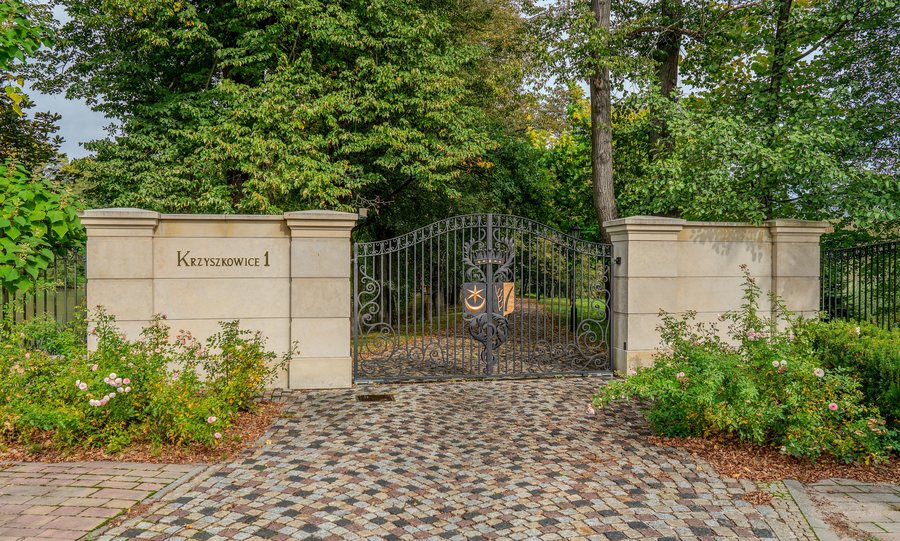 File:Krzyszkowice gm. Myślenice. Dwór park (A-616M) (9).jpg
Photo: Januszk57 via Wikimedia Commons, CC BY-SA 4.0
Krzyszkowice at a glance
The manor and park estate is located in the central part of Krzyszkowice, a few hundred metres west of St. Anne’s Parish Church. The current manor house in the estate complex was built around 2013. The stone Chapel of St. Florian was founded in 1883.
How is the manor estate situated?
Its location in the central part of Krzyszkowice, a few hundred metres west of St. Anne’s Parish Church, provides a clear reference point for the manor and park estate. The estate complex includes the current manor house, built around 2013. Compared with the Chapel of St. Florian, founded in 1883, it is a considerably newer building, dated “around 2013”.
There are three ponds east of the manor estate. A description from June 2020 noted that they were once again clearly visible at that time.
What historical traces shape Krzyszkowice?
The chapels differ in their materials, dedications and origins. Andrzej and Katarzyna Salowie founded the stone Chapel of St. Florian in 1883. At the entrance to the park stands the wooden Chapel of St. John of Nepomuk, on a masonry plinth. These are distinct points of reference: the founders and year are significant for the Chapel of St. Florian, while the location at the park entrance and the construction are notable for the Chapel of St. John of Nepomuk.
The cemetery’s history also includes specific local connections. The cemetery by St. Anne’s Church in Krzyszkowice was established and consecrated in 1886. The grave of Professor-Priest Władysław Wicher is located in the Krzyszkowice cemetery. In January 1937, the remains of Augusta de Montléart were transferred to the local cemetery in Krzyszkowice. These dates connect different forms of commemoration with local history, without reducing them to a single event.
How do the hiking trails in the wider destination of Myślenice differ?
Several hiking trails with different routes run through the wider destination of Myślenice. The red trail from Myślenice via Działek, Kudłacze and Łysina to Jaworzyce is 15.5 kilometres long and is listed as taking six hours. The yellow trail runs from Myślenice via Dalin and Pisania to Sułkowice; its 13.5 kilometres are listed as taking three hours and 45 minutes. The red trail is 2 kilometres longer, and its stated duration is 2 hours and 15 minutes longer than that of the yellow trail.
Another red route runs from Myślenice via Sularzówka, Trzebuńska Góra, Babica, Bieńkowska Góra and Końcówka to Palcza. It is 20.5 kilometres long; the stated duration of five hours and 45 minutes explicitly applies to one direction. This qualification matters when comparing routes: the time should not be read as the duration of a round trip.
What cultural attractions does the wider destination of Myślenice offer?
The historic urban fabric of Myślenice is considered a valuable monument at both regional and national levels. It is an example of a medieval town layout; surviving remnants point to a settlement that existed before the town was founded. At the Sanctuary of Our Lady of Myślenice, the church was built in the mid-15th century. An early Baroque chapel was added in 1642–1646.
The sanctuary also houses a miraculous 16th-century image painted in Italy, which became the destination of numerous pilgrimages. The religious dates are also specified: the main feast is held on 8 September. From May to October, night-time Fatima devotions with vigils are held there on the 13th of each month. These cultural and religious connections belong to the wider destination of Myślenice, not to the local features of Krzyszkowice.
Discover more destinations: Głogoczów, Lubień, Harbutowice, Trzemesnia, Gruszów, Pcim, Borzęta, Siepraw.
FAQ
Where is the manor and park estate located?
It is in the central part of Krzyszkowice, a few hundred metres west of St. Anne’s Parish Church.
How do the two chapels differ?
The Chapel of St. Florian is made of stone and was founded in 1883 by Andrzej and Katarzyna Salowie. The Chapel of St. John of Nepomuk is made of wood, stands at the park entrance and rests on a masonry plinth.
When was the current manor house built?
The current manor house in the estate complex was built around 2013.
For the wider travel overview: Myślenice.

