
Stróza: Rock Trails and Architecture
Accommodation in Stróza
Stróza combines marked rock trails, bouldering and distinctive rock formations with a Neo-Gothic church and dated buildings. The specific differences can help you weigh your interests in nature and culture when planning your trip and accommodation.
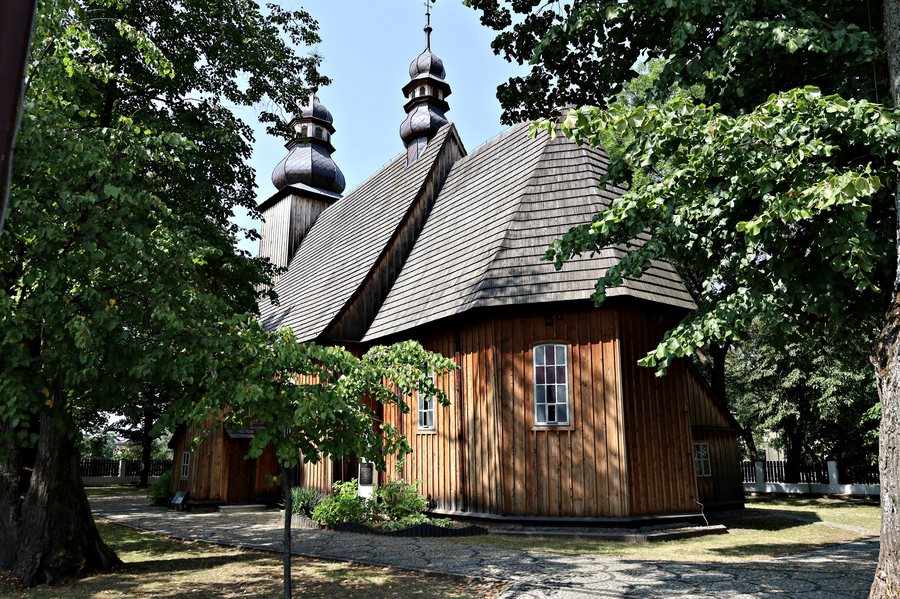 File:Stróża, Kościół św. Kazimierza i Józefa v.jpg
Photo: Jacek Daczyński via Wikimedia Commons, CC BY-SA 4.0
Stróza at a glance
A short trail marked in black leads to Wielki Kamień and branches off from the trail marked in yellow, which runs over the summit and ridge of Krzywicka Góra. Diabelski Kamień is 6.5 m high. The Church of NMP Królowej Polski was built in 1904–1909; Willa Klebertówka dates from 1923, and the “Firkówka” farmstead from 1924.
Which rock and trail features are important?
Bouldering takes place at Wielki Kamień, where there are five boulder problems rated 6b to 6c on the French grading scale. The grades indicate the difficulty of the problems; they do not provide information about the approach. Activity details may change. If bouldering is a deciding factor for your trip, check the information in advance.
The short trail marked in black to Wielki Kamień branches off from the trail marked in yellow, which runs over the summit and ridge of Krzywicka Góra. Diabelski Kamień has different notable features: the rock formation lies on the slopes of Kotoń, is 6.5 m high and can be reached via a marked turnoff. This makes it possible to distinguish between the two rock destinations based on their specific features: Wielki Kamień is associated with bouldering and the trail route, while Diabelski Kamień is notable for its height and location on the slope.
How can the building history be understood?
The Church of NMP Królowej Polski was built between 1904 and 1909 in the Neo-Gothic style. Its freestanding bell tower was built in 1908. The interior contains Neo-Baroque altars; the stained-glass windows were made in 1966 to a design by Adam Bunsch. Neo-Gothic describes the style of the church building, while Neo-Baroque describes the design of the altars. The stained-glass windows date from after the church was built.
Willa Klebertówka was built in 1923 and is located near the hamlet of Miłogoszcz. The “Firkówka” farmstead dates from 1924. The years are close together, but refer to different buildings: a villa and a farmstead.
What does the Strefa Aktywności Sportowo-Rekreacyjnej offer?
A report dated 14 April 2026 describes the completed Strefa Aktywności Sportowo-Rekreacyjnej, with a pump track for cycling and skateboarding, a playground, a covered seating area and benches. The facility is intended for children and young people from Stróza and all surrounding localities. If you want to make using it a fixed part of your plans, check its current status in advance.
Discover more destinations: Wiśniowa, Skomielna Czarna, Lubień, Myslenice, Krzyszkowice, Głogoczów, Krzywaczka and Siepraw.
FAQ
Where does the marked trail to Wielki Kamień lead?
A short trail marked in black branches off from the trail marked in yellow, which runs over the summit and ridge of Krzywicka Góra.
What information is available about bouldering?
There are five boulder problems at Wielki Kamień, rated 6b to 6c on the French grading scale. Activity details may change; check the information in advance if you are making a special trip for this activity.
Which architectural styles are associated with the church?
The church is Neo-Gothic; the altars inside are Neo-Baroque. The stained-glass windows were made in 1966 to a design by Adam Bunsch.
For the wider travel overview: Myślenice.

