
Berest: Lemko Church and Cultural History
Accommodation in Berest
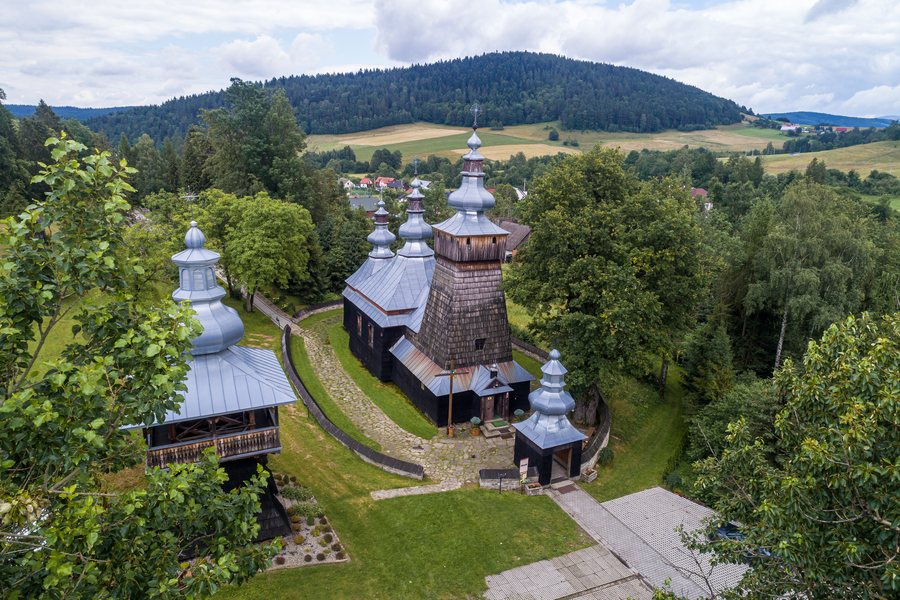
Berest offers a clear cultural focus: the former Greek Catholic Church of Saints Cosmas and Damian is a large Lemko church of the so-called northwestern type. Its architectural form and an icon dating from 1721 also give this destination a distinctive theme. If you compare places by cultural history and architecture, you will find specific details here rather than just a general impression.
Quick facts about Berest
- The former Greek Catholic church belongs to the northwestern Lemko type and has a three-part layout.
- The chancel faces east; tent roofs support onion-shaped cupolas.
- The church houses the icon Opieka Bogurodzicy, dating from 1721.
- Berest is on the Lemko Church Trail.
What makes the church’s architecture distinctive?
The church is divided into a nave, chancel, and porch. This three-part layout describes the building’s structure, while the chancel’s eastward orientation is another feature. Together, these details give a concrete sense of how the architectural form can be described: by its individual sections and their orientation. The so-called northwestern type also places the building within a named form of Lemko church architecture.
The roof design also contributes to this distinctive appearance. Onion-shaped cupolas covered in sheet metal sit atop tent roofs. This distinguishes the roof form from its crowning feature: the tent roofs provide the basic shape, while the cupolas add a separate accent above them. For a trip focused on regional religious architecture, the church offers several specific points to guide comparisons.
What exterior architectural details are described?
The walls are built of logs and covered with shingles. There are also slightly sloping walls and tower supports that enclose the porch. A zachata surrounds the tower. These terms refer to different parts of the building: the wall construction, the porch area, and the surroundings of the tower. The combination of the wooden construction and the roof forms described makes the architecture a tangible subject of interest, without requiring a general comparison with other churches.
The enclosure also contributes to the described appearance. A low rubble-stone wall surrounds the church, with a gate topped by a sheet-metal-covered cupola. Alongside the wooden elements, the rubble-stone wall and the metal covering of the gate add further materials and forms. When planning a trip with a particular interest in cultural heritage, you can use these details to identify which aspects of the complex matter most to you.
What cultural and historical details are there?
The church houses the icon Opieka Bogurodzicy, dating from 1721. It was in the church in Izby until 1955. This date distinguishes between two locations: its former location in Izby until 1955 and the location in Berest given for the icon. This does not state that it was transferred specifically in 1955.
The icon complements the architectural features with a specific historical object that has its own name and date. In Berest, interest in the building itself can thus be combined with a particular cultural artifact placed in a historical context. For a cultural trip, this distinction can help with planning: the architectural form describes the building, while the icon’s name and date highlight a specific historical object.
What role does the Lemko Church Trail play?
Berest is on the Lemko Church Trail. This connection adds a broader cultural context to the details about the church. It is especially relevant to travelers who also choose destinations based on church architecture and Lemko culture. This information establishes Berest’s connection to the trail; on its own, it says nothing about current trail conditions or access.
Discover more destinations: Nowa Wieś, Białawoda, Zawadka, Gródek Nad Dunajcem, Krynica-Zdrój, Barcice, Muszyna and Krzyżówka.
FAQ
What is architecturally distinctive about the church in Berest?
It is a large Lemko church of the so-called northwestern type. Its plan includes a nave, chancel, and porch; the chancel faces east.
What roof and wall forms are mentioned?
The tent roofs support onion-shaped cupolas covered with sheet metal. The walls are built of logs and covered with shingles.
What is the history of the icon Opieka Bogurodzicy?
The icon dates from 1721 and is in the church in Berest. It was in the church in Izby until 1955.
How is Berest connected to the Lemko Church Trail?
Berest is on the Lemko Church Trail. This adds its connection to the trail to the described features of the church.
Go to the main travel overview: Nowy Sącz.

