
Łącko: Hiking Trails, Cycling Routes and Church Art
Accommodation in Łącko
Łącko combines ecclesiastical history with designated hiking and cycling routes. When planning your trip, you can explore culture, nature conservation and specific routes; there is also an annual festival held in May.
Łącko at a glance
The parish church dates from the 18th century and was consecrated in 1720. Its notable furnishings include a Gothic baptismal font dating from 1493. Marked hiking and cycling trails offer different distances and time estimates; the Święto Kwitnącej Jabłoni is held every year in May.
What makes the parish church in Łącko distinctive?
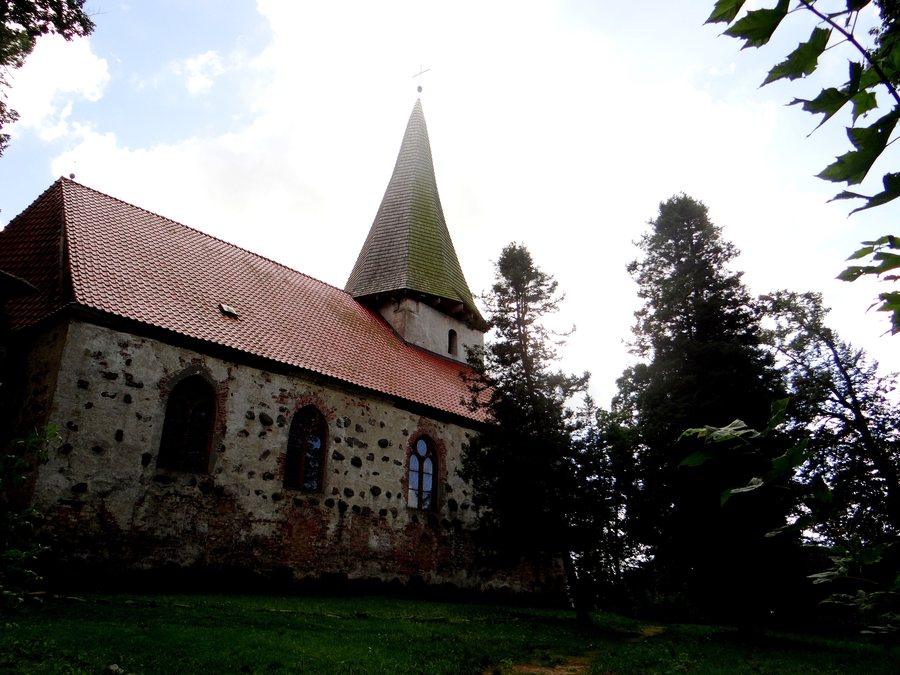
The parish church of “St John the Baptist and St Michael the Archangel” dates from the 18th century. Bishop Jan Tarło consecrated it in 1720. This makes the consecration a specific historical point of reference for the church in Łącko.
A Gothic baptismal font made of stone and wood adds another dimension to the church. It dates from 1493, is chalice-shaped and stands 120 centimetres tall. Its date is much earlier than that of the 18th-century church. Together, these details reveal different historical layers without requiring any prior knowledge of art history.
What conservation feature is associated with the church?
Breeding colonies of lesser horseshoe bats and greater mouse-eared bats live in the church attic. Both bat species are considered endangered across Europe and require active protection. Alongside the building’s history and furnishings, this adds a specific nature conservation aspect—of interest to travellers who care about wildlife and its protection.
What hiking routes and walking times are listed?
A yellow-marked hike to Modyń starts at Łącko’s market square. The outbound walk takes about three hours, and the return takes two and a half hours. Another yellow-marked route runs via Modyń, Kicznia and Łącko to the cycling bridge over the Dunajec in Czerniec. It continues via Łąckie Zawodzie and Suchy Groń to Dzwonkówka; the stated walking time is seven hours.
For planning, it is worth keeping these times separate: for the hike from the market square, the outbound and return walks are listed individually, while the other route has a walking time of seven hours. Check current trail markings and conditions before setting out.
How do the marked cycling routes differ?
The shortest route described is a four-kilometre, black-marked route from Łącko via Jeżowa to Byniowa. A ten-kilometre, yellow-and-green-marked route runs via Kiczonki, Pożogi, Czarny Potok and Wolaki back to Łącko. This loop includes the return to the starting point.
Two other routes lead to Modyń, but differ in length and course. The 12-kilometre, blue-marked route runs via Kicznia, Góra Klończyk and Wyrobiska. The 14-kilometre, red-marked route runs via Zagorzyn, Wola Piskulina, Wola Kosnowa, Dudówki, Tomaszki, Zagrodniki and Pod Modyń. You can compare them by their listed distances and named waypoints; the trail-marking colour alone does not indicate difficulty.
When does the Święto Kwitnącej Jabłoni take place?
The annual Święto Kwitnącej Jabłoni takes place in May at the amphitheatre on Góra Jeżowa. If you would like to plan your trip around the festival, check current announcements for the exact date and programme.
Discover more destinations: Binczarowa, Nowa Wieś, Krzyżówka, Grybow, Nowy Sącz, Florynka, Mochnaczka Niżna, Labowa.
FAQ
How long does the hike from the market square to Modyń take?
The outbound walk takes about three hours, and the return takes around two and a half hours.
Which cycling route leads back to Łącko?
The ten-kilometre, yellow-and-green-marked route runs via Kiczonki, Pożogi, Czarny Potok and Wolaki back to Łącko.
When and where is the Święto Kwitnącej Jabłoni celebrated?
The festival is held every year in May at the amphitheatre on Góra Jeżowa. Check current announcements for the date and programme.
Go to the broader travel overview: Nowy Sącz.

