
Grybow: Historic Architecture and Jewish Heritage
Accommodation in Grybow
Grybow lies in the Biała Valley on the edge of the Lower Beskids. Its most important historic buildings are concentrated around the market square. The basilica, synagogue, Jewish cemetery, and parish museum each offer a different perspective and provide concrete points of interest if you are interested in architecture and history.
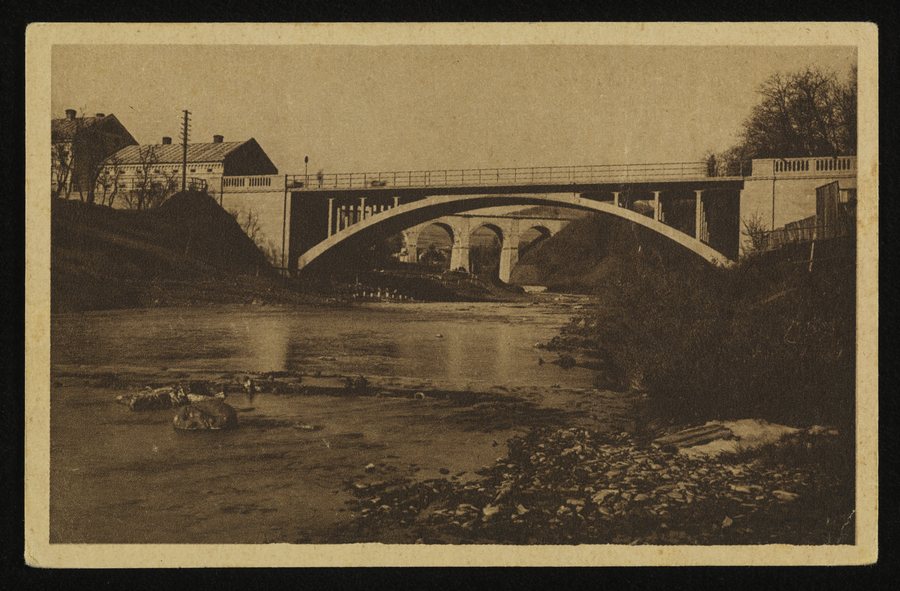 Grybów: view from above the bridge and viaduct over the Biała, before 1932
Photo: Unknown author via Wikimedia Commons, Public domain
Grybow at a glance
- Grybow lies in the Biała Valley on the edge of the Lower Beskids.
- Its most important historic buildings are concentrated around the market square.
- The Neo-Gothic basilica was built in 1909–1914; its tower is 77 meters high.
- The railway station is on line 96 from Tarnów to Leluchów and is served by the K7/K71 lines. Check the timetable before your trip.
- The historic rectory now houses the parish museum; it was probably built in 1699.
What architecture defines Grybow?
The town hall on the north side of the market square is a Neo-Gothic brick building dating from 1902. The Basilica of St. Catherine of Alexandria is also Neo-Gothic: the parish church was built between 1909 and 1914. Its 77-meter-high tower is a landmark in Grybow's architectural history. The basilica contains the venerated image of Our Lady Przedziwna, dating from 1700, and a wooden Madonna and Child known as the Madonna of Grybów.
The historic “Sokół” Society building at 7 Kościuszki Street was built between 1906 and 1910. Its historic form and architectural details are clearly visible. Southeast of the market square stands the preserved Classicist manor house of the Hoschów family. Comparing these buildings takes you from the Neo-Gothic style of the town hall and basilica to the Classicism of the manor house; the Sokół building adds another historic style to the picture.
What traces of Jewish history can you find?
The synagogue on Kilińskiego Street was built in 1909. A niche for the Aron ha-Kodesh has been preserved inside. Jewish Cemetery No. 130 preserves around 50 stone tombstones from the 19th and 20th centuries. Jewish soldiers who fell in the First World War are buried in a separate military section. The synagogue and cemetery offer different insights: one preserves an architectural detail, while the other features tombstones and a distinct burial area.
The First World War military cemetery No. 129 is a separate site. It lies on the southeastern edge of Grybow and was designed by Hans Mayr. For those interested in history, it complements Cemetery No. 130 with another site associated with the First World War.
What can you see at the parish museum?
The historic rectory now houses the parish museum; it was probably built in 1699. The permanent exhibition is divided into sections on Western and Eastern Christian civilization. There is also a section on Jewish tradition. The exhibition thus presents several religious traditions in separate sections.
Specific exhibits include the painting “Saint Zofia with Her Daughters,” dating from 1440. The eastern exhibition section contains icons, some of which date back to the 17th century. The painting and the icons provide a sense of the different periods represented in the collection and complement its thematic organization.
How can you find your way around when arriving and sightseeing?
The market square is a useful reference point for the main historic buildings. The Hoschów family manor house is southeast of it; military cemetery No. 129 lies on the southeastern outskirts of the town. This helps distinguish the buildings around the market square from the two southeastern locations.
For train travel, Grybow station is on line 96 from Tarnów to Leluchów. The K7/K71 lines serve the Kraków/Tarnów–Nowy Sącz–Krynica-Zdrój connection. Timetables may change, so check your connection before traveling. Grybow can be considered both for its historic sites and its rail connection; which of these aspects matters to your plans depends on your own travel arrangements.
FAQ
When was the basilica built, and how tall is its tower?
The Neo-Gothic parish church was built from 1909 to 1914. Its tower is 77 meters high.
What does the parish museum's permanent exhibition include?
It is divided into sections on Western and Eastern Christian civilization, as well as Jewish tradition. Exhibits include a painting dating from 1440 and icons, some of which date back to the 17th century.
Which train services stop at Grybow station?
The K7/K71 lines serve the Kraków/Tarnów–Nowy Sącz–Krynica-Zdrój connection. Check the timetable before your trip.
For the broader travel overview: Nowy Sącz.

