
Koźmice Wielkie
Accommodation in Koźmice Wielkie
Koźmice Wielkie combines steep, wooded slopes and a broad meadow valley with religious and historical memorial sites. If you’re looking for a place to stay with a rural landscape and tangible traces of culture, these features offer clear points of reference.
Koźmice Wielkie at a glance
The Wilga flows through the northern part of the village. Part of Czarny Las lies within Koźmice Wielkie. Cultural landmarks include a chapel on the border with Siercza, a stone statue of Saint John of Nepomuk, and a monument to partisans.
What kind of landscape characterizes Koźmice Wielkie?
Czarny Las grows on steep slopes that are unsuitable for farming. Oak and beech trees make up most of the forest; spruce and pine are present in smaller proportions. Among the trees, you’ll find blackberries, raspberries and wild strawberries, among other plants. Mushrooms also grow there, attracting foragers. The landscape is therefore shaped both by the nature of the slopes and by the diverse vegetation.
Another landscape feature is the Wilga: it crosses the northern part of Koźmice Wielkie from southeast to northwest, forming a broad valley characterized by meadows. The combination of steep, wooded slopes and the open valley gives a clear impression of the village’s varied landscape. If nature and a rural setting are your main priorities when choosing a destination, you can take these two features into account.
What cultural landmarks are there in the village?
A chapel dating from the first half of the 19th century stands on the border between Koźmice Wielkie and Siercza. It was renovated toward the end of the 19th century. To this day, it is considered a symbol of the faith of the local population. Its construction and subsequent renovation are two distinct milestones in its history.
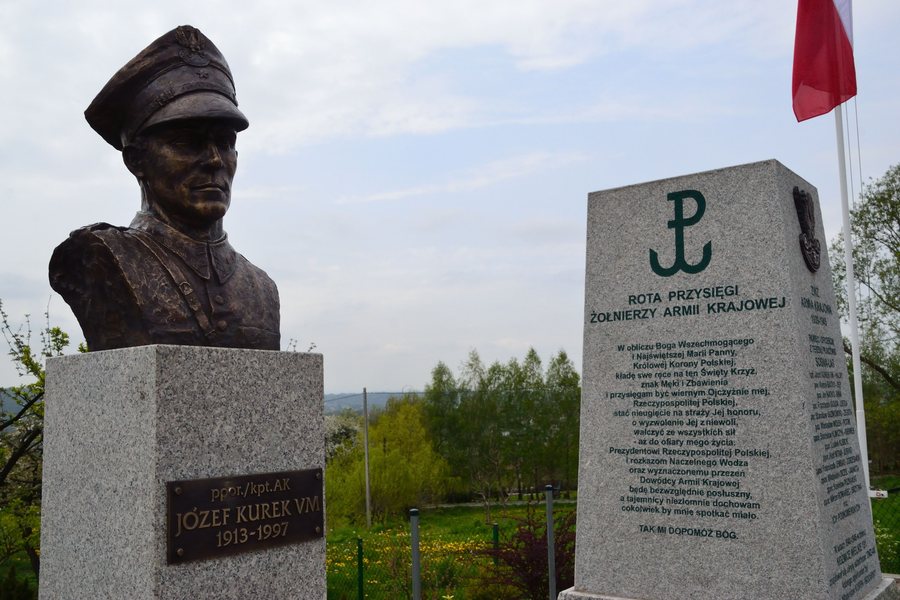
Near the Wilga, at the intersection of the Wieliczka–Myślenice road and the road to Janowice, stands a statue of Saint John of Nepomuk made entirely of stone. It dates from 1827 and was commissioned by Jan Holewa. Another historical theme is the commemoration of the partisans of the ZWZ-AK “Sosna-Las” unit, who fought German troops from 1940 to 1945. A monument honoring them was unveiled in Koźmice Wielkie on May 2, 2013.
What should you know about the cycling route in the region?
The 23-kilometer cycling route through the Pogórze Wielickie passes through Koźmice Małe, among other places. Koźmice Wielkie is not included in the listed route sequence. When planning, it is therefore important to distinguish between the similar-sounding place names: the route sequence mentioned refers to Koźmice Małe, not Koźmice Wielkie.
More pages about nearby places: Przebieczany, Gdów, Sułków, Zakrzów, Łysokanie, Mała Wieś, Jawczyce and Suchoraba.
FAQ
What is the landscape like in Koźmice Wielkie?
The village includes part of Czarny Las, with its steep slopes, and the broad, meadow-filled valley of the Wilga.
Which historical memorial sites are mentioned?
A chapel on the border with Siercza, the 1827 stone statue of Saint John of Nepomuk, and the monument unveiled in 2013 to the partisans of the “Sosna-Las” unit.
Does the 23-kilometer cycling route pass through Koźmice Wielkie?
Koźmice Wielkie is not included in the listed route sequence. The cycling route passes through Koźmice Małe, among other places.
Go to the main travel overview: Wieliczka.

