
Discover Wieliczka: Salt Mine and Cultural Heritage
Accommodation in Wieliczka
Wieliczka brings together the history of salt mining, historic buildings and outdoor trails. This lets you compare different focuses for your trip: mining history, cultural heritage or activities in the region.
Wieliczka facts at a glance
- The Wieliczka Salt Mine is the oldest salt enterprise in Polish territory; its origins date back to the Middle Ages.
- Żupny Castle houses the Muzeum Żup Krakowskich, with exhibitions about the salt mine.
- The guided Miners’ Route starts at the Regis Shaft and is about two kilometres long.
- The Żupny Garden consists of two terraces and is an integral part of the castle.
What stories does Wieliczka tell about salt?
The history of the salt mine dates back to the Middle Ages. It is part of the UNESCO World Heritage Site “Wieliczka and Bochnia Royal Salt Mines.” Żupny Castle houses the Muzeum Żup Krakowskich, whose rooms feature exhibitions about the salt mine. An archaeological exhibition in the castle traces the development of salt production from the Neolithic period to the Middle Ages.
A renovation notice is relevant for visits to Żupny Castle: a notice dated 8 September 2026 reports that the castle and its courtyard are closed for renovation work. The work is expected to continue until the end of 2028. Check the current status before planning a visit.
What can you expect at the mining sites?
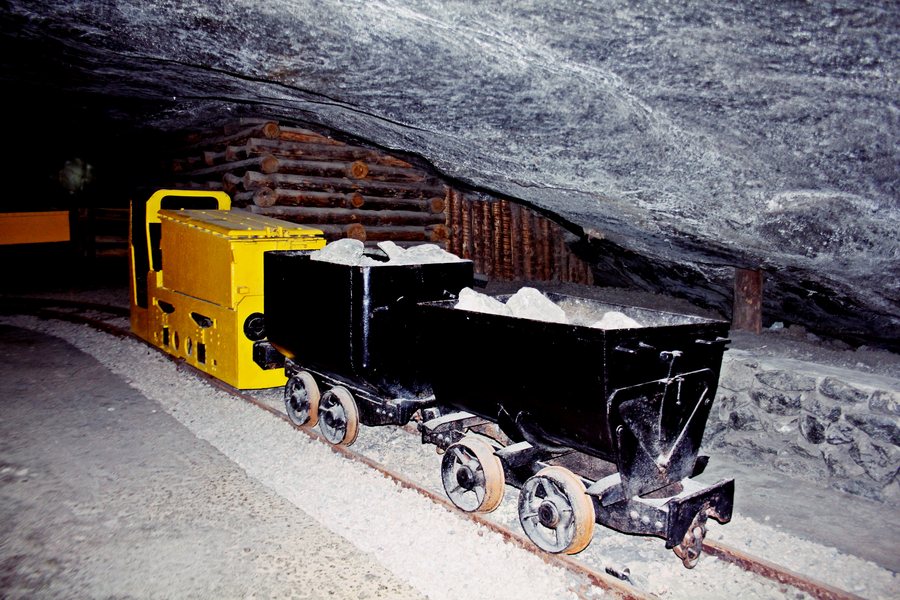
The Regis Shaft is the oldest surviving shaft of the Wieliczka Salt Mine and the only surviving medieval mining shaft in the city. After reopening to tourists in 2012, it became the starting point for the approximately two-kilometre-long Miners’ Route. The guided tour passes through 7 to 14 excavated chambers in the rough workings around the shaft. Participants receive mining equipment, learn about former working methods and tackle practical mining tasks. Check the current visiting conditions before travelling.
Another distinctive feature of the mine is the Chapel of St. Kinga, located 101 metres underground. Numerous elements of its interior are carved from salt. The chapel and the hands-on tour at the Regis Shaft show different aspects of the mining heritage: the design of an underground space on the one hand, and mining methods and tasks on the other.
Which buildings and gardens shape the cultural heritage?
The Żupny Garden is an integral part of Żupny Castle. It was reconstructed between 1993 and 1995 and consists of two terraces. The town is also home to the wooden Church of St. Sebastian, built in 1582 and featuring Renaissance paintings. The parish Church of St. Clement was founded in 1381 by the townspeople; it preserves architectural elements from the 13th and 14th centuries.
The Franciscan church and monastery in Wieliczka were built in the first half of the 17th century. They were the first stone church of the Lesser Poland Reformed Province. The historic Jewish cemetery in Wieliczka is also a testament to the past and dates from the 18th century.
What cultural sites and activities are there in the wider region?
The wider region around the destination of Wieliczka includes other places, each with its own history. In Grabie, the parish Church of the Assumption of the Blessed Virgin Mary dates from 1742. It contains a Gothic stone baptismal font from the 15th century. In Siercza, the Ursuline convent is located in a former Lubomirski palace dating from around the turn of the 20th century. In Raciborsko, remnants of a former manor complex, including a granary, have been preserved.
Siercza is also home to a riding stable where you can ride under the guidance of an instructor. Check availability in advance. These places and activities add other regional themes to the story of salt, without requiring you to follow the same day plan.
How do the routes in the region differ?
The yellow trail is a hiking and cycling route between Wieliczka and Dobczyce. The red cycling route, by contrast, forms a 27-kilometre loop through Wieliczka and Siercza. These details provide a clear comparison of the route formats: a connection between two places versus a designated circular route.
The “Las i stawy na Grabówkach” ecological protection area lies along a hiking and cycling route starting in Wieliczka. For the connection to Kraków, a municipal overview dated 19 January 2024 lists metropolitan-area buses. Routes and services can change, so check current connections and travel times before setting off.
When planning your trip, you can first decide whether salt history, historic buildings or outdoor trails are your main focus. For more destinations, also discover Biskupice, Mała Wieś, Suchoraba, Czarnochowice, Jawczyce, Byszyce and Brzegi.
FAQ
What is the Miners’ Route like?
The guided route starts at the Regis Shaft, is about two kilometres long and passes through 7 to 14 excavated chambers. Participants receive mining equipment, learn about former working methods and carry out practical tasks. Check the current visiting conditions before travelling.
How do the yellow trail and the red cycling route differ?
The yellow trail connects Wieliczka and Dobczyce as a hiking and cycling route. The red cycling route is a 27-kilometre loop through Wieliczka and Siercza.
What should you check before visiting Żupny Castle?
A notice dated 8 September 2026 reports that the castle and its courtyard are closed for renovation work, which is expected to continue until the end of 2028. Check the current status before your visit.
For the broader travel overview: Wieliczka.

