
Pabianice
Accommodation in Pabianice
Pabianice brings together buildings from different centuries, waterside locations and a route tracing the marks left by different cultures.
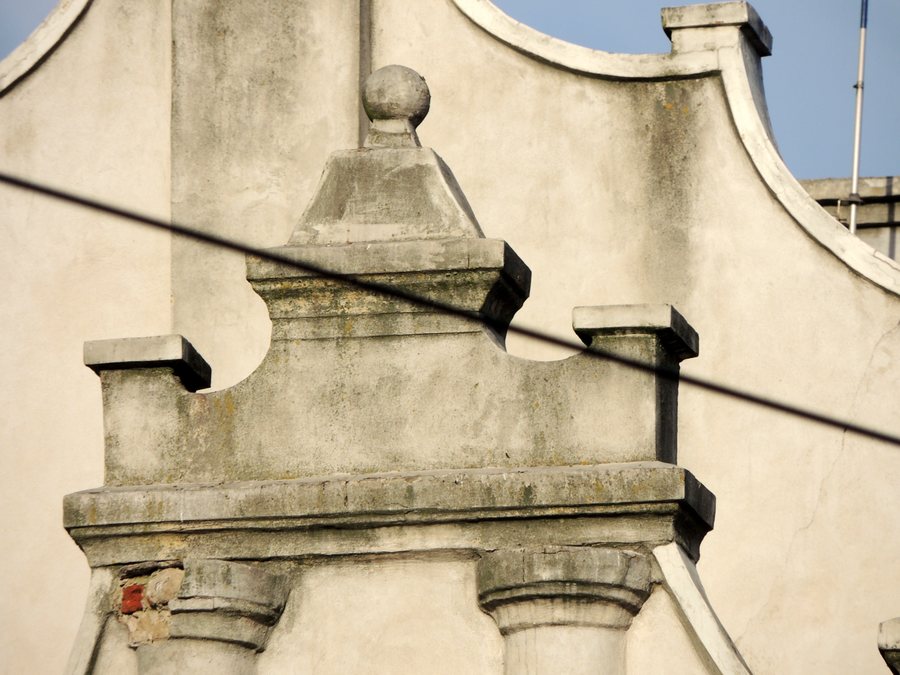 File:Pabianice, Stary Rynek 1, Dwór Kapituły Krakowskiej-003.jpg
Photo: Jacek Bogdan via Wikimedia Commons, CC BY-SA 3.0 pl
File:Pabianice, Stary Rynek 1, Dwór Kapituły Krakowskiej-003.jpg
Photo: Jacek Bogdan via Wikimedia Commons, CC BY-SA 3.0 pl
Pabianice at a glance
- The Church of St Matthew the Apostle and Evangelist and St Lawrence the Martyr was built between 1583 and 1588.
- The city museum is housed in a Renaissance manor house colloquially known as “Zamek”.
- The “Lewityn” recreation centre is in the south of the city, by ponds and the Dobrzynka River.
- Pabianice is served by a railway line, a tram line to Łódź and an extensive bus network.
What does the architecture tell us about Pabianice?
One striking example of the city’s architectural history is the Church of St Matthew the Apostle and Evangelist and St Lawrence the Martyr. Its Late Gothic and Renaissance forms contrast with its Baroque interior. The church was built between 1583 and 1588. It thus combines several architectural styles in a single building, with the different forms evident both in its exterior and its interior.
The Renaissance manor house, commonly called “Zamek”, also shapes the city’s historic character. It is a unique and valuable monument of 16th-century Polish architecture. The Museum of the City of Pabianice is housed in the same manor house. Its collections include prehistoric, medieval and modern-era artefacts from Pabianice. These include a coin hoard from the 16th to 18th centuries, found in the manor house. In this way, the building’s own Renaissance architecture and objects from different periods of the city’s history come together in one place.
What other historic places can you discover?
The Evangelical-Augsburg Church of St Peter and St Paul dates from 1827. It was consecrated and opened for worship in 1832. The mausoleum of the Kindler family, built in 1911, also survives in the Evangelical-Augsburg Cemetery. These two sites add examples from the 19th and early 20th centuries to the city’s architectural history.
The former Baruch factory offers another perspective on the city’s history. The complex is located on Lipowa Street, between Zamkowa and Grobelna, and is typical of the industrial architecture of the Łódź region.
Where can you find water and walking routes in Pabianice?
In the south of Pabianice, the “Lewityn” recreation centre extends around ponds and along the Dobrzynka River. Juliusz Słowacki Park is a historic city park on the same river, established in 1901. The two places provide different settings for the water: “Lewityn” is associated with its ponds and the river, while the park is characterised by its history as a city park.
A promenade called “bulwary” runs along the edge of the regulated main channel of the Dobrzynka. It connects Marchlewskiego and Grobelna Streets. Another way to explore the city on foot is the “Śladami Wielokulturowości Pabianic” route, designed to help visitors discover traces of different cultures and religions in Pabianice. Alongside the city’s buildings, this route offers those interested in cultural history a path specifically focused on this diversity.
How is Pabianice connected by public transport?
Pabianice is served by a railway line, a tram line to Łódź and an extensive bus network. These modes of transport each form part of the city’s connections: the tram line goes to Łódź, while the railway and bus network also contribute to the transport options. When planning your trip, you can consider these connections alongside your interests in the city’s history, architecture or places along the Dobrzynka.
Compare other destination pages: Konstantynów Łódzki, Ksawerów and Dobroń.
FAQ
Which architectural styles are combined in the Church of St Matthew and St Lawrence?
It combines Late Gothic and Renaissance forms with a Baroque interior. It was built between 1583 and 1588.
What is housed in the Renaissance manor house “Zamek”?
It houses the Museum of the City of Pabianice. Its collections include prehistoric, medieval and modern-era artefacts, including a coin hoard from the 16th to 18th centuries.
Which modes of transport serve Pabianice?
Pabianice is served by a railway line, a tram line to Łódź and an extensive bus network.
Which places in Pabianice are connected with the Dobrzynka?
The “Lewityn” recreation centre is by the river and around ponds. Juliusz Słowacki Park is a historic city park on the river; the “bulwary” promenade runs along the edge of the regulated main channel.
For the broader travel overview: Pabianicki.

