
Lipce Reymontowskie
Accommodation in Lipce Reymontowskie
Visitors interested in Lipce Reymontowskie from a cultural perspective will find a range of themes: a former textile mill, military history, old household appliances and a 19th-century cemetery chapel.
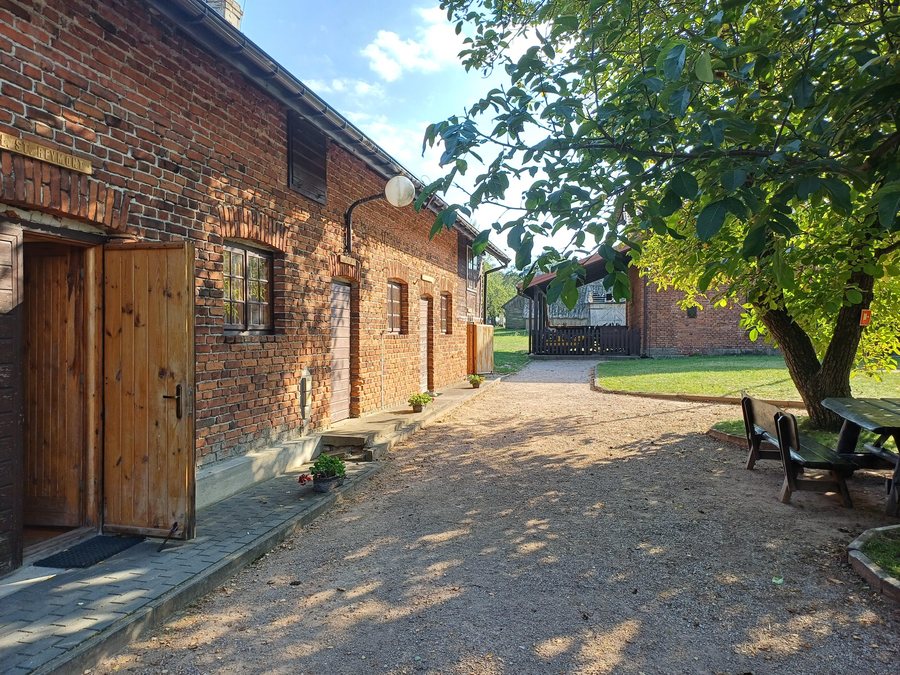 Muzeum Regionalne im. Wł. St. Reymonta – Lipce Reymontowskie
Photo: Radosław Botev via Wikimedia Commons, CC BY 3.0 pl
Muzeum Regionalne im. Wł. St. Reymonta – Lipce Reymontowskie
Photo: Radosław Botev via Wikimedia Commons, CC BY 3.0 pl
Cultural highlights and experiences at a glance
The Muzeum Regionalne im. Wł. St. Reymonta is housed in preserved buildings of the former textile mill owned by the Winklów family. The Muzeum Czynu Zbrojnego was founded in 1988 on the basis of private military memorabilia collections connected with the independence struggles in the Lipce Reymontowskie area and its surroundings. A third room in the museum is devoted to the post-war history of the Polish Army.
The listed Kaplica Cmentarna is a 19th-century cemetery chapel in Lipce Reymontowskie. The Galeria Staroci i Pamiątek Regionalnych displays old household appliances. For many years, the nationwide “Dzień Reymonta” has helped popularize the literary works and biography of Nobel laureate Władysław St. Reymont.
What themes do the museums cover?
The Muzeum Regionalne connects its location with the history of a former textile mill: it is housed in the preserved buildings of the Winklów family’s mill. This gives it a distinct historical focus from the military history themes of the Muzeum Czynu Zbrojnego. If you are interested in the history of buildings and former businesses, you can include the regional museum as a distinct cultural highlight in your selection.
The Muzeum Czynu Zbrojnego’s private military memorabilia collections are connected with the history of the independence struggles in the region and its surroundings. A third room turns to a different period: it is devoted to the post-war history of the Polish Army.
What other cultural highlights are there?
The Kaplica Cmentarna has a different focus from the museums: it is a listed 19th-century cemetery chapel. If you are particularly interested in historic religious buildings or the history of cemetery chapels, you can include this site in your cultural research. Its historical context and listed status are as much part of its description as its function as a cemetery chapel.
The Galeria Staroci i Pamiątek Regionalnych displays old household appliances. This makes its focus different from that of the military history collection: everyday appliances rather than military memorabilia. This distinction can help you choose cultural topics if you are more interested in household objects from the past than in military history.
What connects Lipce Reymontowskie with Reymont?
“Dzień Reymonta” is a nationwide artistic event. For many years, it has served to popularize the literary works and biography of Władysław St. Reymont, the Nobel laureate. This event adds a literary and biographical connection to the historic sites and collections. When planning your trip, it is useful to distinguish the nature of the event from a fixed date: the information provided describes its purpose but does not specify an event date. If you are interested in Reymont’s work or life story, this is another reason to explore the cultural profile of the town.
Which other town pages can you compare?
For comparison with other towns, you can also find Skierniewice, Chlebów and Bolimów here.
FAQ
Where is the Muzeum Regionalne im. Wł. St. Reymonta located?
It is housed in the preserved buildings of the former textile mill owned by the Winklów family.
What history does the Muzeum Czynu Zbrojnego cover?
Its private military memorabilia collections are connected with the history of the independence struggles in the Lipce Reymontowskie area and its surroundings. A third room is devoted to the post-war history of the Polish Army.
What is “Dzień Reymonta” about?
For many years, this nationwide artistic event has served to popularize the literary works and biography of Władysław St. Reymont.
For the broader travel overview: Skierniewice.

.jpg)