
Bad Dirsdorf: Discover Spa History and Nature
Accommodation in Bad Dirsdorf
Bad Dirsdorf (Przerzeczyn-Zdrój) combines a spa history dating back to 1802 with natural mineral waters and the rocky gorge of the Ślęza. Historical names, landscape features, and a described cycling route offer different ways to explore the town according to your interests.
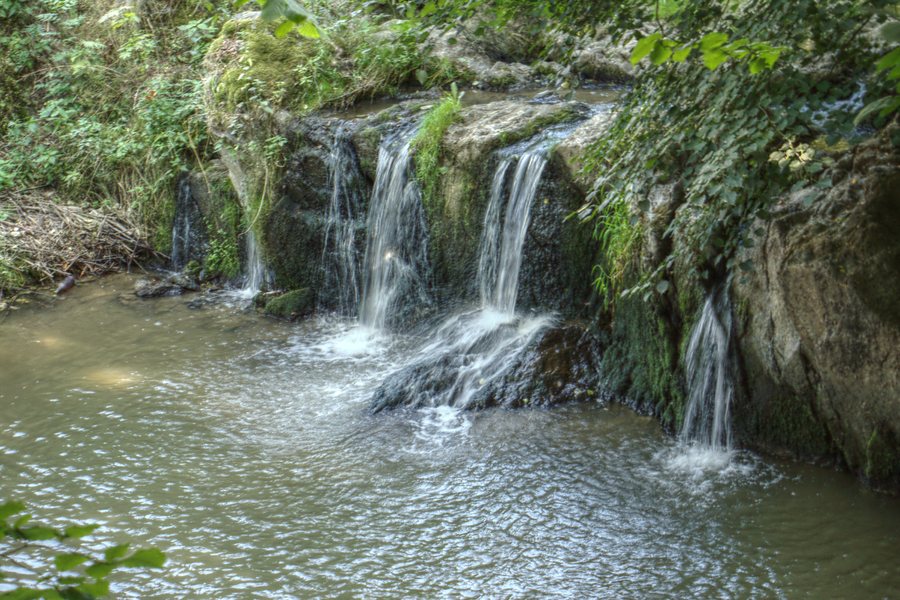 Przerzeczyn-Zdrój, vodopád
Photo: I would appreciate being notified if you use my work outside Wikimedia. More of my work can be found in my personal gallery . via Source, CC BY 3.0
Bad Dirsdorf at a glance
The history of the spa dates back to 1802. That year, a sulfur-water spring was enclosed and a small wooden bathhouse was built; it is now called Jaś. The spa house built in Przerzeczyn in 1825 is known as Akacja. The natural mineral waters are rich in sulfides, radon, or iron. The eastern spa district is home to a spa park, mineral-water boreholes, a fountain, and sanatorium buildings. A red cycling route passes through Przerzeczyn-Zdrój, by the church building, and continues to Podlesie.
Which historic traces shape the spa town?
The year 1802 is an important point of reference for the beginnings of the spa: Count von Pfeil had a spring developed for therapeutic use. That same year, a sulfur-water spring was enclosed and a small wooden bathhouse for therapeutic baths was built. The building is now called Jaś.
Another milestone is the spa house built in Przerzeczyn in 1825, now known as Akacja. The two buildings therefore belong to different periods in the spa’s history: the wooden bathhouse was part of the early development of the healing spring, while the spa house was added later. The history of the Church of Our Lady Queen of Poland (Najświętszej Maryi Panny Królowej Polski) also goes back a long way; its origins are dated to 1280. The town thus brings together historic buildings from different periods.
What landscape features can you discover in Bad Dirsdorf?
A striking natural feature is the rocky gorge of the Ślęza, with cascades and a small waterfall. A 2021 article also describes a viewing platform there, from which a cascade with a small waterfall can be seen. If you plan to visit the platform, check its condition before your visit. The landscape can be understood both through the shape of the gorge and through its water features.
The described landscape of the eastern spa district includes a spa park, mineral-water boreholes, a fountain, and sanatorium buildings. Distinct from these is the landscape park around the palace dating from 1906, which is reported to cover about 3.4 hectares. The natural composition of the mineral waters is another distinctive feature of the spa; sulfides, radon, or iron are listed as constituents.
What should you know about the cycling route?
A description of the red cycling route, last updated in 2020, takes it through Przerzeczyn-Zdrój, past the church building, and then on to Podlesie. The church is therefore a named landmark along the described route. The two endpoints of this section are also useful for planning: the route not only passes through the town but continues toward Podlesie afterward.
The historic buildings and the gorge of the Ślęza offer different points of interest, while the cycling route describes a specific course. If you would like to explore Bad Dirsdorf by bike, check the route before planning; the description available here was last updated in 2020.
FAQ
How far back does Bad Dirsdorf’s spa history go?
The spa’s origins date back to 1802. That year, a sulfur-water spring was enclosed and a small wooden bathhouse for therapeutic baths was built.
What natural features can you find at the gorge of the Ślęza?
The features described include a rocky gorge, cascades, and a small waterfall. A 2021 article also mentions a viewing platform; check its condition before visiting.
Where does the described red cycling route lead?
It passes through Przerzeczyn-Zdrój, by the Church of Our Lady Queen of Poland (Najświętszej Maryi Panny Królowej Polski), and continues to Podlesie. The route description was last updated in 2020.
For the broader travel overview: Niemcza.

