
Discover Altheide-Bad
Accommodation in Altheide-Bad
Altheide-Bad combines a historic spa park and a pump room with facilities for mountain bikers, a longer hiking trail and an ethnographic museum. Which of these aspects interests you most may help determine your choice of destination and accommodation.
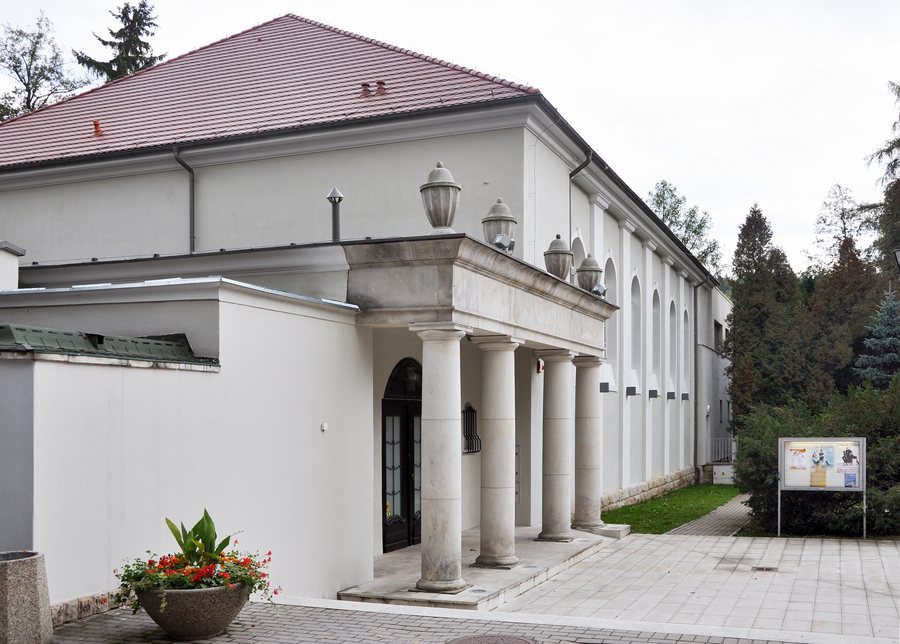
Altheide-Bad at a glance
The Zdrojowy Park was laid out in 1906 in Polanica-Zdrój, the Polish name for Altheide-Bad. The water Wielka Pieniawa is available to drink on site in the pump room; it is also sold bottled in shops. The Cross Country Park includes an XCO MTB trail with technical sections. The Leśny Szlak Wspinaczkowy is 6.8 km long and takes about 2.5 hours on foot. Cultural attractions include the Ethnographic Missionary Museum.
What do the park and pump room offer?
Zdrojowy Park was laid out in 1906. Its promenades lead to the forests and mountains. This gives the park its own place among the town’s attractions: the focus is on paths through the park and its connection to landscapes of forests and mountains. If you would rather combine your trip with a visit to the park and a stay in the pump room, this offers a different focus from the MTB trail or hiking path.
Wielka Pieniawa water contains natural carbon dioxide. You can drink it on site in the pump room in Polanica-Zdrój; it is also sold bottled in shops. This means you can consider a visit to the pump room separately from whether you want to try the water there or sample it as a bottled product. The park and the water are different aspects of the spa town: one is defined by its layout and promenades, the other by its natural composition and the pump room.
What options are there for cycling and hiking?
The Cross Country Park has an XCO MTB trail with technical sections, including rock gardens, stones and tree trunks. These features make the trail especially relevant to your travel plans if you are specifically looking for a mountain bike route with technical passages. Important to know: the trail is for cyclists only; pedestrian traffic is prohibited. It is therefore not a shared route for cycling and hiking.
Another option on foot is the Leśny Szlak Wspinaczkowy. The 6.8 km route is listed as taking about 2.5 hours. It leads to Piekielna Dolina, which features scenic steep slopes, rock outcrops and viewpoints. If you include this route in your trip, you can take both its length and approximate walking time into account when planning your day. The information about the hiking trail provides a concrete guide, without equating it with the technical sections of the MTB trail.
What can you see at the Ethnographic Missionary Museum?
The Ethnographic Missionary Museum is housed in a 19th-century monastery that was converted into a mission house in 1927. Its collection includes clothing, jewelry, musical instruments, everyday objects and sculptures collected by missionaries. The different groups of objects offer different ways to explore the collection: clothing and jewelry sit alongside musical instruments, everyday objects and sculptures. The museum thus complements the town’s opportunities for nature and outdoor activities with a cultural attraction.
When planning your stay, you can first consider which of Altheide-Bad’s different aspects appeals to you most: the park and pump room, a technical MTB trail, the hike to Piekielna Dolina or a visit to the museum.
If you would like to compare other destinations, you can also find Radochów, Sokolec, Nowa Ruda, Bielice, Kąty Bystrzyckie, Sienna, Domaszków and Poręba here.
FAQ
How long is the Leśny Szlak Wspinaczkowy?
The trail is 6.8 km long and takes about 2.5 hours on foot.
Can pedestrians use the XCO MTB trail?
No. The trail in the Cross Country Park is for cyclists only; pedestrian traffic is prohibited.
What does the Ethnographic Missionary Museum collection include?
It includes clothing, jewelry, musical instruments, everyday objects and sculptures collected by missionaries.
For the broader travel overview: Kłodzki.

