
Gierczyn – Hiking Trail and Mining History
Accommodation in Gierczyn
The green hiking trail from Lubań to Lwówek Śląski passes through Gierczyn, a place with a long history shaped by tin mining. The church and listed historic park add to the village’s historic landmarks. If you’re planning a hike, check the current trail conditions.
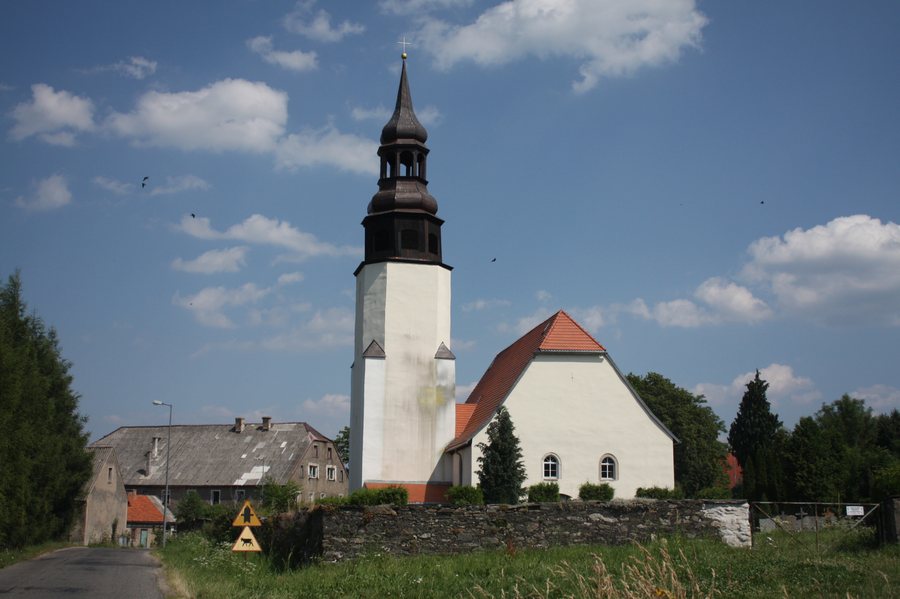
Gierczyn at a glance
- The first mention of the village dates back to 1385.
- Gierczyn was an important mining center linked to local tin ore deposits; a mining office was established in 1578.
- The Church of the Nativity of the Blessed Virgin Mary dates back to 1604 and was later altered.
- The church’s furnishings include a Renaissance coffered ceiling and a stone baptismal font.
- A listed historic park dating from the late 19th and early 20th centuries lies in the northern part of the village.
- The green hiking trail from Lubań to Lwówek Śląski passes through Gierczyn.
What does the mining history tell us?
The village’s history can be placed in context through several distinct dates: 1385 is the first mention of Gierczyn, while 1578 marks the establishment of a mining office. During the tin-mining period, the Schaffgotsch family brought miners from Jáchymov in Bohemia to Gierczyn. The village was an important mining center linked to local tin ore deposits.
A mining office was an administrative body for the mining industry. Its establishment is therefore a different historical reference point from the village’s first mention: one date marks an early written reference, while the other marks a specific institution connected with mining. Gierczyn’s mining history can thus be understood through more than one date.
What makes the church special?
The Church of the Nativity of the Blessed Virgin Mary in Gierczyn dates back to 1604. It was altered in the mid-17th century and again in the 18th century. Its furnishings include a Renaissance coffered ceiling and a stone baptismal font. The church also contains stone epitaphs and tombstones from the 18th and 19th centuries.
A coffered ceiling is divided into individual panels; the term describes a type of ceiling design. Epitaphs and tombstones, by contrast, are stone memorials. These features represent different aspects of the church: its original date, later alterations, and furnishings and memorials added over several centuries. This helps put the building’s history and individual features in context without assigning them all to a single period.
What other traces of history are there?
A listed historic park with valuable trees is located in the northern part of Gierczyn and dates from the late 19th and early 20th centuries. It is a separate point of reference alongside the church and the mining history. Its dates set it clearly apart from the church, which dates back to 1604. Its location in the northern part of the village also helps you place the park within Gierczyn.
What is the hiking trail like in the surrounding area?
The green hiking trail from Lubań to Lwówek Śląski passes through Gierczyn. From there, a path continues through the Czarnotka stream valley and along the slope of Łyszczyk to the hamlet of Lasek. Near Lasek, a viewpoint offers a view over the Mirsk Valley. The viewpoint is therefore near Lasek, not in Gierczyn; the village and the scenic viewpoint are two distinct landmarks to keep in mind when planning your trip.
If you’re planning a hike, check the current trail conditions before setting off. This lets you consider the section through the village and the onward route towards Lasek separately, and plan your trip according to the actual conditions.
Discover more destinations: Gryfów Śląski, Chmieleń, Mlądz, Gajówka, Tarczyn, Kłopotnica, Mirsk, Grudza.
FAQ
Which dates are important in Gierczyn’s history?
1385 is the first mention of the village. A mining office was established in 1578, and the Church of the Nativity of the Blessed Virgin Mary dates back to 1604. These dates therefore refer to different milestones in the village’s history.
What lies along the route towards Lasek?
The path leads through the Czarnotka stream valley and along the slope of Łyszczyk to the hamlet of Lasek. There, a viewpoint overlooks the Mirsk Valley.
What historic features of the church are known?
The church was altered in the mid-17th century and in the 18th century. Its features include a Renaissance coffered ceiling, a stone baptismal font, and stone epitaphs and tombstones from the 18th and 19th centuries.
For the broader travel overview: Löwenberg in Silesia.

