
Groß Merzdorf (Marcinowice): History and Accommodation
Accommodation in Groß Merzdorf
Groß Merzdorf, now Marcinowice in Lower Silesia, has a church with several layers of construction and furnishings. There is also a roadside shrine, former station buildings and a schoolhouse dating from the early 20th century. Anyone interested in local history can view these places as separate clues to the village’s development. Accommodation in the village should be chosen based on its actual location; the historic buildings are not evidence of guided tours or special hotel services.
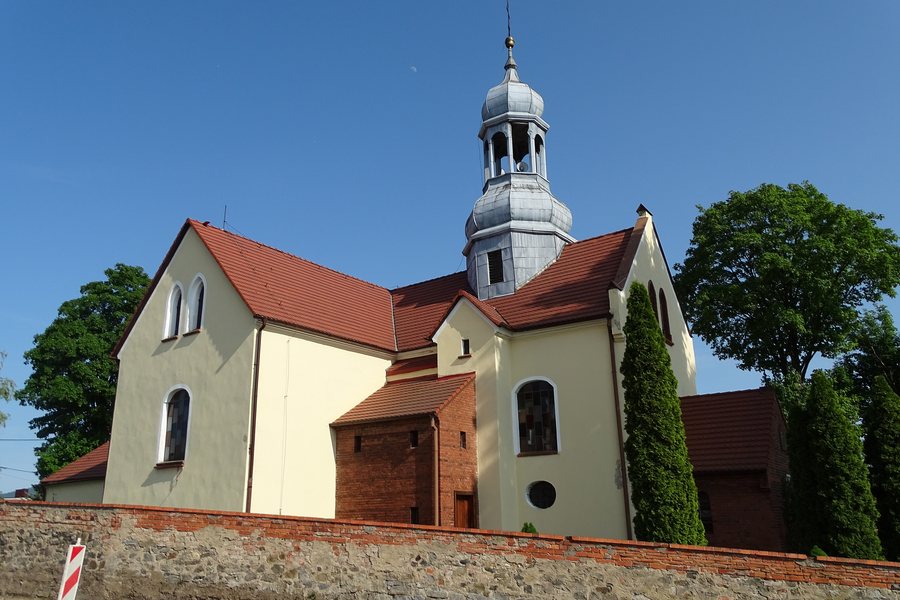 File:Kościół św. Wacława Marcinowice.jpg
Photo: Robert Niedźwiedzki via Wikimedia Commons, CC BY-SA 4.0
Key facts about Groß Merzdorf / Marcinowice
- St. Wacław Church dates back to a building from around 1500.
- After being destroyed during the Thirty Years’ War, it acquired its present late Baroque appearance in the 18th century.
- A brick roadside shrine on Juliana Tuwima Street dates from around 1830.
- Buildings from the former railway station, dating from the early 20th century, have been preserved.
- A brick school building from the same period stands at 67 Kolejowa Street.
St. Wacław: a building with several layers
The filial church of St. Wacław is described by the municipality as a particularly valuable historic monument in Marcinowice. A church building was constructed around 1500. It was destroyed during the Thirty Years’ War; in the first half of the 18th century, it was rebuilt or newly constructed. The source does not clarify which. Its present late Baroque appearance should therefore not be mistaken for a completely unchanged Renaissance building.
The interior contains Baroque furnishings: painted wooden altars from the 18th century, oil paintings from the same period, and a wooden pulpit with evangelical images dating from the transition between the 18th and 19th centuries. These are distinct objects with different dates. Anyone interested in art history can therefore take a closer look at the church rather than viewing it only from the outside. The historical information reviewed does not indicate whether it will be open at the time of travel or whether a guided tour is available.
The churchyard contains the grave of Angela Hilcher, a woman who lived in the village before the war and was buried there in 1920. The churchyard is therefore also a place of remembrance. Visitors should respect its character as a cemetery; the grave is not an attraction for staged entertainment.
The roadside shrine, school and railway traces
A brick roadside shrine dating from around 1830 stands on Juliana Tuwima Street. Its approximate date of construction falls between the major phases of the church and the more recent public buildings. A brick school building from the early 20th century stands at 67 Kolejowa Street. Buildings from the former railway station dating from this period have also been preserved. These places tell us more about everyday life and transport than sacred art.
Marcinowice Świdnickie station is listed at 20 Kolejowa in an undated directory and described there as accessible to people with reduced mobility. Such a catalogue entry does not confirm current accessibility or present-day train connections. Anyone who relies on step-free routes should not base their specific travel plans solely on this old designation. Likewise, the preserved station building does not prove that regular passenger services operate.
The main page about the Świdnica County provides the regional context. In Marcinowice itself, the church and later local buildings are the documented reasons to visit. The choice of accommodation depends on which of these stops matters and what a particular offer actually includes.
FAQ
Has the church been completely preserved from around 1500?
No. A building was constructed around 1500, destroyed during the Thirty Years’ War, and rebuilt or newly constructed in the 18th century.
Where is the roadside shrine?
The brick roadside shrine dating from around 1830 is on Juliana Tuwima Street in Marcinowice.
What remains as a reminder of the former railway?
Buildings from the former railway station dating from the early 20th century have been preserved. This does not mean there is a current train timetable.

