
Discover Kotowice on the Oder
Accommodation in Kotowice
Kotowice lies on the Oder and has a long village history. A yellow hiking trail passes through Kotowice. When planning your trip, also consider the described road and rail routes, as well as which experiences you want to shape your stay.
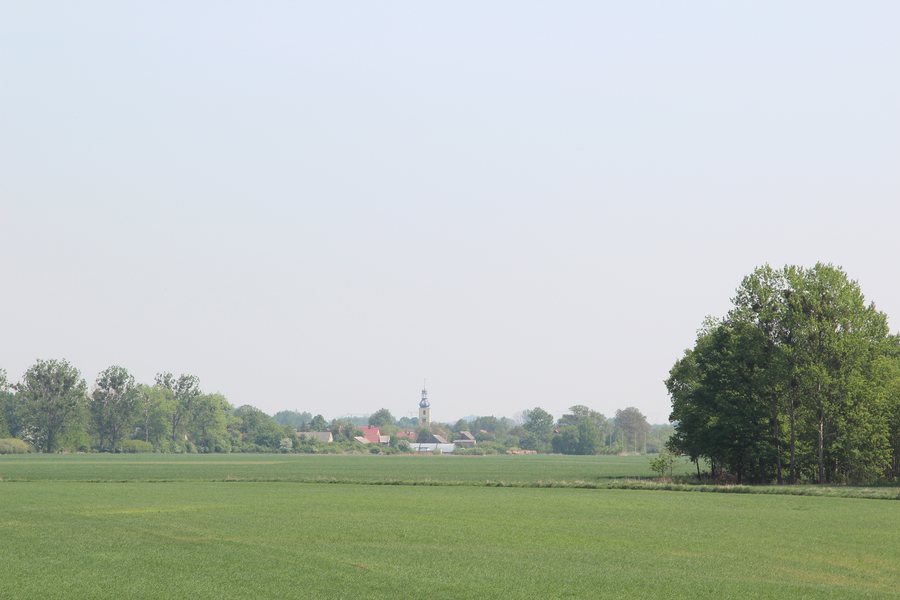
Kotowice at a glance
- The first mentions of the village date from the early 13th century.
- A former parish church is documented in 1376; it burned down in 1832.
- A new church was built in Kotowice in 1902.
- The yellow hiking trail is 12 km long and passes through Kotowice on its way to Uraz.
- Routes from Wrocław and railway stations in Szewce and Pęgów are mentioned for getting there.
What does Kotowice’s history tell us?
Kotowice was described as a monastic fishing village. The residents are said to have supplied fish to the Cistercian monastery in Trzebnica; today, the inhabitants no longer fish there. The description thus refers to a former activity, not to a current offering.
A former parish church in Kotowice is documented in 1376; it burned down in 1832.
A new church was built in Kotowice in 1902 at the request and through the efforts of the residents.
On the square in front of a historic church in Kotowice, an information board describes the village’s history and sights.
What is the route of the yellow hiking trail?
The 12 km yellow hiking trail passes through Kotowice and connects Most Mikory na Widawie with Uraz. The route includes the Szewce, Paniowice and Raków stops. This means you can consider Kotowice as part of a longer route, rather than focusing the route description solely on the village itself.
If you plan to hike the trail, check its current condition and markings before setting out. The stated distance applies to the entire route; the description does not specify a separate section for Kotowice.
Which way of getting there suits your stay?
The described drive from Wrocław follows the regional road towards Oborniki Śląskie. In Szewce, turn towards Paniowice; another option leads directly to Kotowice from Zajączków. The route description therefore provides two road routes with different turn-offs.
Two options are mentioned for travelling by train: from Szewce station via Paniowice, or from Pęgów station via Zajączków. Before your trip, check the current train timetable and connections for your travel date.
Then compare the specific location of your accommodation with your plans for arrival and your days there.
Which local offerings are mentioned?
Visitor offerings mentioned in Kotowice include buying eggs directly from the chicken and tasting milk straight from the cow. Check locally whether these offerings are available when you travel. They complement the historical and landscape themes with a connection to local agriculture.
Discover more destinations: Pęgów, Uraz, Trzebnica, Osolin, Żmigród, Świątniki, Wisznia Mała and Pierwoszów.
FAQ
What does the term “monastic fishing village” mean?
It refers to the residents’ former practice of supplying fish to the Cistercian monastery in Trzebnica. Today, the inhabitants of Kotowice no longer fish there.
Which places does the yellow hiking trail connect?
The 12 km route runs from Most Mikory na Widawie via the Szewce stop, Paniowice, Kotowice and Raków to Uraz. Check the trail’s current condition and markings before your hike.
Which routes are mentioned for getting there?
By car, one option runs from Wrocław via Szewce and Paniowice, while another leads directly to Kotowice from Zajączków. Szewce and Pęgów railway stations are mentioned for travelling by train; check the current connections in advance.
For the broader travel overview: Trzebnicki.

