
Ścinawa: Cultural History, Cycling Routes and Nature Trail
Accommodation in Ścinawa
Ścinawa offers distinct reasons to choose it as a travel destination: Gothic architecture, sections of the blue Oder Cycling Route and a short nature trail. If you are looking for a hotel in Ścinawa, you can decide whether town history, cycling or a route with a defined destination should shape your stay.
Ścinawa at a glance
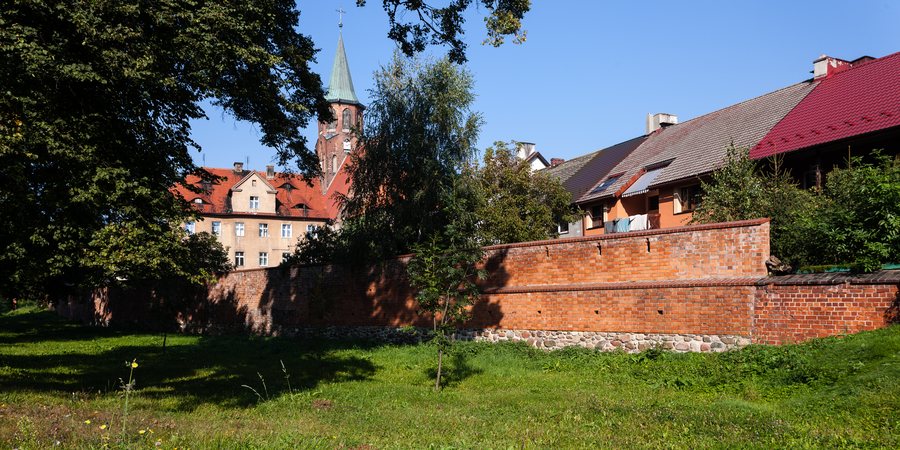
The Gothic Church of the Holy Cross Exaltation (“Podwyższenia Krzyża Świętego”) is the only one of Ścinawa’s former churches to have survived. It was built in the second half of the 15th century; its spire dates from the 17th century. Inside the church are two tomb slabs dating from 1595 to 1605. The surviving Gothic town hall tower dates from the 15th century. In addition, the western section of the blue Oder Cycling Route and the 1.8 km Ścinawskie Bagna nature trail pass through or start from Ścinawa.
What architectural history can you discover in Ścinawa?
The Church of the Holy Cross Exaltation (“Podwyższenia Krzyża Świętego”) offers several specific points of reference in time that can be distinguished from one another: its Gothic structure was built in the second half of the 15th century, and the spire was added in the 17th century. The two tomb slabs inside date from 1595 to 1605. Visitors interested in architecture and historical memorials will therefore find different features in one and the same church, rather than a story confined to a single century.
The Gothic town hall tower also dates back to the 15th century. A newer building, now the seat of the town and municipal office, was added to it. The tower and the attached administrative building can thus be described as two distinct architectural elements: a surviving historic tower and a later building with a municipal function. A small section of the town wall has survived in the western part of the town. It adds another historical landmark, explicitly located in the west.
What does the cycling route offer?
The western section of the blue Oder Cycling Route, which connects Wrocław and Głogów, passes through Ścinawa. For travel planning, the town’s position on this named section of the route is relevant. There is also the Ścinawa–Iwno connecting route, which allows cyclists to switch between the western and eastern sections of the blue Oder Cycling Route. If you are considering making the cycling route the focus of your trip, you can therefore choose between riding through the western section and switching to the eastern part. No additional distances or travel times are specified for these sections, so none are assumed here.
What should you know about the nature trail?
The Ścinawskie Bagna nature trail is 1.8 km long and runs from Ścinawa to the mouth of the Zimnica. Its length and endpoint give the route a clearly defined scope: rather than an open-ended, unspecified walking idea, it is a specific route with a named destination. As described here, this distinguishes it from the cycling route, whose significance lies primarily in connecting sections of a larger route.
If you would like to compare other destinations, you can also find Wołów, Węgrzce, Siodłkowice, Brzeg Dolny and Wińsko here.
FAQ
Which historic church has survived in Ścinawa?
The Church of the Holy Cross Exaltation (“Podwyższenia Krzyża Świętego”) is the only one of Ścinawa’s former churches to have survived.
How long is the Ścinawskie Bagna nature trail?
The nature trail is 1.8 km long and runs from Ścinawa to the mouth of the Zimnica.
How are the sections of the blue Oder Cycling Route connected?
The western section of the cycling route passes through Ścinawa. The Ścinawa–Iwno connecting route allows cyclists to switch between the western and eastern sections.
For the broader travel overview: Wohlau.

