
Wohlau – Oder Landscape, Nature and Culture
Accommodation in Wohlau
Wohlau combines landscapes along the Oder with cycling routes and a rich cultural history. Here you’ll find inspiration for a nature holiday as well as places that reveal the history of the region.
Wohlau at a glance
The Oder flows through Wołów County, whose attractive tourist landscapes include wooded dune ridges. Cycling options include a yellow route of around 16 kilometres and the 38-kilometre “Cudne Manowce” route. Cultural and historical stops range from the Piast Castle in Wołów to the bloomery furnaces in Tarchalice.
What landscapes define the region?
The Jodłowice Nature Reserve covers 9.36 hectares and lies in the municipalities of Brzeg Dolny and Oborniki Śląskie. It protects a mixed forest with fir trees that grow at the edge of their range. The Jodłowice Natura 2000 site (PLH020106) lies entirely within the nature reserve. This means both conservation designations refer to the same area.
The Oder also shapes the county’s landscape. Lubiąż lies on the river’s right bank and is surrounded by fields, meadows and forests. Wooded dune ridges are another landscape type found in the region. If you’d like to combine nature and culture when planning your trip, you can explore these different highlights without treating them as a single route.
What cycling and nature experiences are available?
The yellow Wołów–Wrzosy–Moczydlnica Klasztorna–Orzeszków cycling route is around 16 kilometres long and passes through the Dolina Jezierzycy Landscape Park. The named places and approximate distance give you a practical guide for planning your ride. The section of the blue Oder Route in Wołów County starts in Brzeg Dolny. There is also a signposted long-distance Cistercian Route. The “Cudne Manowce” cycling route is 38 kilometres long.
In Budków, a circular route runs along the Oder floodplain, the Oder’s old river channels and a wet meadow. The village is also on a cycling route along the Oder, and has a campsite that is suitable for a break and some time to relax in nature. These descriptions offer different ways to explore: a circular route through several types of landscape and a break by the cycling route.
What do the water and riverside areas offer?
There is a bathing area at Zalew Słup, run by the municipal Sports, Tourism and Recreation Centre in Wińsko. Fishing is permitted if you have a fishing licence and pay a fee to GOSTiR for a permit. Swimming and fishing are two different activities at the reservoir; fishing is subject to the requirements listed above.
Which cultural sites and traces of history are worth exploring?
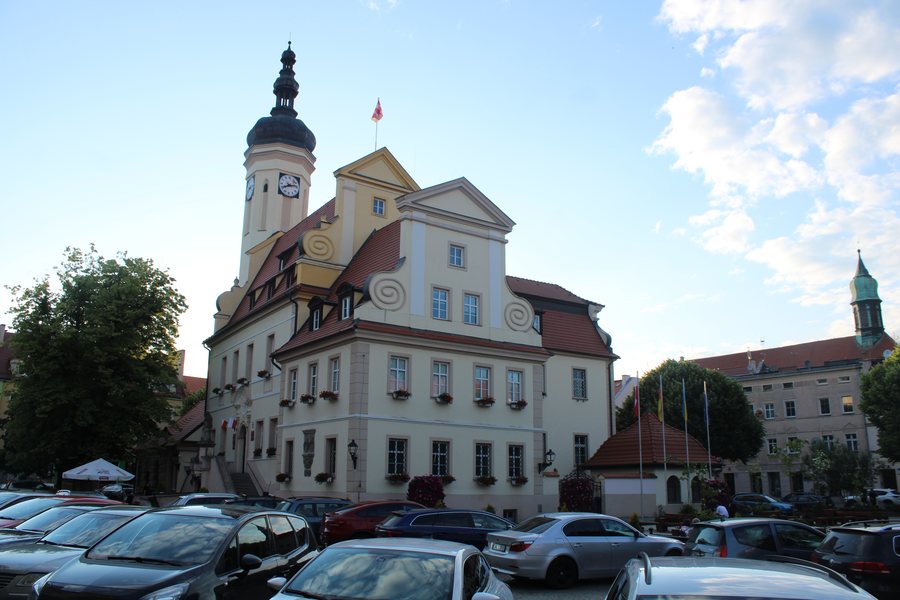
In Wołów, the town hall dates from the second half of the 15th century, while the Piast Castle is dated to 1157. The organs built by Adam Casparini in 1716 are preserved in St Lawrence’s Church. This architectural and musical history offers several specific themes to help you decide what to focus on during your cultural visit.
In Konary, Franz Achard opened the world’s first sugar factory in 1801 with support from the Prussian King Frederick William III. A monument to Achard and the remains of the sugar factory are preserved there. Other historical traces in the county include archaeological iron-smelting sites, including the bloomery furnaces in Tarchalice. Lubiąż is home to the Cistercian Abbey, considered the largest Cistercian abbey in Europe.
Architecture and science are also part of what the region has to offer. The historic park complex in Brzeg Dolny included a bathing pavilion designed by Langhans, a teahouse, a wine cellar, a wine pavilion, a mill and a forester’s house. In Białków, the University of Wrocław’s Centre for Astronomical Education is located on the former estate of amateur astronomer Leo Wutschichowsky. Wińsko is home to a 14th-century Holy Trinity Church. The church tower in Głębowice, adapted for tourism, is equipped with two telescopes offering views of the surrounding Dolina Łachy Natura 2000 site.
For more information about local places, you can also visit the pages on Węgrzce, Siodłkowice and Ścinawa. For comparisons with other regional pages, see Wałbrzyski and Strehlen.
FAQ
How long is the yellow cycling route through the Dolina Jezierzycy Landscape Park?
The Wołów–Wrzosy–Moczydlnica Klasztorna–Orzeszków cycling route is around 16 kilometres long.
What are the requirements for fishing at Zalew Słup?
You need a fishing licence and must pay a fee to GOSTiR for a permit.
What can you see from the church tower in Głębowice?
From the two telescopes, you can view the surrounding Dolina Łachy Natura 2000 site.
For the main travel overview: Lower Silesia.

